Tension rippled through the ancient city of Ibadan on Monday as the Central Council of Ibadan Indigenes (CCII) issued a stern warning to political actors in Oyo State, cautioning them against any form of disrespect toward the revered stool of the Olubadan of Ibadanland.
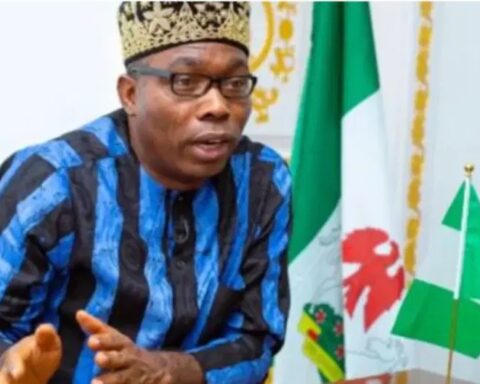
In a strongly worded statement that carried the weight of history and cultural pride, the CCII President-General, Ajeniyi Ajewole, declared that the council would no longer tolerate what it described as “reckless utterances and conduct” by some power-hungry politicians seeking relevance ahead of future political contests.
The statement, released through the council’s Publicity Secretary, Kola Olomide, came amid rising concerns that political rivalries in the state were beginning to spill into dangerous territory, one that threatens not only decorum but the sanctity of traditional institutions that have long served as pillars of identity and unity in Ibadanland.
For centuries, the Olubadan stool has stood as a symbol of continuity, culture, and authority in Ibadan. Unlike many other traditional institutions in Nigeria, its succession system is widely regarded as orderly and transparent, earning it respect across the country. Any perceived slight against the throne, therefore, is not merely a personal affront, it is seen as an attack on the collective heritage of the Ibadan people.
Ajewole did not mince words.
He warned that recent actions by certain politicians had crossed acceptable boundaries, noting that the growing trend of dragging traditional institutions into political disputes was both dangerous and unacceptable. According to him, such behavior risks eroding the respect that has been carefully preserved over generations.
“There is a line that must not be crossed,” he emphasized. “The Olubadan stool is sacred, and any attempt to denigrate it for political gain will be met with consequences.”
Though the statement stopped short of naming specific individuals, insiders within Ibadan’s socio-political circles suggest that the warning was triggered by a series of comments and actions perceived as undermining the authority and dignity of the traditional ruler. These incidents, they say, have sparked outrage among community leaders and elders who view the development as a troubling sign of declining respect for cultural institutions.
The CCII, widely regarded as the umbrella body of all Ibadan indigenes both at home and in the diaspora, made it clear that it would not stand idly by while the throne is dragged into partisan politics. Ajewole stressed that the council is prepared to take decisive steps to defend the integrity of the institution if the trend continues.
Observers note that the warning carries significant weight, given the influence of the CCII in mobilizing public opinion within Ibadanland. Historically, the council has played a key role in mediating conflicts and preserving the city’s cultural identity, often serving as a bridge between modern governance and traditional authority.
In recent years, however, the intersection of politics and tradition has become increasingly fraught. As electoral stakes rise, politicians have sometimes sought to leverage traditional institutions for legitimacy or influence, an approach that often backfires when perceived as exploitative or disrespectful.
Residents of Ibadan expressed mixed reactions to the development. While many applauded the CCII for taking a firm stand, others called for restraint on all sides, urging both politicians and traditional leaders to prioritize peace and mutual respect.
A community elder, who spoke anonymously, described the situation as a “test of values,” noting that Ibadan’s strength has always been rooted in its ability to balance modern political realities with deep cultural traditions.
“This is not just about politics,” he said. “It is about who we are as a people.”
As the political climate in Oyo State continues to evolve, the message from the CCII is unmistakable: the Olubadan throne is off-limits for political gamesmanship.
Whether this warning will temper the conduct of politicians remains to be seen. But one thing is clear, the guardians of Ibadan’s heritage are watching closely, and they are prepared to act.
In a landscape where ambition often collides with tradition, the unfolding events in Ibadan serve as a reminder that some institutions are not merely symbolic, they are sacred, and their preservation is non-negotiable.