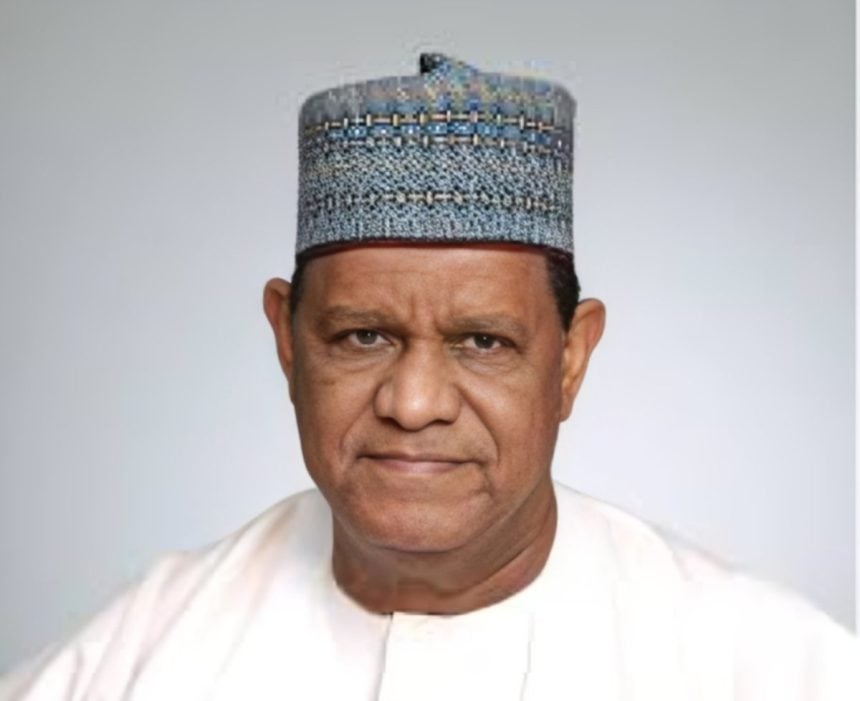
Presidential aspirant of the African Democratic Congress, Mohammed Hayatu-Deen, has defended the constitutional autonomy of political parties in managing their internal affairs, insisting that the Independent National Electoral Commission should not interfere in party processes beyond its regulatory responsibilities.
Hayatu-Deen made the remarks during the MHD for ADC NorthCentral town hall meeting held in Abuja ahead of the party’s presidential primary scheduled for today.
The presidential hopeful stated that the recent Federal High Court ruling against aspects of INEC’s 2027 election guidelines reaffirmed the constitutional limits of the electoral commission’s authority over internal party matters.
According to him, the judgment serves as a significant reminder that political parties remain independent organisations with the legal right to determine how they conduct their primaries, congresses and internal democratic processes.
“The High Court was right to affirm that INEC should not dictate the internal democratic processes of political parties,” Hayatu-Deen said during the gathering attended by party delegates, supporters and stakeholders from across the North-Central region.
“INEC’s responsibility is to ensure credible elections, maintain fairness, and protect the integrity of the electoral process, not to interfere in how parties manage their internal affairs,” he added.
The ADC presidential aspirant argued that while electoral oversight remains important for transparency and accountability, excessive interference in party administration could undermine democracy and weaken political institutions.
He stressed that political parties should be allowed sufficient freedom to organise themselves within the boundaries of the constitution and existing electoral laws.
Hayatu-Deen further maintained that internal democracy can only thrive when parties are given room to independently resolve their organisational issues without undue external pressure.
The remarks come amid ongoing national debate over the role of INEC in supervising party primaries and enforcing electoral guidelines ahead of the 2027 general election.
Several political parties and stakeholders have recently criticised aspects of the electoral commission’s guidelines, arguing that some provisions exceed the powers granted to INEC under the constitution and the Electoral Act.
The Federal High Court ruling referenced by Hayatu-Deen reportedly addressed concerns surrounding the scope of INEC’s authority in regulating internal party procedures.
Legal analysts say the judgment could have far-reaching implications for the relationship between political parties and the electoral commission as preparations intensify for the next election cycle.
During the town hall meeting, Hayatu-Deen also used the opportunity to present his vision for the country and seek support from party members ahead of the ADC presidential primary.
He called for a new era of leadership focused on economic reform, institutional strengthening and national unity.
The aspirant urged delegates to prioritise competence, integrity and ideas when selecting the party’s presidential candidate.
According to him, Nigeria requires bold leadership capable of addressing pressing national challenges including insecurity, unemployment, inflation and declining public confidence in governance.
Hayatu-Deen also emphasised the importance of strengthening democratic institutions and promoting issue-based politics rather than divisive political rhetoric.
He appealed to ADC members to remain united and committed to building a credible alternative political platform capable of competing effectively in the 2027 presidential election.
Political observers say the ADC presidential primary is attracting growing attention as smaller parties attempt to reposition themselves ahead of the next general election.
Analysts note that debates surrounding party autonomy and INEC’s regulatory role are likely to remain central issues as political parties prepare for primaries and candidate selection processes nationwide.
Some constitutional lawyers argue that while INEC has the mandate to monitor political parties and ensure compliance with electoral laws, the commission must avoid actions that could be interpreted as direct interference in internal party administration.
Others, however, insist that stronger oversight remains necessary to prevent manipulation, imposition of candidates and abuse of democratic procedures within political parties.
The conversation has continued to generate mixed reactions among politicians, civil society groups and electoral reform advocates.
Supporters of broader party autonomy believe excessive regulation could weaken internal decision-making structures and reduce the independence of political organisations.
Meanwhile, advocates of stricter electoral supervision maintain that effective oversight is essential for ensuring transparency and credibility in party primaries.
As political activities gather momentum ahead of 2027, the relationship between INEC and political parties is expected to remain a major topic in Nigeria’s evolving democratic landscape.
For Hayatu-Deen and other aspirants preparing for party primaries, the debate also highlights the growing importance of constitutional interpretation, institutional balance and electoral reforms in shaping the country’s political future.