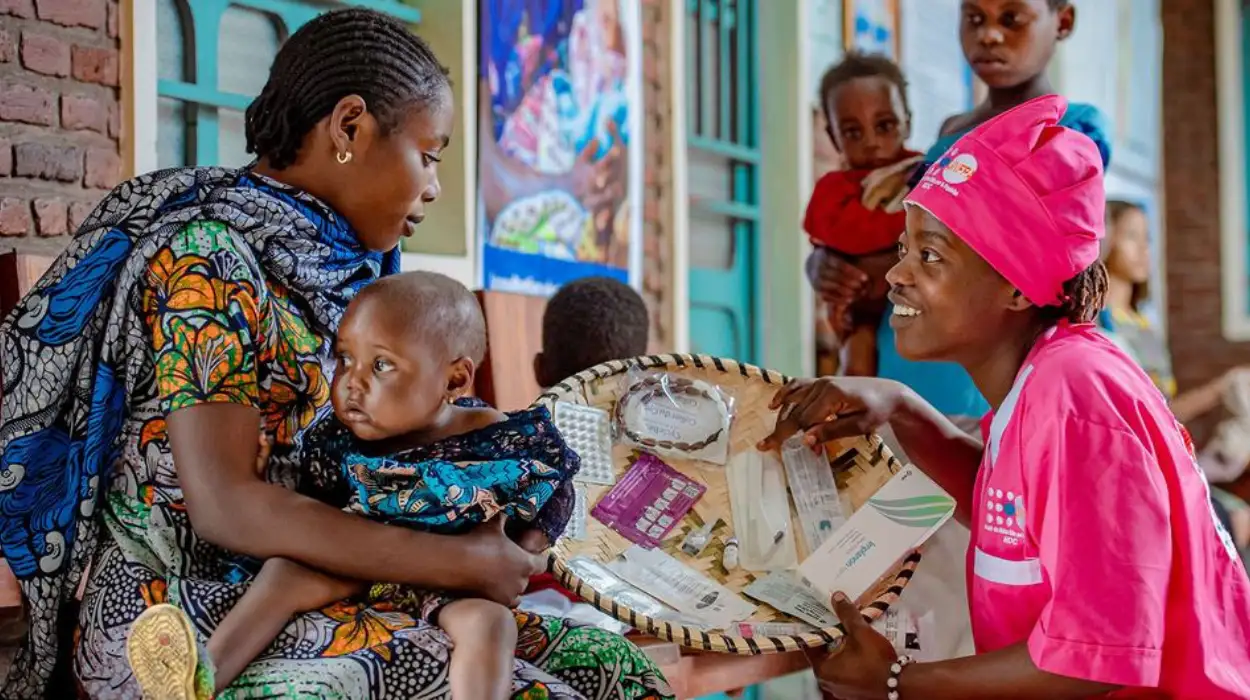
The Guttmacher Institute says every additional one dollar invested in family planning and contraceptive care can save 1.97 dollars in pregnancy-related and newborn care costs.
The institute disclosed this in its “Adding It Up 2024” report made available to the News Agency of Nigeria (NAN) ahead of World Contraception Day, marked on Sept. 26.
The information also came ahead of the International Safe Abortion Day, marked on Sept. 28.
The report, covering 128 low- and middle-income countries, said increased investment in contraception, maternal and newborn care, abortion services and STI treatment could generate significant health and economic benefits.
According to the report, meeting the full need for modern contraception, maternal and newborn care, abortion services and treatment for four infections in low- and middle-income countries in Asia will require increased annual spending.
It estimated that spending would need to rise from 5.87 dollars to 8.61 dollars per person.
It said this represented an additional 2.74 dollars per person, or 12.4 billion dollars annually.
The report estimated that meeting sexual and reproductive health needs across Asia could result in a 26 per cent reduction in unintended pregnancies, a 65 per cent decline in maternal deaths and a 62 per cent decline in newborn deaths.
It also highlighted wider economic benefits associated with contraceptive use, including increased workforce participation and greater control over earnings and savings.
The report estimated that 129 million women of reproductive age in Asia had an unmet need for modern contraception.
It, however, noted that the conventional measure of “unmet need” included women using traditional contraceptive methods who might not want to switch to modern methods.
It, therefore, introduced the concept of “unmet demand”, focusing on women who want to avoid pregnancy, and were not using a contraceptive method and expressed a desire for future family planning.
Based on this approach, the report estimated that 36 million women in low- and middle-income Asia had unmet demand for contraception.
It said Asia recorded an estimated 120.6 million pregnancies annually, with 63 per cent resulting in live births, 19.4 per cent ending in safe abortions, 21.3 per cent in unsafe abortions, and 16.7 per cent in miscarriages and stillbirths.
The report also stressed the importance of translating investments into accessible and quality services.
It said that financing alone was insufficient without trained healthcare workers, medicines, referral systems and services responsive to vulnerable populations.
Meanwhile, Ms Shobha Shukla, Coordinator and Host of SHE & Rights, and Executive Director of CNS, called for accessible, safe, legal and stigma-free abortion care and access to the full range of proven contraceptive options.
Shukla said investment in sexual and reproductive health and rights was important, not only for meeting health needs, but also for advancing gender equality, the right to health and the Sustainable Development Goals (SDGs).
Ms Riju Dhakal, Programme Officer, Asian-Pacific Resource and Research Centre for Women (ARROW), called for international commitments on sexual and reproductive health and rights to be reflected in approved national budgets.
Dhakal said governments and stakeholders should track, not only what was pledged, but whether funds were budgeted, released and ultimately reached health services and communities.
Ms Jane Nyanjom, Associate Director, Advocacy and Partnerships, Reproductive Health Network Kenya, said translating reproductive health rights into practice required alignment between law, policy, financing and service delivery.
Nyanjom highlighted concerns around contraceptive commodity stock-outs, particularly their impact on women and girls in rural and hard-to-reach communities.
She also stressed the importance of youth-friendly services, accurate information, effective referral systems and informed choice.
Ms Nawmi Naz Chowdhury, Executive Director, Women’s Global Network for Reproductive Rights (WGNRR), said reproductive rights must translate into actual access to services.
Naz Chowdhury identified conflict, humanitarian crises, displacement, shortages of trained providers and medicines, weak referral systems, administrative requirements, cost, geographical barriers, stigma and misinformation among factors affecting access to abortion care.
Dr Imran Pambudi, Director of Vulnerable Groups Health Services, Indonesia’s Ministry of Health, said health systems needed to pay particular attention to vulnerable populations, including persons with disabilities, remote communities, survivors of violence, older people, women and adolescents.
Pambudi advocated integrating sexual and reproductive health and rights into primary healthcare and strengthening healthcare workforce capacity, medicines availability and referral systems.
NAN reports that the Guttmacher Institute’s Family Planning Investment Impact Calculator and Safe Abortion Calculator were also highlighted as tools for estimating the potential health and economic impact of increased investment in reproductive health services.
The tools allow users to examine country-specific implications of investments in contraception and safe abortion care, including potential reductions in unintended pregnancies, unsafe abortions and health-system costs.