EVERY counterfeit tells the truth about the original.
A forged banknote is an admission that genuine currency possesses value. A forged passport is an acknowledgment that citizenship commands recognition. Even a forged signature pays tribute to authenticity, because no one imitates what carries no authority.
Counterfeits do not create value.
They borrow it.
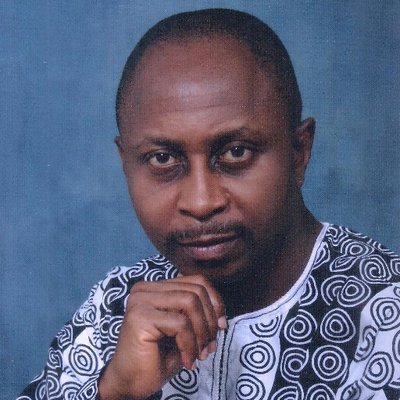
That simple observation explains why the allegations surrounding Prince Adeniyi Adeyemi Matthew and the purported Presidential Foreign Investment Promotion Council should not be read merely as another corruption story. According to the Nigeria Police Force and official statements from government institutions, Matthew allegedly forged presidential approvals, presented himself as the head of an agency the Federal Government says never existed, and reportedly secured significant institutional recognition before the scheme was uncovered. If those allegations are ultimately proved in court, they will expose something far more consequential than the ingenuity of one individual.
They will expose a crisis in the way the Nigerian state recognizes itself.
We often imagine that a state is made of ministries, courtrooms, soldiers, constitutions and imposing government buildings. It is not. Those are only its visible organs. The state itself is something less tangible and far more fragile.
It is a shared agreement about legitimate authority. It exists because millions of people simultaneously accept that certain offices possess lawful power, certain signatures carry legal force and certain institutions speak with constitutional legitimacy.
That shared recognition is the invisible architecture of government.
Without it, flags become cloth, offices become buildings and official titles become little more than ink on paper.
Every functioning republic is therefore engaged in one permanent task: distinguishing legitimate authority from imitation.
That is the first duty of the modern state.
Before it collects taxes, before it prosecutes criminals, before it conducts elections or signs treaties, it must know who is authorized to act in its name.
Everything else depends upon that.
If the reported facts surrounding this case are substantially accurate, then the most unsettling question is not how an alleged impostor became so convincing.
It is why the machinery of government reportedly found him convincing at all.
That distinction changes everything.
Public discussion has naturally focused on the individual at the center of the allegations. Yet history has never lacked gifted impostors. Every age produces people capable of forging documents, inventing identities or exploiting institutional weaknesses. Their existence is not remarkable.
What is remarkable is the vulnerability of the institutions they encounter.
Strong institutions do not become strong because they never meet deception.
They become strong because deception repeatedly fails against them.
That is why bureaucracy exists.
Citizens often complain that government moves too slowly, asks for too many documents and buries simple tasks beneath endless procedures. The complaints are understandable. Yet those frustrating rituals serve a constitutional purpose. Verification is the immune system of the state. Every independent confirmation, every authentication process and every administrative checkpoint exists to answer one deceptively simple question:
Is this genuine?
When that question stops being asked, bureaucracy loses its purpose.
It becomes theatre.
Perhaps that is the deeper lesson suggested by this episode. Modern states are surrounded by symbols of authority—official seals, letterheads, titles, motorcades, security details and ceremonial language. These symbols are necessary. They communicate legitimacy before a word is spoken.
But symbols are not legitimacy itself.
A healthy republic teaches its institutions never to confuse the costume with the office, never to mistake proximity to power for proof of power, and never to assume authenticity simply because authority appears to be speaking.
The danger begins when verification gives way to reverence.
When questioning an apparent presidential directive feels more dangerous than accepting it unquestioningly, bureaucracy quietly abandons its constitutional function. It ceases to verify authority and begins merely to admire it.
That is how institutions become vulnerable—not necessarily through corruption, but through deference.
There is another lesson hidden beneath the surface of this affair.
Most people assume that the objective of institutional fraud is money.
It is not.
Money comes later.
The first thing any successful impostor acquires is legitimacy.
Before public funds can ever be diverted, before influence can ever be exercised, before meetings can ever be held or directives obeyed, there must first be recognition. The most valuable asset an impostor can obtain is not access to an account.
It is access to belief.
That is why legitimacy is the state’s most precious constitutional resource.
Once belief is borrowed, every other transaction becomes easier.
Trust, not money, is the first currency of government.
Perhaps this also requires us to rethink corruption itself. We usually imagine corruption beginning when public funds disappear. But financial theft is often only the final chapter. The earlier and more dangerous corruption is institutional blindness—the gradual erosion of a state’s ability to distinguish between what is authentic and what merely resembles authenticity.
When that blindness takes hold, procedures continue. Meetings continue. Files move from desk to desk. Stamps are applied. Letters are acknowledged. Everything appears orderly.
Only later does everyone discover that order itself had become an illusion.
Authority travelled.
Truth did not.
The courts will determine the legal responsibility of Prince Adeniyi Adeyemi Matthew. That is where questions of criminal liability properly belong.
The rest of the country faces a different question.
What does it mean if the symbols of the Nigerian state can, even temporarily, become more persuasive than the disciplines that are supposed to authenticate them?
That question reaches beyond one individual, one prosecution or one news cycle.
It reaches into the philosophy of the Republic itself.
Every nation confronts enemies. Few are defeated by them. The greater danger is subtler. It arrives when institutions become so captivated by the appearance of authority that they forget authority must first be proved.
For a state does not lose its sovereignty only when others overpower it.
Sometimes it surrenders a small part of that sovereignty the moment it can no longer distinguish its own voice from a convincing echo.
Shaakaa can be reached on: shaakaastephanie@yahoo.com