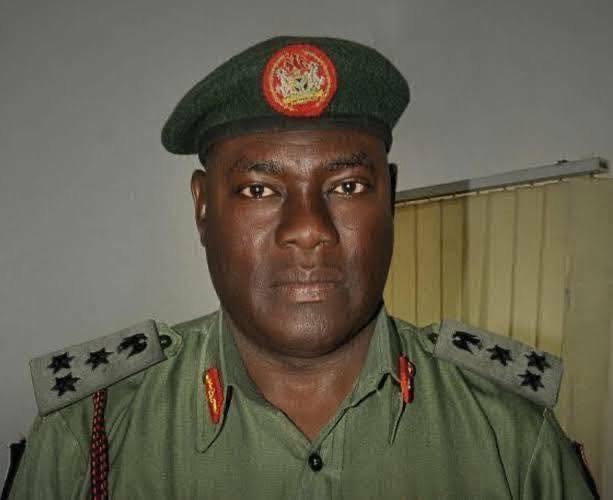
By Richard Benjamin
KATSINA, On May 30, 2026, retired Major General Rabe Abubakar embarked on what appeared to be a routine journey along the Marabar Musawa–Kafinsoli Road in Matazu Local Government Area of Katsina State. Travelling with his wife, Hajiya Amina Abubakar, and their driver, the former Director of Defence Information never reached his destination.
Armed bandits intercepted their vehicle and whisked the occupants away into the forests that have become notorious hideouts for criminal gangs operating across Nigeria’s North-West.
Two weeks later, the nation received devastating news. The retired general had died in captivity.
His death triggered widespread grief and renewed concerns about the growing insecurity confronting communities across the region. It also underscored a troubling reality: even individuals who once occupied the highest levels of the nation’s security establishment are not immune from the threats facing ordinary citizens.
The Man Behind the Uniform
Maj. Gen. Rabe Abubakar was widely known for his service as Director of Defence Information between 2015 and 2017, a period marked by significant security challenges across the country.
As the public face of the Nigerian military, he regularly briefed journalists and citizens on security operations, earning a reputation for professionalism, calmness, and accessibility.
Colleagues and associates describe him as a disciplined officer who remained committed to public service throughout his military career. Following his retirement, he largely withdrew from public life, maintaining a quiet and modest lifestyle.
For many Nigerians, news of his abduction came as a shock. If a retired major general could be kidnapped on a public road, many wondered what that meant for the safety of ordinary citizens.
#Captivity and Death
On June 13, 2026, the Katsina State Government announced that the retired military officer had died while in captivity.
In a statement issued by the Commissioner for Internal Security and Home Affairs, Nasiru Mu’azu, authorities said Abubakar died from complications related to diabetes and hypertension despite efforts by security agencies and the state government to secure his release.
Governor Dikko Umar Radda described the development as a painful loss for Katsina State and the nation.
However, members of the family disputed the official explanation.
Speaking in media interviews, the late general’s son, Isyaka Rabe Abubakar, said his father had no known history of diabetes or hypertension. He suggested that the harsh conditions of captivity, stress, illness, or other factors may have contributed to his death.
The differing accounts have fuelled public discussion over the circumstances surrounding the retired officer’s final days.
Regardless of the cause, family members maintain that he endured significant hardship while being held by his captors.
A Wife’s Ordeal
The tragedy did not end with the general’s death.
His wife, Hajiya Amina Abubakar, remained in captivity after his passing.
Earlier videos released by the kidnappers showed the couple appealing for assistance while the abductors made demands for the release of arrested associates.
Relief finally came on June 15 when troops under Operation Fansan Yanma, supported by the Nigerian Air Force, rescued her during an operation in Tunga village.
Military sources said she sustained gunshot injuries during the encounter but was successfully evacuated for treatment and is receiving medical care.
Her rescue brought a measure of comfort to the grieving family, although it could not erase the pain of losing her husband.
A Symbol of a Wider Crisis
The kidnapping and death of Maj. Gen. Rabe Abubakar reflect the broader security challenges confronting Nigeria, particularly in the North-West where armed bandit groups continue to carry out abductions, attacks on communities, and other violent crimes.
Over the years, thousands of Nigerians have been kidnapped for ransom, forcing families to sell property, exhaust savings, and seek help from relatives in desperate attempts to secure the release of loved ones.
Security experts say the incident highlights the need for improved intelligence gathering, stronger coordination among security agencies, and sustained efforts to dismantle criminal networks operating across vulnerable regions.
The Federal Government and military authorities have since expressed condolences to the family and pledged to continue operations against criminal elements responsible for such attacks.
A Legacy Remembered
For many who knew him, Maj. Gen. Rabe Abubakar will be remembered not only for the circumstances of his death but for his years of service to the nation.
His career spanned decades of military service, culminating in a role that placed him at the forefront of communicating the armed forces’ efforts during critical periods in Nigeria’s history.
Today, his death stands as a sobering reminder of the human cost of insecurity.
In the forests of Katsina and across many parts of the country, the struggle against banditry continues. For the Abubakar family, however, the battle has become deeply personal.
Their loss is shared by a nation still searching for lasting answers to one of its most pressing security challenges.