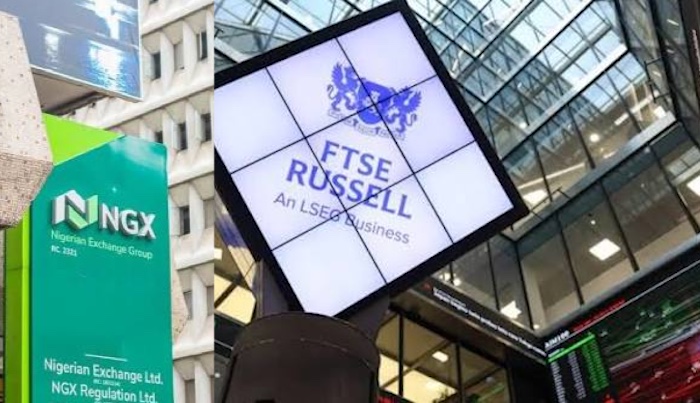
Foreign and institutional investors returned in force to the Nigerian capital market on Monday, September 21, 2026, marking the country’s official re-entry into FTSE Russell’s Frontier Market Index series. The reclassification triggered a wave of institutional buying across top tier-1 banking tickers at the Nigerian Exchange Limited (NGX) floor in Customs Street, Lagos.
The market reclassification took effect at the opening bell on Monday, ending a three-year hiatus that began in September 2023 when FTSE Russell downgraded Nigeria to “Unclassified” status due to persistent foreign exchange illiquidity, capital-repatriation bottlenecks, and multi-billion-dollar backlogs.
Following extensive reforms by the Central Bank of Nigeria (CBN) to clear verified FX backlogs, stabilize the naira, and modernize settlement infrastructure, including a transition to a T+1 settlement cycle, FTSE Russell confirmed that Nigeria had satisfied all five required Quality-of-Markets criteria.
Trading activity on Monday reflected selective, high-volume portfolio rebalancing by foreign fund managers targeting large-cap, liquid financial institutions. Zenith Bank Plc recorded the highest execution volume of the day, absorbing N9.9 billion in turnover on 77.07 million shares, more than 3.5 times its 30-day average daily volume, to close at N128.60.
Guaranty Trust Holding Company Plc (GTCO) delivered the strongest price gain among Tier-1 banks, advancing 3.9% to close at N133.90 with a turnover of N3.41billion across 25.85 million shares. FirstHoldCo Plc sustained solid institutional demand, generating N1.87billion in turnover on 12.18 million shares, closing flat at N160.00. Its single-day turnover outpaced the combined execution volumes of Access Holdings N665.46 million and United Bank for Africa N713.48 million.
The institutional positioning was largely concentrated in Zenith, GTCO, and FirstHoldCo due to their direct inclusion in the elite FTSE Frontier 50 Index. Alongside non-bank blue chips Aradel Holdings, Dangote Cement, and MTN Nigeria, these three financial institutions serve as primary conduits for passive global allocations tracking the index.
Speaking on the market developments, executives and market analysts emphasised that the upgrade serves as an important seal of confidence in the market’s underlying plumbing and macro-policy execution. ”Nigeria’s restoration to FTSE Russell’s Frontier Market status is an important recognition of the progress made in our capital market and the strengthening of the infrastructure that supports it.
Our responsibility is to ensure that the market has the efficiency, accessibility, and depth investors need to participate with confidence.” said Temi Popoola, Group Managing Director and Chief Executive Officer, NGX Group. Research teams across major investment houses expect the momentum to trigger multi-quarter capital inflows into both equity and debt markets.
”We expect the positive sentiment to persist in the near term, supported by potential passive fund inflows following Nigeria’s reclassification… The reclassification could drive additional demand from funds tracking relevant FTSE Russell indices and provide a near-term catalyst for market performance.” according to a Coronation Research Analysts, in a market note issued on Monday.
Analyst notes from United Capital Research also pointed out that institutional trading coincided with the Central Bank of Nigeria’s Monetary Policy Committee (MPC) meeting held on September 21–22, providing a double catalyst for fixed-income and equity re-rating as foreign portfolio investors look to capture attractive carry opportunities.
With 31 Nigerian companies now added back into the FTSE Frontier Index Series, spanning 10 large-caps, 10 mid-caps, and 11 small-caps, market watchers expect foreign tracking inflows to continue providing structural support to market valuation into the final quarter of the year.