Participants at a one-day workshop organised by diplomatic correspondents in Abuja on Tuesday urged newsmen to imbibe evidence-based reporting to bolster the fight against poverty in the country.
They also urged the correspondents to consistently report on the welfare of Nigeria’s most vulnerable population to draw government and other stakeholders’ attention to their plight.
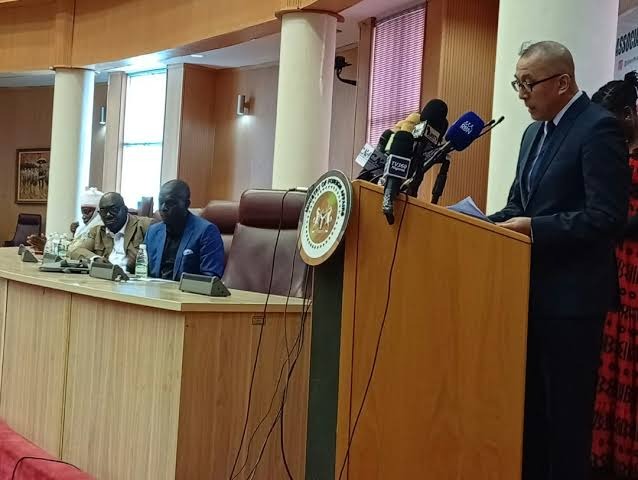
Among stakeholders at the workshop held on the aegis of the Diplomatic Correspondence Associations of Nigeria(DICAN), were the Ministry of Foreign Affairs, the academia, diplomats and traditional rulers.
The workshop, which centred on ending poverty, had “Nigeria’s poverty alleviation efforts: Adopting China modules and its relevance in a new era: The place of policy makers, development partners and diplomatic Reporters” as its theme.
Mr Dunoma Ahmed, Permanent Secretary in the Ministry of Foreign Affairs, in his remarks, described the workshop as apt, “especially in terms of fostering measures to tackle issues that border on poverty in Nigeria”.
Ahmed, represented by the ministry’s Spokesman, Kimiebi Ebiefa, said that diplomatic correspondents must play key roles in reporting about Nigeria like most developing countries facing complex development challenges.
He identified the challenges to include persistent poverty, unemployment and inequalities that require bold, pragmatic and collaborative responses.
“No single institution or country holds all the answers and that is why the constructive study of international models, adaptation of best practices, and strengthened partnerships are essential for delivering inclusive progress for our citizens.
“China’s development experience offers lessons in long-term planning, infrastructure-led growth, targeted poverty reduction programmes and the mobilisation of domestic resources.
“Our objective should assess which elements of China model can be responsibly contextualised for Nigeria to enhance agricultural productivity, expand social protection, leverage public–private partnerships and investment in human capital.
“We must also emphasise transparency, accountability and respect for democratic governance,” he said.
In his lecture, the Chinese Ambassador to Nigeria, Amb. Yu Dunhai, represented by Sun Xuekun, Counselor, Economic and Commercial Office of the China Embassy in Nigeria, said that China’s historic achievements in poverty reduction is based on scale, speed and sustainability.
According to him, the Chinese government invested 1.6 trillion yuan in special poverty alleviation funds, mobilised financial support, dispatched more than 3 million officials and village work team members, and built nationwide assistance network that reached every poor household, to achieve set targets.
“Although global poverty remains a serious challenge, China’s poverty reduction journey demonstrates that poverty is neither inevitable nor irreversible,” he said.
On his part, a don, Prof. Sheriff Ibrahim, who spoke on the topic: “Political economy and governance mechanism of China’s successful targeted poverty reduction”, said that Nigeria could emulate Chinese core framework on combined sustained market-driven economic growth with Targeted Poverty Alleviation (TPA).
Ibrahim, who is a scholar, administrator and foreign policy expert, focused on governance, anti-corruption and contemporary China-Africa Relations.
He stressed the need for adequate investments, local industry promotion, and accountability to achieve the desired goals.
Dr Austin Maho, a teacher at the International Institute of Journalism (IIJ), Abuja, emphasised the need for diplomatic correspondents and media executives to contextualise international development models and draw lessons from China’s poverty alleviation strategy.
According to him, such models must be evaluated, communicated and contextualised, saying that they were essential for diplomatic correspondents and media executives toward bridging international and domestic policy between China and Nigeria.
Dr Charles Onunaiju, Director, Centre for China Studies, Abuja, urged journalists to emphasise more about gaps in poverty reduction measures citing China’s experience while recounting poverty eradication programmes as one mantra of successive government in Nigeria.
“Poverty alleviation or reduction is not a humanitarian gesture or a charity to be extended by benevolent leaders; it is a serious front-line policy arena that must be dutifully engaged with all sense of responsibility,” he said.
In his remarks, DICAN Chairman, Mr Idehai Frederick, said that the association would remain committed to bridging gaps between foreign policy formulation and public understanding in alignment with China-Africa People-to-People exchange and strategic priorities of the Forum on China-Africa Cooperation (FOCAC).
He expressed appreciation to the Chinese government for providing a study tour platform for Nigerians to experience China’s rural revitalisation projects and gain invaluable insights into the country’s modernisation goals.