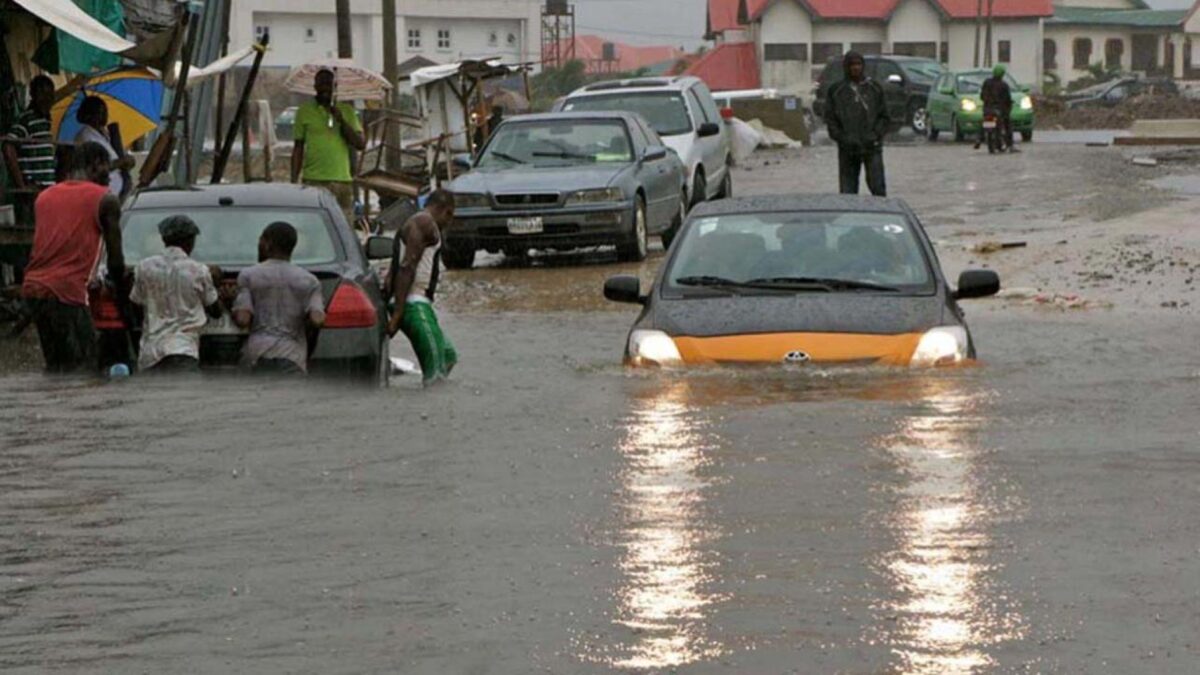
The Lagos State Government has directed residents living in flood-prone, low-lying, and coastal communities to temporarily relocate to higher ground to safeguard lives and property following a fresh flood advisory.
The directive was issued on Monday, September 21, 2026, in an official statement released in Lagos by the Director of Public Affairs, Ministry of the Environment and Water Resources, Mr. Kunle Adeshina, on behalf of the Commissioner, Mr. Tokunbo Wahab.
The evacuation directive follows a seven-day flood warning issued by the Nigerian Hydrological Services Agency (NiHSA) covering September 19 to September 25, 2026.
The alert, which affects Lagos and 14 other states across the federation, warns that rising river levels and intense rainfall could trigger severe localized flooding impacting residential areas, schools, healthcare facilities, markets, farms, and places of worship.
Speaking through the statement, Mr. Tokunbo Wahab noted that Lagos is currently experiencing the second phase of its annual rainfall season, characterized by heavier downpours, elevated water levels, and strong tidal influences from surrounding lagoons and rivers.
”When the signs point to danger, the safest decision is to move early. No property is worth risking a life,” Wahab emphasized, urging residents in affected areas not to wait until floodwaters overflow into homes before acting.
The Ministry highlighted several key local government areas and waterfront settlements across Lagos State as high-risk locations requiring immediate vigilance and readiness for temporary relocation.
Areas highlighted are the Coastal & Island Corridors; Lagos Island, Eti-Osa, Oke-Ira Nla (Ajah), Kirikiri, Ilaje Waterfront Jetty, and Jetty Terminal B. Downstream & Ogun River Basin Areas: Isheri North, Kara, Itowolo, Ajegunle, Majidun, Ogolonto, parts of Agboyi, and settlements downstream of Isheri Olofin.
The Commissioner explained that heavy rainfall upstream along the Ogun River system forces water downstream into Lagos waterways, compounding the surge in coastal and low-lying communities.
The Lagos State Government confirmed that it has intensified monitoring of rainfall patterns, river levels, and canal flows in collaboration with federal hydrological authorities. Continuous desilting, cleaning, and maintenance of major drainage channels across the state are ongoing to facilitate quick water runoff.
The state government advised residents, local government administrators, emergency agencies, and community leaders to adhere strictly to the following safety protocols:-
Community leaders and Local Emergency Management Committees (LEMCs) must maintain active communication channels to share real-time weather updates.
They must move vulnerable individuals, pets, livestock, and critical valuables to higher, secure locations ahead of rising water levels. Refrain from driving or walking through fast-moving floodwaters, submerged bridges, or open drainage paths.
Residents must cease the indiscriminate dumping of refuse into canals, gutters, and primary drainage channels, as blockages exacerbate street flooding.
The government assured the public that emergency response teams remain on high alert and appealed for calm, cooperation, and swift compliance with official advisories throughout the peak rainy period.