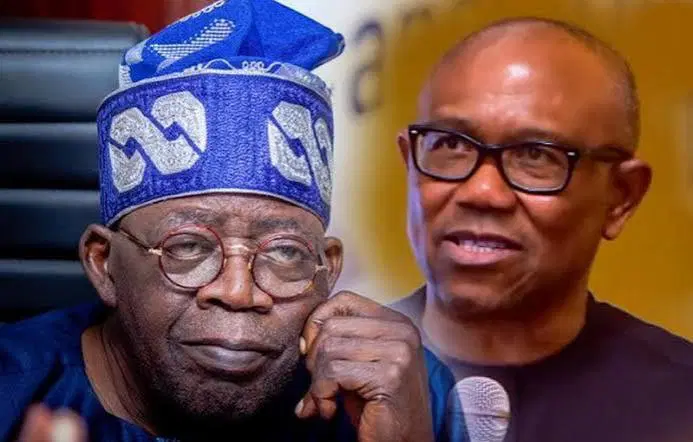
The presidential candidate of the National Democratic Congress (NDC), Peter Obi, has dismissed claims by President Bola Tinubu criticizing his record on erosion management during his tenure as governor of Anambra State. Obi asserted that he personally spearheaded the development of the national erosion-control framework currently being utilised to combat ecological degradation across the country.
Speaking on Tuesday morning, November 10, 2026, during a live radio broadcast on Rhythm FM Jos ahead of an NDC town hall rally in Plateau State, Obi pushed back against the President’s comments. The exchange follows remarks made by President Tinubu on Friday, November 6, 2026, during an All Progressives Congress (APC) campaign rally in Uyo, Akwa Ibom State.
Addressing crowds in Uyo, President Tinubu accused Obi of failing to confront Anambra’s severe gully erosion issues, contrasting it with his administration’s land reclamation projects in Lagos. ”He ran away from erosion in Anambra,” President Tinubu stated at the Uyo rally.
“Here we are on a resort reclaimed from erosion. And we are going to enjoy life? And he now wants to be president?” Responding directly during his Jos radio appearance, Obi characterized the President’s statement as untrue. ”On what the president said while campaigning in Akwa Ibom, it’s not true,” Obi said.
“I, working with the former Minister of Environment, developed what they are using today to fight erosion. I went to President Yar’Adua, made a suggestion to him. He called the minister and said he should go and develop it.” Obi’s media advisor, Valentine Obienyem, also issued a separate statement in response to the President’s remarks,
clarifying that Obi’s administration actively tackled the Nanka-Agulu erosion complex, one of the South-East’s most severe environmental hazards, and collaborated directly with the World Bank to institutionalize the Nigeria Erosion and Watershed Management Project (NEWMAP). Additionally, NDC campaign spokespersons stated that President Tinubu’s criticisms misrepresent historic environmental interventions, emphasizing that the Obi-Kwankwaso ticket remains focused on national economic recovery and sustainable infrastructure development.