It’s a classic case of the “fine print” canceling out the headline. While the “Not Too Young to Run” law successfully lowered the legal age barriers, the financial hurdles have arguably never been higher. As we head further into 2026, the conversation has shifted from “Can you run?” to “Can you afford to?”
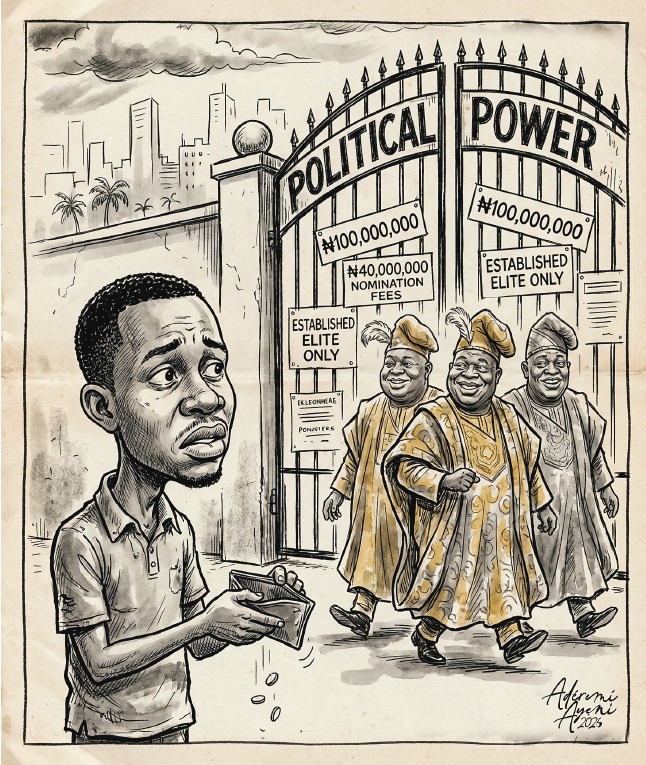
The “gatekeeping” starts long before the general election. Political parties set the prices for nomination forms, which often serve as a first-line filter to ensure only the wealthy or the “sponsored” get in.
For the last major cycle, major parties like the APC set presidential forms at ₦100 million, while the PDP set theirs at ₦40 million. For a young Nigerian earning a good salary, these figures represent decades of total savings. While some parties offer discounts for youth (often 50%), a ₦50 million “discounted” form is still an impossible mountain for most.
The recently signed Electoral Act 2026 has introduced changes that critics argue might actually strengthen financial gatekeeping rather than dismantle it. Spending caps for various elective offices have been raised by 100% to 400%. This acknowledges inflation but also officially raises the “cost of competition.”
The individual donation limit has jumped from ₦50 million to ₦500 million. The amount a donor can give before their name must be disclosed was hiked from ₦1 million to ₦100 million. This makes “dark money” and elite sponsorship much harder to track.
Because the costs are so high, young aspirants often have two choices which entraps them in the same political cycle. This is gaining traction but is rarely enough to compete with the sheer scale of established party machines.
Many are forced to seek “Godfathers” to bankroll their campaigns. This creates a cycle where the “Young to Run” candidate enters office already indebted to old-guard interests, effectively neutralizing the fresh perspective they were supposed to bring.
Beyond the forms and the laws, the “hidden costs” are where the real gatekeeping happens. Moving across a state or the country requires a massive fleet of vehicles and private security. Dominating the airwaves and social media in a crowded field is a multi-million naira endeavor.
Internal party politics often involve “mobilization fees” for delegates, which is a polite way of saying the primary itself is a bidding war.
The legal right to run is now a reality, but the economic right to run is still restricted to the elite. Without reforms that address political party pricing and enforce strict transparency on campaign spending, the “Not Too Young to Run” victory remains largely symbolic for the average Nigerian youth.