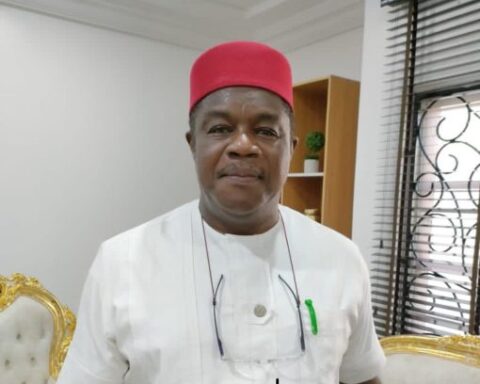
Alhaji Yahaya Abubakar, the Etsu Nupe and Chairman, Niger State Council of Traditional Rulers, has called on affluent Nigerians to prioritise support for the less privileged.
Abubakar made the call on Monday in Bida, during the annual distribution of Zakat by the Bida Emirate Council.
Abubakar observed that targeted welfare interventions remain an effective means of addressing poverty-driven insecurity in the country.
The traditional ruler said the rising cases of social vices and criminality in some communities were closely linked to economic hardship, stressing that deliberate acts of compassion by people with the means to assist would help bridge the gap between the rich and the vulnerable.
“When we care for the orphan, the widow, the sick and the poor, we are not only fulfilling a religious duty, we are also securing our neighbourhoods.
“Insecurity thrives where there is hunger and hopelessness. If the wealthy give willingly, we will see less desperation on our streets,” he said.
The monarch, while emphasising the significance of Zakat as an instrument of social welfare and economic empowerment, described the annual obligation as a means of promoting social justice and strengthening community bonds.
According to Etsu Nupe, Zakat, the third pillar of Islam, requires eligible Muslims to give a specified portion of their wealth annually to designated categories of beneficiaries.
Addressing the 120 beneficiaries of the Bida Emirate Zakat, Abubakar urged them to utilise the financial assistance judiciously by investing in ventures capable of improving their livelihoods.
“I urge you to be prudent. Use this money to start small businesses, pay school fees, or take care of your health.
“Let this Zakat be the beginning of a better story for you and your families,” he said.
The Etsu Nupe also urged the Niger State Zakat and Endowment Board to intensify public enlightenment on the importance of Zakat, particularly through radio programmes, town criers, Friday sermons and other platforms, to ensure that more Muslims understand and fulfil the religious obligation.
Earlier, the Chairman of the Bida Emirate Zakat Committee, the Datijo Nupe, Alhaji Idris Mohammed, said the emirate had sustained the annual distribution and recorded steady growth in contributions and impact over the past five years.
“With the support of our members, donors and the palace, we have been able to reach more vulnerable households each year.
“Our goal is to ensure that no eligible person in Bida Emirate is left out,” Idris said.
Also speaking, the Secretary of the Niger State Zakat and Endowment Board, Mallam Salihu Mohammed, said Zakat was not limited to cash and livestock, explaining that the obligation also covered proceeds from farming and the exploitation of mineral resources, where applicable under Islamic jurisprudence.
“Many people don’t know that Zakat also covers proceeds from farming and mining of mineral resources.
“When properly collected and distributed, Zakat circulates wealth, stimulates the local economy and reduces inequality. It is Allah’s injunction for social justice,” he said.
Salihu appealed to traditional rulers across the various emirates to establish functional Zakat committees in their domains and collaborate with the state board to harmonise the collection and distribution of Zakat.
In his remarks, the Chief Imam of Bida, Sheikh Adamu Yakatun, charged Muslim leaders to use their positions and platforms to mobilise the faithful towards fulfilling their Zakat obligations.
“Leaders must lead by example. We must remind our people that withholding Zakat is withholding blessings from the community.
“Let us fulfil this obligation with sincerity,” he said.
The 120 beneficiaries of this year’s Zakat distribution were selected across three categories.
The first category comprised 40 vulnerable persons, including orphans, widows and persons living with health challenges.
The second category consisted of 40 poor persons and individuals without steady means of livelihood, while the third category comprised 40 persons, including Islamic propagators and teachers contributing to the advancement of Islam.
Some community members who spoke at the event described the intervention as timely, saying the financial assistance would help cushion the impact of rising food prices and other economic challenges confronting vulnerable households.
The beneficiaries expressed appreciation to the Bida Emirate Council, donors and the traditional institution for sustaining the initiative, describing it as a practical demonstration of compassion, social responsibility and commitment to improving the welfare of the less privileged.