By Darlington Onedibe
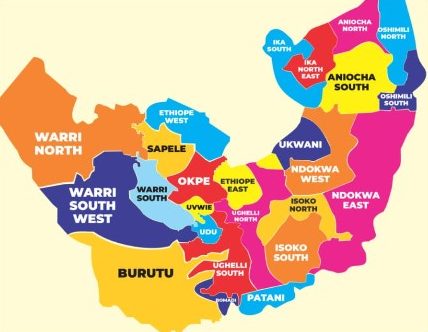
The Independent National Electoral Commission (INEC) has moved to restore suppressed state and federal constituencies across Nigeria, but the complex political geography of Delta State continues to highlight the deep challenges of electoral delineation.
Following strict mandates from the Supreme Court and regional high courts, INEC initiated the restoration of dozens of historically suppressed or malapportioned constituencies in several states, including Delta, Kogi, Benue, and Jigawa. While the move aims to correct long-standing imbalances in local representation, it has reignited fierce local debates over legislative boundaries that have remained broken for decades.
The crisis of suppressed constituencies dates back to the transition from military rule to the Fourth Republic in 1999. During previous military administrations, certain local government areas and state assembly seats were merged or altogether dissolved under arbitrary decrees.
When the 1999 Constitution was enacted, Section 91 mandated that every state house of assembly must consist of not less than 24 and not more than 40 members. However, during subsequent general elections, several vibrant constituencies which previously held distinct legislative voices, found themselves structurally swallowed by neighboring districts.
In Delta State, the fight for restoration has been acutely tied to ethnic and territorial dynamics, particularly within the oil-rich but highly contested areas of Warri and the riverine local governments. For years, legal battles raged as communities argued that their disenfranchisement violated constitutional provisions ensuring equitable population-to-seat ratios.
In compliance with a milestone Supreme Court directive, INEC implemented a major restructuring program aimed at returning stolen representation to affected areas. For Delta State, the intervention targeted structural deficiencies in volatile zones.
While the intervention successfully created two additional state constituencies and carved out new federal representation for the Warri North and Warri South-West axes, it has faced immense local scrutiny. For many community leaders, the restructuring is seen as an incomplete remedy for a wound that has festered for over 25 years.
Despite INEC’s sweeping structural adjustments, community activists and political stakeholders argue that the restoration has failed to satisfy the true historical margins of the region. Critics point out that while some boundaries were redrawn, the actual political clout and administrative autonomy of certain deeply suppressed indigenous communities remain overshadowed.
”Restoration on paper does not always equal representation on the ground,” noted a local legal analyst tracking the Delta delineation. “When you suppress a constituency for nearly three decades, a simple redrawing of wards doesn’t instantly give a marginalized community its unique legislative voice back. It often just repackages the old imbalance.”
The lingering discontent stems from the fact that certain ancient clans and demographic groups remain grouped into multi-ethnic local government areas where they are perennially outvoted. For these areas, the “seat that never came back” represents a broader systemic failure to grant absolute autonomy away from larger, dominant political blocs.
As INEC pushes forward with voter registration and polling unit distribution within these newly adjusted zones, the commission faces the uphill task of convincing a skeptical Delta electorate that these changes will truly translate to a more inclusive democracy.