The National Commissioner and Chief Executive Officer of the Nigeria Data Protection Commission, Dr Vincent Olatunji, has warned that rising cyber threats are tracking the rapid expansion of the global digital economy.
He said cyberattacks now occur every 39 seconds globally, underscoring the scale and persistence of digital security risks facing governments, businesses and individuals.
Olatunji gave the warning in his keynote address at the IoT West Africa Conference and Data Centre Cloud Expo on Wednesday at the Landmark Event Centre, Lagos.
He noted that cybercrime had become a major threat to digital growth, with global losses estimated at about $10.5 trillion annually, while the average cost of a data breach stood at $14.88 million, reflecting a 26 per cent year-on-year increase.
He added that over one million cybercrime complaints are recorded globally, showing the widening exposure of digital systems to attacks.
Olatunji said Nigeria remained one of Africa’s most targeted cyber environments, recording more than 4,000 attacks weekly and accounting for about 45 per cent of cybercrime incidents on the continent.
He disclosed that financial losses in Nigeria exceeded ₦12 billion in 2024, largely driven by phishing, ransomware and other digital fraud schemes.
According to him, phishing and social engineering remain the most common attack methods, used to gain unauthorised access to sensitive systems and data.
He said ransomware accounted for about 35 per cent of global economic losses, while Business Email Compromise (BEC) continued to inflict heavy financial damage on organisations.
Olatunji added that Distributed Denial of Service (DDoS) attacks occur about 44,000 times daily, disrupting critical infrastructure such as banking, telecoms and government platforms.
He also noted that identity theft and data breaches accounted for about 25 per cent of digital economy losses, with 85 per cent of breaches involving personal identifiable information (PII), including biometric data.
He stressed that the rise in cyber threats had serious implications for data infrastructure, sovereignty and national security, calling for stronger cybersecurity frameworks and sustained investment in digital protection systems.
Shifting to the broader digital economy, Olatunji said the global system was being reshaped by an unprecedented surge in data generation, now estimated at 402.89 million terabytes daily.
He disclosed that Nigeria’s digital economy was currently valued at about $18.3 billion, adding that it was projected to double within five years as digital adoption expanded across key sectors.
According to him, the global digital economy now contributes about 20 per cent of global GDP, with countries increasingly competing through data infrastructure, cloud systems and digital innovation.
Olatunji noted that data creation had increased more than 90 times in the last 15 years, reflecting the speed of global digital transformation.
He clarified that global data volumes are projected to rise from about 181 zettabytes to 221 zettabytes, underscoring the scale of the data economy.
He further revealed that about 82 per cent of global data is now driven by video content, including streaming platforms, social media and video conferencing.
“Almost everything today revolves around video streaming, learning, healthcare and social interaction,” he said.
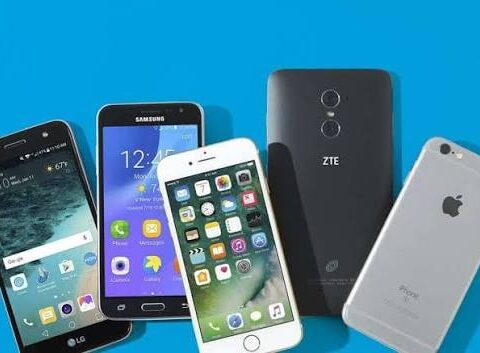
Olatunji said the world had also entered a mobile-first era, with about 5.6 billion unique mobile subscribers, making mobile devices the primary gateway to digital services.
He added that more than 21 billion Internet of Things (IoT) devices are now connected globally, continuously generating vast amounts of data.
Speaking on global trends, he said countries such as the United States, Russia, India, Saudi Arabia, Israel and Australia are investing heavily in cloud computing, IoT systems, e-commerce platforms and digital marketplaces to strengthen their economies.
“Technologies such as cloud, IoT and digital platforms are now the backbone of modern economic growth,” he said.
Olatunji stressed that governments were now building data economy strategies supported by infrastructure development, governance systems and digital policy frameworks.
He described data as the “new oil” of the global economy, noting that every digital interaction was powered by data.
The NDPC boss also highlighted the importance of data infrastructure, describing it as critical national infrastructure requiring sustained investment to support innovation and economic competitiveness.
He urged Nigeria and other developing economies to strengthen data governance, infrastructure and digital skills to remain competitive in the global digital ecosystem.