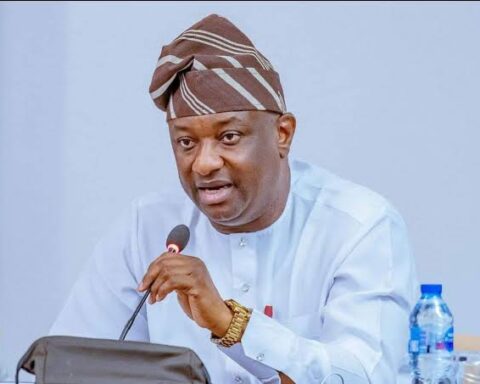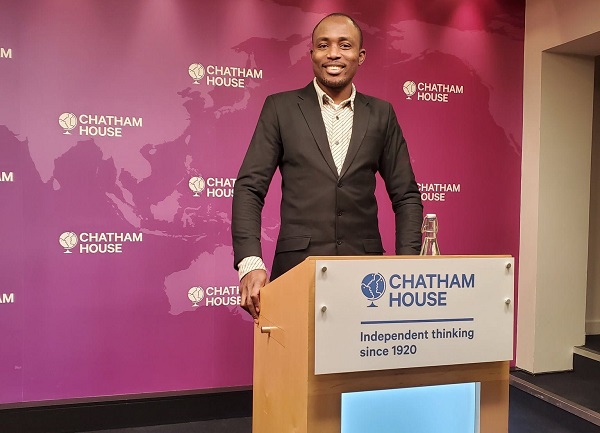
A United Kingdom-based Nigerian and member of the Royal Institute of International Affairs (Chatham House), Tunmise Ajiboye, has strongly condemned the confrontation, harassment, and physical blocking of the Chairman of the Independent National Electoral Commission (INEC), Professor Joash Amupitan (SAN), by demonstrators in London.
In a formal press statement made available to journalists on Saturday morning, November 14, 2026, Ajiboye described the incident, which unfolded on Thursday, November 12, outside the Chatham House premises in Central London and near the UK Parliament area, as unpatriotic, disturbing, and a direct affront to democratic norms.
He called on British authorities and law enforcement agencies to launch a thorough investigation into the incident and ensure that anyone involved is held accountable under the law.
Professor Amupitan had traveled to London on Thursday to participate in a policy forum titled “Nigeria’s 2027 Elections: Democratic Trajectory and Regional Stability Beyond the Ballot,” hosted by Chatham House in partnership with the Kimpact Development Initiative.
During the engagement, the electoral chief addressed concerns surrounding Nigeria’s democratic trajectory and ongoing efforts to sanitize the preliminary voters’ register ahead of the 2027 general elections.
Trouble began shortly after the conclusion of the formal session when a group of demonstrators ambushed the INEC Chairman’s vehicle outside the venue.
Protesters surrounded the car, blocked its path, hurled insults, and demanded Amupitan’s resignation amid growing scrutiny over alleged duplicate entries in INEC’s preliminary voters’ register. The INEC Chairman remained inside the vehicle without responding audibly until UK security agents and Chatham House officials intervened to clear the pathway.
Reacting to the development on Saturday, Ajiboye expressed deep disappointment that an internationally respected platform for policy dialogue was turned into a scene of intimidation and mob action.
”As a member of Chatham House, I understand the value of this institution as a space where leaders, policymakers, academics, and citizens exchange ideas freely and respectfully,” Ajiboye said. “Turning its environment into a scene of intimidation and mob action undermines the very principles the institution represents.”
Ajiboye stressed that while citizens have every right to scrutinize public officials, an electoral umpire must be held accountable through established constitutional and democratic channels rather than street harassment ahead of the 2027 general elections.
He warned that resorting to mob action embarrasses Nigeria on the international stage, weakens public confidence in democratic institutions, and creates an atmosphere where violence replaces dialogue.
”Nigeria’s democracy will not be saved by disorder,” Ajiboye added. “It will be saved by credible institutions, responsible citizens, peaceful participation, and respect for the rule of law.” He urged Nigerians in the diaspora to channel their grievances into constructive engagement with INEC, voter education, and lawful advocacy.
Ajiboye’s remarks add to a growing chorus of reactions from political figures and diaspora stakeholders following the London incident. In his statement, Ajiboye aligned himself with former Kaduna Central Senator Shehu Sani, who earlier condemned the confrontation as an unfair attack on an electoral referee ahead of the 2027 polls.
Similarly, a UK-based Nigerian lawyer who attended the Thursday session issued a separate statement on Saturday, November 14, clarifying that the Chatham House dialogue concluded peacefully before a small group staged the demonstration outside.
The lawyer alleged that the individuals were “rented” protesters and insisted that the actions of a handful of people did not represent the broader Nigerian diaspora community in the United Kingdom.
Meanwhile, INEC also issued a statement on Saturday dismissing viral social media claims alleging that Professor Amupitan had tendered his resignation following the London protest, describing the reports as fabricated and misleading.