By Farooq Kperogi
Because human beings are prone to perceive nonexistent patterns, connections and intentional design even in random or unrelated events, a cognitive tendency called apophenia, and because Nigerians have an enduring and justified mistrust of government, I have seen many people question whether the abduction and rescue of pupils and teachers from three schools in the Yawota and Ahoro-Esinele communities of Oriire Local Government Area in Oyo State really happened.
The mistrust is legitimate, but I find the apophenic leap from mistrust to the conclusion that the entire episode was staged a little unsettling.
I am convinced by the available evidence that pupils and teachers were indeed abducted by despicably homicidal terrorists. I have seen no credible evidence that any government paid criminals to stage the spectacle of an abduction and rescue.
Contemporary reporting documented the May 15 attacks, identified abducted children and teachers, interviewed their relatives and recorded the killing of two teachers before the surviving captives regained their freedom.
Terrorist groups have been abducting and killing innocent students for more than a decade and have never needed prompting from politicians to do so. Attributing their heinous crimes to sponsorship by rival factions within the Nigerian political class unintentionally exculpates these scoundrels and converts murderers into mere instruments of political intrigue.
That said, there is no complete clarity about how the pupils and teachers regained their freedom. Government critics have alleged, without evidence, that a huge ransom was paid as a precondition for their release. As I will show later, I doubt this.
But the government’s version of how the pupils and teachers were rescued is not entirely coherent, either.
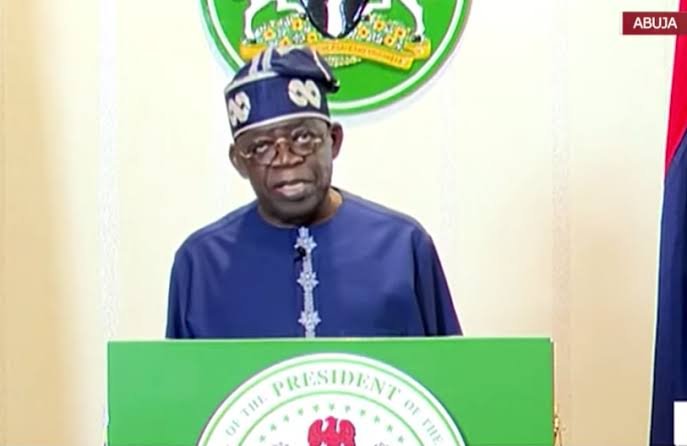
The Presidency initially described the rescue as the outcome of a successful joint military, police and intelligence operation. It said eight suspected kidnappers were arrested, other members of the group were killed and neither ransom nor a prisoner exchange was involved. The abductors had allegedly demanded the release of a detained terrorist leader, but the government said he remained in custody and was being prosecuted.
The Army’s subsequent account was less dramatic than the Presidency’s early language suggested. It did not say troops stormed the camp and physically extracted the hostages during a firefight. Instead, it said a month-long intelligence operation identified the group’s leaders, informants, logistical networks and hideouts. According to the Army, arrests disrupted the group and exerted pressure that “ultimately led the terrorist group to unconditionally release the pupils and teachers.”
Tinubu-owned TVC News, former DSS operative Seyi Adetayo offered a more specific but as yet uncorroborated explanation of the operational modalities of the rescue. He claimed that government security operatives identified and detained some kidnappers’ mothers, wives, children and other associates, sent recordings of those arrests to the abductors and combined coercive pressure with intelligence operations. He also claimed that the terrorists were warned that harm to their captives would bring harm to their relatives.
Based on the available evidence, the most defensible interpretation of what happened is that this was an unusually collaborative, intelligence-driven and coercively negotiated release. It was probably not a conventional battlefield rescue. Nor does it appear to have been a ransom-propelled release.
This actually fills me with hope. It means the government may have found a potentially effective template for disrupting terrorist networks and rescuing their victims without exposing abductees to the indiscriminate violence of a frontal military assault.
But the part of the template worth replicating is its lawful core: interagency cooperation, careful intelligence gathering, the identification of terrorist networks, the disruption of their supply routes and the arrest of culpable collaborators.
There would be no greater evidence for the truth of the government’s account of the Oriire rescue than the successful replication of its methods in unresolved mass-abduction cases nationwide.
The February 3-4 terrorist assault on Woro and neighbouring Nuku communities in Kaiama Local Government Area of Kwara State not only killed scores of people but also led to a mass abduction. UNICEF reported that around 176 women, including pregnant women, and children were kidnapped from Woro.
More than five months later, the victims have not been released, according to the latest public reports. The terrorists have released videos showing women and small children appealing desperately for intervention. They, too, need the collaborative intelligence-gathering energies that security agencies deployed in Oyo.
On May 15, suspected militants abducted 42 children from Mussa Primary and Junior Secondary School and surrounding homes in Askira-Uba Local Government Area of Borno State. Some of the abductees were extremely young. According to the latest available reporting, all 42 remain missing.
There was a separate school attack in Lassa town in the same local government area in Borno on June 29. Gunmen attacked Government Day Secondary School while students were taking examinations. Eight people were rescued, but 36 students and one staff member remain captive. The students comprised 25 girls and 11 boys.
On June 7, in Magamin Diddi village in Maradun Local Government Area of Zamfara State, bandits reportedly invited villagers to what was presented as a peace meeting and then abducted them. The police confirmed that 39 people were taken, although community estimates were as high as 50. The kidnappers reportedly demanded ₦125 million and released some captives to communicate the demand. There has been no authoritative public account of the remaining captives’ release.
Nor should the passage of time cause older victims to disappear from the national conscience. Eighty-nine of the Chibok schoolgirls abducted in 2014 remain officially unaccounted for. Their families have endured more than a decade of promises, occasional discoveries and prolonged uncertainty.
There are many more cases than I have the space to chronicle in this column. Security forces presumably have records of mass abductions, including many that never made the national news. Yet Nigeria has developed a disturbing ritual in which outrage follows an abduction, officials promise decisive action and public attention eventually moves elsewhere while families remain imprisoned in terrifyingly crippling uncertainty.
The true test of the Oyo operation is not the applause it generated after one dramatic success but the number of forgotten captives its methods can bring home. If its intelligence model worked as the government says it did, it should become a national operational doctrine rather than a self-contained public-relations trophy.
Replicating it in Woro, Mussa, Lassa, Magamin Diddi and other communities would simultaneously rescue imperiled citizens, restore public faith in the capacity of the government to perform its primary duty and begin to extirpate a kidnapping economy that has destroyed communal peace and individual peace of mind across Nigeria. Until that happens, Oyo remains an encouraging breakthrough, but not yet a proven national template.