Fr. Dr. Okhueleigbe Osemhantie Ãmos
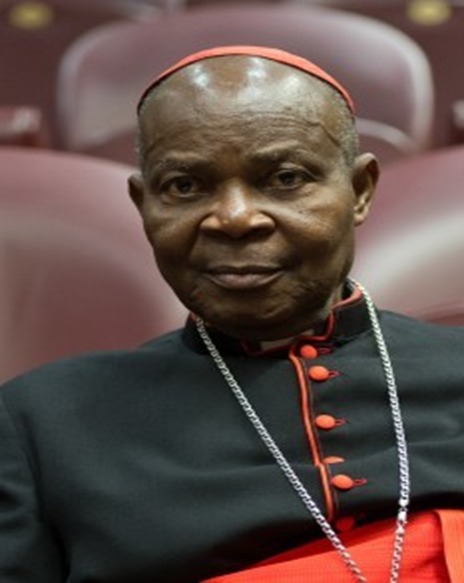
In any serious reconstruction of Nigeria’s democratic genealogy, particularly the protracted struggle that followed the annulment of the 12 June 1993 presidential election, intellectual honesty demands the inclusion of all categories of actors who sustained civic resistance under military authoritarianism. Beyond politicians, labour leaders, journalists, and student activists stood another class of moral authority whose voice, though non partisan, shaped national conscience and constrained authoritarian excesses. Among them, Cardinal Anthony Olubunmi Okogie occupies a central and irreplaceable position.
His exclusion from Nigeria’s June 12 (2026) national honours list therefore raises not a sentimental complaint but a historiographical concern: the incomplete recognition of the full moral architecture of Nigeria’s democratic struggle. The following restatement presents, in documentary and contextual form, key interventions that establish his undeniable contriburions of CARDINAL ANTHONY OLUBUNMI OKOGIE AND THE MAKING OF NIGERIA’S DEMOCRATIC CONSCIENCE
In the immediate aftermath of the annulment of the 12 June 1993 presidential election, Nigeria entered a period of intense constitutional uncertainty. The military administration’s refusal to restore the electoral mandate created widespread civil agitation, international pressure, and institutional fragmentation. Within this context, Cardinal Okogie, then Archbishop of Lagos and one of the most visible Christian leaders in the country, emerged as a stabilising moral voice.
His engagement with political actors during the crisis has been documented in multiple interviews, including his recollection of discussions with Chief Moshood Kashimawo Olawale Abiola. Reflecting on Abiola’s intention to declare himself president during the peak of the crisis, he stated:
“I told him, ‘No way. Don’t do it.’”
This intervention, situated within the highly volatile post annulment environment, demonstrates his role not as a passive observer but as an active participant in attempts to prevent escalation into wider constitutional breakdown. His position reflected a strategic moral caution aimed at preserving national stability while still affirming democratic principles.
During the military regime of General Sani Abacha (1993–1998), Cardinal Okogie became one of the most consistent ecclesiastical critics of authoritarian governance. His public interventions frequently addressed the erosion of judicial independence and the suppression of civil liberties. In a widely reported reflection on Nigeria’s democratic condition, he declared:
> “If the executive disobeys court rulings, and if it intimidates and humiliates the judiciary, then we are back to the era when a military junta made laws and interpreted them without any regard for fundamental human rights.”
This statement, preserved in multiple press accounts, reflects a sustained doctrinal critique of executive overreach and the breakdown of constitutional order.
As President of the Christian Association of Nigeria between 1994 and 2000, Cardinal Okogie presided over one of the most politically consequential periods in the history of Nigerian religious civil society. CAN under his leadership became a structured national platform that consistently engaged the military government on issues of human rights, arbitrary detention, and governance accountability. This institutional positioning gave religious civil society an unprecedented voice during a period when political parties had been dissolved and opposition structures severely weakened.
Cardinal Okogie’s democratic advocacy was also rooted in a consistent theological anthropology derived from Catholic social teaching. His public interventions repeatedly emphasised that political authority must be accountable to moral law and the dignity of the human person. In various interviews across the late military and early democratic transition period, he maintained that governance devoid of accountability collapses into coercion, regardless of its institutional form.
During the darkest phase of Abacha regime, particularly following the execution of Ken Saro Wiwa and the intensified repression of pro democracy groups, Cardinal Okogie’s leadership within CAN provided an important institutional counterweight to state power. His position ensured that the Church remained publicly engaged in national ethical discourse at a time when fear significantly constrained civil society expression.
In later reflections on Nigeria’s political trajectory, he consistently argued that the return to civilian rule in 1999 was not an elite gift but the cumulative outcome of sustained pressure from multiple civic actors. His interpretation situates religious leadership as part of the broader ecosystem of democratic resistance that included NADECO, labour movements, journalists, and international advocacy networks.
In a 2019 public statement reflecting on Nigeria’s governance condition, he reiterated his concern about democratic backsliding:
> “If the executive disobeys court rulings, and if it intimidates and humiliates the judiciary, then we are back to the era when a military junta made laws and interpreted them without any regard for fundamental human rights.”
This continuity of critique demonstrates that his democratic engagement was not episodic or confined to the military era, but extended into the evaluation of democratic governance itself.
Across his episcopal tenure from 1973 to 2012, Cardinal Okogie maintained a consistent public posture that linked moral authority to civic responsibility. His interventions during successive political crises, from the transition failures of Babangida era through the authoritarian consolidation under Abacha, positioned him as a sustained moral interlocutor in Nigeria’s public sphere.
What emerges from this record is not symbolic participation but structural contribution. Nigeria’s democratic survival during the 1990s depended not only on formal political negotiations but on the preservation of civic courage under repression. Religious leaders such as Cardinal Okogie played decisive role in sustaining that courage by legitimising dissent, articulating moral critique, and providing institutional shelter for democratic aspirations.
The conclusion is therefore unavoidable. If the June 12 national honours are intended to recognise those who contributed meaningfully to the restoration and consolidation of democracy in Nigeria, then Cardinal Anthony Olubunmi Okogie belongs squarely within that category. His exclusion does not reflect absence of contribution but a narrowed interpretation of history.
A complete democratic memory must recognise not only those who signed agreements or held office after transition, but also those whose voices, spoken under risk and sustained over decades, helped ensure that such a transition remained possible at all.
Your Eminence, Cardinal Anthony Okogie, congratulations on your threefold celebrations.
Fr Dr. Okhueleigbe Osemhantie Ãmos is a priest of the Catholic Diocese of Uromi and a Lecturer at CIWA, Port Harcourt, Nigeria