By Okagbue Aduba
This summer, Americans got a taste of what the rest of the world has been obsessed with since the 1930s, the thrill, chaos, and alluring magic of football. Or soccer as it is known here.
The United States Soccer Federation, founded in 1913, has spent decades trying to push the sport into the same cultural orbit as baseball, basketball, and American football with limited success. It’s not that Americans don’t play soccer; they do, everywhere. It’s that sponsors and fans have historically been pulled toward other shiny objects perceived to be more rewarding.
To the casual observer, America looked indifferent to soccer before the World Cup. But the sport is far more developed than it seems. In fact, it is more developed than in African footballing nations such as Nigeria, Ghana, Cameroun, Senegal and more. Youth clubs and competitions exist in every corner of America. Kids compete from age 8 through 19.
High schools and colleges field teams across every state and locality of the country. And the professional game, Major League Soccer is thriving, even if it does not follow the European model. Here, the difference is the MLS has no relegation, no promotion, just the same teams battling it out every year, driven mostly by commercial value.
But we are digressing, let’s get back to the summer party, the 2026 World Cup.
Yes, America hosted the tournament once before in 1994, but this time felt different. This time, the U.S. didn’t just host the World Cup; it embraced it. It was loud, flamboyant, over-the-top and, unmistakably American making people forget Canada and Mexico also hosted some games.
A 48‑nation carnival rolled across the country, and even people who had never watched a soccer match got swept up in the fever. We danced. We drank. We learned the Viking Roar with Norway. We wore Scottish kilts and moved to the sound of bagpipes. We clinked giant beer mugs with Germans. Every culture brought something to the table, and Americans, natural-born party lovers, soaked it all in.
Beer ran scarce in Boston bars. Team merchandise flew off shelves across New York, Atlanta, Los Angeles, Dallas. Fans picked teams at random just to join the fun. Someone heard a buzz about a player, bought the jersey, and boom, instant fan. Nigerian jerseys even popped up in stadiums, despite Nigeria not qualifying.
But beneath all the joy and spectacle, something darker was brewing inside world football’s governing body.
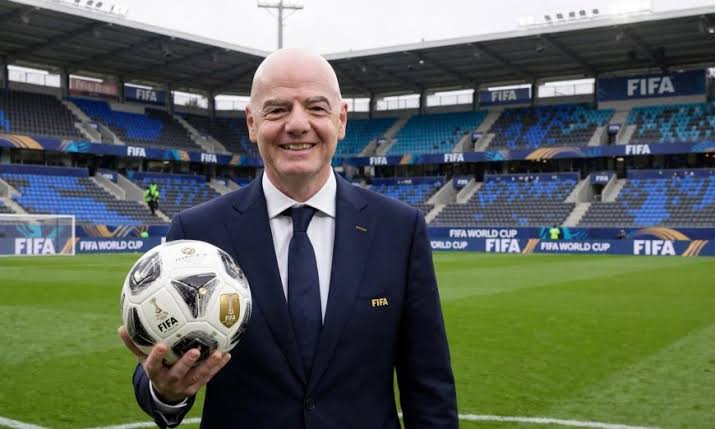
FIFA has become powerful, maybe too powerful. With its expanding portfolio of tournaments, it now earns more money than many of its member nations. This World Cup alone generated over $15 billion, more than double the revenue from Qatar 2022. And with that financial muscle comes political muscle, concentrated in the hands of one man: Gianni Infantino.
And Infantino has been busy but not always in ways that inspire confidence. His critics aren’t upset that he wants to grow FIFA’s wealth. They’re upset because he allegedly tried to do it in secret. Infantino reportedly explored selling shares in a new FIFA enterprise, negotiating quietly with JP Morgan and Thrive Capital, the latter tied to Donald Trump’s in‑laws.
This came on the heels of another controversy: Infantino’s intervention in a red-card decision involving a U.S. player, allegedly at Trump’s request.
And that’s not all. Infantino’s tenure has been riddled with questionable decisions. In December, 2025, he awarded Donald Trump a “Peace Prize,” a move widely seen as dragging FIFA into political waters. The world recognizes only the Nobel Peace Prize, so what exactly was Infantino trying to accomplish? Ironically, the FIFA Peace award was introduced just weeks after the Nobel Committee passed over Donald Trump for the coveted Nobel prize.
Then there are the long-standing allegations around World Cup bidding. Russia 2018 and Qatar 2022 were clouded by corruption claims. The 2034 bid is also widely believed to have been manipulated to guarantee Saudi Arabia’s victory.
Add to these, Infantino’s flashy lifestyle; private jets, constant self-promotion, and a bizarre directive that every World Cup broadcast must cut to a clip of him during matches, and you begin to see why the pressure is mounting.
Whether Infantino survives this crisis depends on how much support he can peel away from UEFA, the European federation determined to remove him. His strongest backing comes from Africa, where many associations rely heavily on FIFA funding and where executives are often susceptible to political and pecuniary influence.
But can Africa save him? Not likely, not without Europe.
Europe supplies most of the world’s top teams. If UEFA boycotts future tournaments, imagine a World Cup without France, Germany, Spain, England, Italy, Croatia, Portugal, Belgium, the Netherlands, Scotland, Denmark, Poland, Norway…
Imagine a World Cup without Mbappé, Haaland, Kane, Lamine Yamal, Olise, and the rest of the global stars. The tournament would collapse. Viewership and Broadcast Rights would collapse. Merchandising would collapse and the entire FIFA commerce would be dead.
Infantino may eventually step down or negotiate a settlement with Europe. Either way, the crisis he created is now threatening the very sport billions of people love.
Okagbue Aduba, is a US Soccer Referee and pioneer Editor of THISDAY daily newspaper.