This northern hemisphere summer smashed climate records. Last year has been confirmed as one of the warmest years on record, signalling the arrival of the era of ‘global boiling’. The world is also witnessing a rise in conflict; 2022 saw the highest number of violent conflicts since the Second World War.
Around the world, these factors are forcing families to give up their ways of living and all their support systems. More than 110 million people are displaced because of conflict, violence, the effects of climate change and disasters.
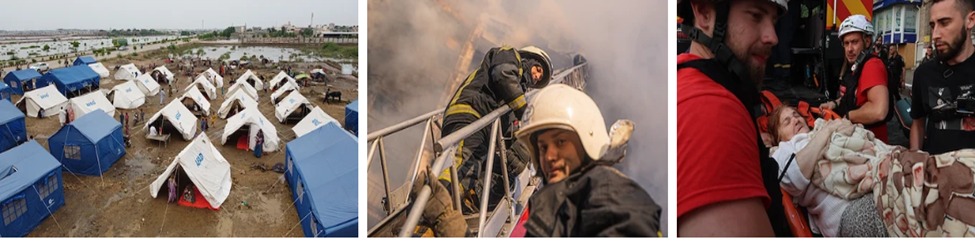
Many of them live in places which suffer a “double burden” of climate vulnerability and conflict, as 70 percent of countries most vulnerable to climate change are also the most fragile.
The numbers are only projected to rise.
By 2050, climate change could displace more than 216 million people within their own countries’ borders.
The threats posed by the climate crisis to peace, security and stability reinforce the urgent need to drastically reduce greenhouse gas emissions and accelerate climate action. Every fraction of a degree of warming matters, particularly for those most vulnerable.
While our world faces crises that threaten the Sustainable Development Goals (SDGs), a stable climate will pay a double dividend with a more peaceful world. UNDP and the United Nations are working towards both, taking valuable opportunities to rebuild trust and mend the social fabric.
The Intergovernmental Panel on Climate Change (IPCC) recognizes that climate solutions can offer new avenues to build peace in conflict-prone regions vulnerable to climate change.
We must invest more time, financing and resources for those in crisis. Delaying now means paying more later. Much more.
The case for investing in climate, peace and security
With every fractional degree in increased global warming, we risk triggering irreversible tipping points and the attendant increases in the cost of adaptation, which are estimated to reach US$500 billion per year by 2050.
In 2021, 90 percent of climate finance went to mitigation, despite the proven returns and strong economic rationale to invest in adaptation. In 2019, public adaptation finance was just $20 billion.
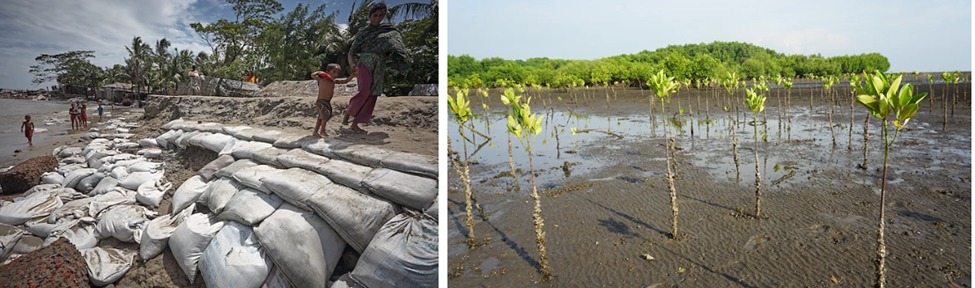
And those who need the most get the least. Between 2014 to 2021, extremely fragile states received $2.1 per person in climate finance compared with $161.7 for those in non-fragile circumstances (including Small Island Developing States).
While both those numbers are much too low, they also contain the seeds of enormous potential and opportunity. So far, climate finance has remained largely blind to fragility and conflict.
“There is a powerful business case to invest in prevention first,” says Catherine Wong, Team Leader for Climate and Security Risk in the UNDP Crisis Bureau. “Addressing climate change has to be part of this. By climate-proofing prevention and peacebuilding and ensuring peace-positive mitigation and adaptation, we address head on two of the most pressing issues of our time—climate action and sustaining peace.”
Through its work, UNDP has proven again and again that even the smallest interventions—such as providing a dignified job and access to energy can have much wider effects.
Renewable energy can be a lifeline which makes all other support possible. In conflict and crisis hit communities, it enables basic and emergency services, from provision of clean water to medical care. It allows small businesses to stay open longer. It gives children more study time and makes communities safer for women and girls.
And by taking pressure off natural resources, it can relieve often overburdened infrastructure, particularly in areas receiving refugees or displaced populations.
“There is a powerful business case to invest in prevention first.”
Supporting climate resilience and conflict prevention
There are valuable, and often underacknowledged, opportunities in the nexus between climate, peace and security. As adaptation and mitigation actions are central to the climate crisis response, we can deploy them to build peace and mend the social fabric of societies.
UNDP is stepping into the breach with a game-changing approach that will unite at-risk communities, give them the resources to create resilient lives, and get us back on track for the 2030 timeline of the SDGs.
UNDP is working at the crossroads of climate and conflict in more than 40 countries, with more than $424 million mobilized for climate change adaptation financing in countries affected by fragility and conflict and another $573 million on the way.
In the Sahel region, increasing water scarcity is putting communities at odds. UNDP is promoting cross border relationships, working to put out flashpoints when they occur, and promoting livelihoods that are consistent with the new reality.
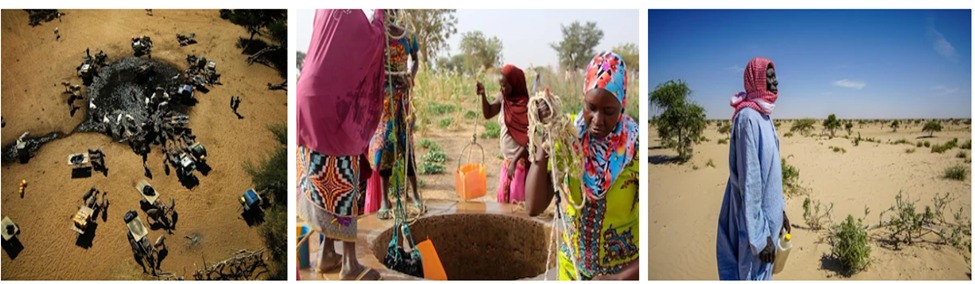
And in South Darfur a groundnut growing and marketing project is providing support and enhancing security for displaced tribespeople with a history of conflict. The initiative is built on a partnership between farmers, UNDP and Darfood, a manufacturing company, and has increased groundnut production, created over 4,800 jobs and reduced inter-community conflict.
“The partnership brought us together. Now we the Rizeigat work alongside the Ma’aliah tribespeople. This shared labour has further healed our wounds and created a bond between our groups. People no longer remember the enmity of the old days,” says Ibrahim, Chairman of a Groundnut Farmers Association in Dar El Salam, East Darfur.
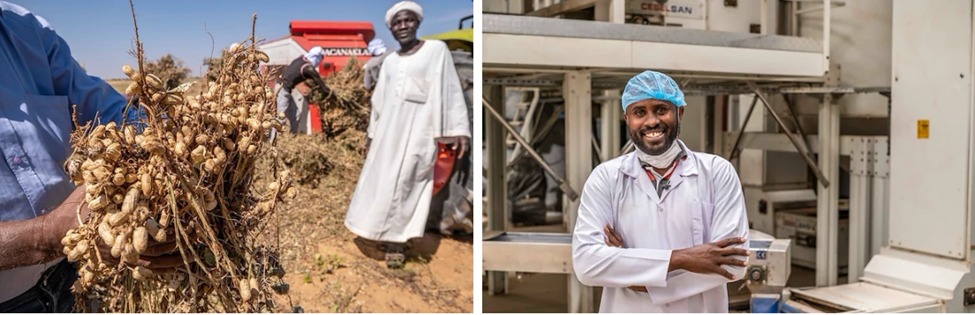
The years-long conflict in Yemen has added to the country’s climate change challenges. UNDP works with Yemeni men and women to maintain food security, giving hope and dignity to those displaced by conflict, such as Haifa, who is now Head of the Milk Production and Collection Centre in Al-Shavahiah village.
“After years of struggle, opportunity arrived at my doorstep,” she says. “The centre has become my source of income; I can now send my children to school and buy medicine for my daughter who suffers from a chronic illness.”
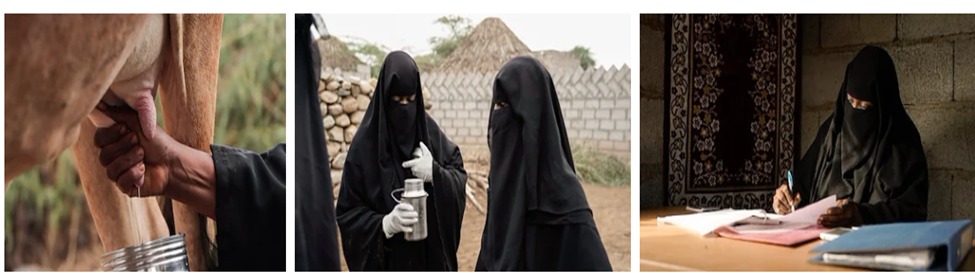
One million people are still displaced within Iraq, six years after the defeat of ISIS. The country is also grappling with severe climate change impacts, from extreme temperatures and drought to dwindling water resources.
UNDP’s long-term partnership is helping the country increase its resilience with programmes to repair the social fabric and to allow families to return home and safely reintegrate.
The climate crisis is moving the global community into uncharted territory where we need new thinking and fresh approaches. UNDP aims to turn challenges into opportunities for lasting, positive change by breaking the vicious cycle of fragility, staying ahead of crises, and ensuring that our development work continues even through the most challenging times.
We are advocating for stronger connections between climate action and conflict prevention and peacebuilding work, prioritizing win-win investments that deliver and sustain peace, addressing the climate-related root causes of conflict, and closing the climate finance gap.