By David Asonye Iheanacho
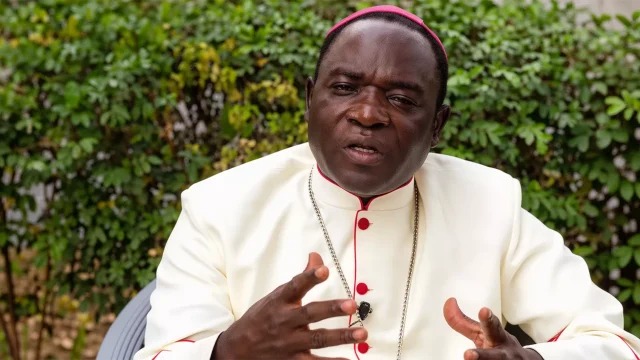
I feel heart-stricken and somehow saddened to have to write this brief essay to you, my beloved Most Rev Matthew Hassan Kukah. As the Bishop of the Catholic Diocese of Sokoto in Sokoto State, you are my superior, my leader, and my shepherd. I am also a Catholic priest and a former colleague of yours in the apostolate of social criticism and mass media communication.
But I feel the weight of my obligation as a writer to pen this essay to you because when things are not quite the way they should be, somebody must volunteer to bell the cat and also be ready and willing to bear the brunt of what follows after. My personal beliefs and antecedents inform me that I am one of those people who would be willing to bell the cat and call a spade a spade. It is this belief of mine, whether real or fake, that qualifies me to write this essay to you.
I believe that an essay of this nature is long overdue because you seem to have become a different person from what we used to know and admire about you. Some of us believe that Your Lordship, Bishop Matthew Kukah, has moved from being a social critic to becoming a sycophant and an ally of those who hold high political offices in Nigeria. And this is totally out of character with a cleric who made his name x-raying the evils of Nigerian society and lampooning the criminal leaders who misused the stupendous resources God blessed Nigeria with. Where has that Kukah gone, many are asking these days?
However, I write this essay with a deep sense of respect and urgency because I know that not a few in Nigeria and overseas may choose to misunderstand and question my motive for doing so. But my motive is pure, and my conscience is clean. I believe that the Matthew Kukah of the 80s and 90s is needed right now more than ever before.
This is because the Matthew Kukah who is now missing in action was the one who helped arouse and ginger the members of the Catholic Bishops Conference of Nigeria of the 90s to vigorously challenge what was evolving as a corrupt military aristocracy that held down the nation and inflicted unbelievable hardship on the masses. There was once Fr Matthew Kukah, who led the fight against the brutal dictator called Sani Abacha. That Kukah galvanized the Nigerian bishops and succeeded in sending the Abacha-loving Apostolic Nuncio to Nigeria, Archbishop Mario Vigano, packing. But now that Nigeria is floundering and dissembling, the great crime fighter-called Fr Matthew Hassan Kukah appears to have changed sides and is now aligned with the criminal oppressors of the masses of Nigeria.
Unlike what we knew of the famous Matthew Hassan Kukah, the new Bishop Matthew Kukah has transformed into one fawning over those holding political offices and receiving vain rewards and worldly accolades from them. The once prophetic Matthew Kukah appears to have vacated his exalted throne in preference for the little stool reserved for praise singers of those in power who are rewarded with crumbs from the exalted table of the mighty. So, the question many of us have been asking privately is: Bishop Kukah, what is happening?
In an occasion I attended recently, the name of Bishop Kukah popped up. Somebody listening to the animated discussion shouted; “I want my former Fr Kukah back. I want the prophetic Fr Kukah and not the praise-singer of the elite known as Bishop Matthew Kukah. Is this present Bishop Kukah a fake clone of Fr Matthew Hassan Kukah of the past?” Another guy in the audience retorted: “does the bishopric ordination turn a prophetic bishop into a charlatan? What has actually happened to the great Fr Matthew Hassan Kukah of old?”
So, my beloved Bishop Matthew Hassan Kukah, instead of joining the choir of those who have persevered chorusing your praises, I have chosen the risky path of critically examining what appears to me to be your metamorphosis into a new personality that makes many of us cringe and feel very uncomfortable. Kindly forgive me if I appear to be overly critical of what I do not fully understand. I am also sensitive to the fact that the seat of your diocese is the headquarters of the Sokoto Caliphate. Where you are serving as a shepherd, the City of Sokoto embodies some constraining forces that only you know and are equipped to handle. So, kindly forgive me if I talk out of ignorance of the forces you are grappling with every day as the Christian shepherd of a Muslim-dominated city.
But your choice as the Bishop of Sokoto was well thought out in my view because if there is one bishop in Nigeria with the skills to maintain a healthy balance between the prophetic apostolate of a bishop and the diplomacy necessary to relate well with the Muslim elite, it is Bishop Kukah. However, the fear of many of us is that the old Matthew Kukah appears to have all but abandoned his former prophetic duties and is now leaning heavily on politics and diplomacy. This has resulted in his transiting whole sale to diplomacy and politics. The new Bishop Kukah now speaks and acts like the crooked politicians of Nigeria who speak from both sides of their mouths. It is for this reason that I am penning this essay.
My Lord Bishop Kukah, long before you were made a bishop of the Holy Roman Catholic Church, I greatly admired you as a writer and a social critic. You always stood out for me as a priest whose courage and insightful essays were worthy of emulation by many priests in Nigeria. From the 1980s, I became an avid reader of your column in the New Nigeria Newspaper of Kaduna. You fitted perfectly well into the genre of critical writing of the 1980s created and sustained by such fearless journalists as the late Dele Giwa, Ray Ekpu, Dan Agbese and Yakubu Muhammed, the founders of the famous Newswatch of the Lagos and western Nigeria axis. You held your own as a writer from the Kaduna axis.
Your column provided us a perspective from Northern Nigeria, which contrasted very well with the perspective we read from newspapers from Lagos and Western Nigeria. Your column and its essays became a must-read for many readers throughout Nigeria.
As a result of the insightful nature of your essays, the Catholic Bishops Conference of Nigeria tapped you to become the secretary general of the Catholic Secretariat of Nigeria in Lagos. There, you became not just a priest journalist from the Archdiocese of Kaduna but a national figure and the spokesperson for the Catholic Church in Nigeria. At the beginning of your position as the secretary general of the Catholic Church in Nigeria, you discharged your responsibility with wisdom and courage. The Catholic Church responded with love and appreciation. Gradually, you became a celebrity priest attracting attention from all corners of Nigeria and beyond.
But gradually, fame and the celebrity associated with being a national figure appeared to catch up with you. Around 2001-2002, I remember dedicating an essay in my former column: Ihenacho Home Truths, in the Nigeriaworld.com, to what appeared as your hobnobbing with the political elite in Nigeria especially the then President Olusegun Obasanjo I reminded you of that essay when we travelled together to Abidjan in March of 2013 for the RECOWA meeting alongside the then president of CBCN Archbishop Kaigama and Bishop John Niyiring You kindly accepted that my description of your relationship with the then President Olusegun Obasanjo was relatively accurate. If I remember correctly, in that essay in the Nigeriaworld.com, I had lamented the fact that you were no longer yourself as you were tending towards sycophancy with some Nigerian political leaders.
Since I penned the Nigeriaworld.com essay, I have watched with controlled horror Your Excellency’s degeneration into what could never have been associated with the Kukah of old. The new Bishop Kukah now goes about accepting what could be regarded as compromising worldly honours that have absolutely nothing to do with his prophetic role as a Catholic bishop and the shepherd of a persecuted Church. The new Kukah now serves as the mouthpiece of the clique denying the horrendous persecution of Christians in Nigeria. This is unconscionable, to say the least. When the whole world was crying and calling out what they described as Christian genocide in Nigeria, it was the new Bishop Kukah who came out to deny it, thereby contradicting his earlier position on the matter.
And notwithstanding the fact that there at his doorstep in Sokoto Diocese the innocent little girl called Deborah Samuel was lynched and murdered for invoking the name of Jesus Christ for helping her pass her examinations at Shehu Shagari College of Education Sokoto, the new Bishop Kukah was not persuaded that the mass murders of predominantly Christians in Nigeria rose up to the level of a genocide. When one compares the new Bishop Kukah with the old Fr Matthew Hassan Kukah of the New Nigeria Newspaper fame, one would be hard pressed not to believe that something has perhaps gone awry in the life of the prophetic Matthew Hassan Kukah.
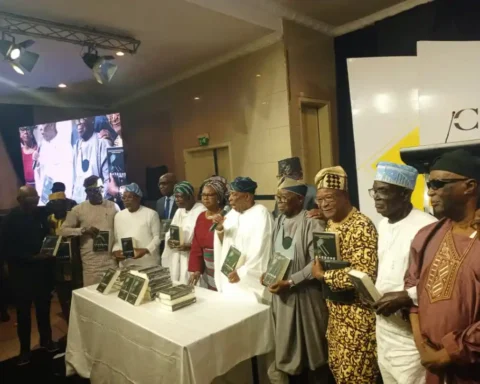
However, the incident that triggered my writing of this essay happened quite recently. The former Nigerian military head of state, Yakubu Gowon, published his belated autobiography; My Life of Duty and Allegiance, and invited the newly transformed Bishop Kukah to serve as the book’s reviewer. As has become his custom in his new posture, Bishop Kukah appeared for the review of Gowon’s book in his full regalia as a Catholic Bishop. I did not have much of a problem with that except that I believe in my conservative faith that the bishopric garb is best suited for a liturgical or para-liturgical function and not in a semi-political rally. But I could be wrong all through. I accept.
In his review of Gowon’s book, Bishop Kukah acknowledged that the book was not based on facts but on the recollections of the 92-year-old Gowon who might be suffering from whatever could be distorting his memory. According to Bishop Kukah, Gowon wrote his books from his heart as documents he could have relied upon were seized during the military coup that ousted him, or the documents were destroyed by fire in his house. Bishop Kukah failed to note that Gowon’s autobiography was completely defective from the get-go. The book that is based on the faded and distorted memory of a 92-year-old man could only amount to a work of fiction. Notwithstanding all that, Bishop Kukah staked his vaunted reputation and treated the book as if it contained solid and irrefutable facts.
However, as has happened since Kukah’s highfalutin review, many readers of Gowon’s autobiography have come down heavy against its non-facts and outrageous claims. Imagine Gowon claiming that the bullets fired during the 30-month civil war only struck palm trees and not humans. Imagine him distorting the Aburi Accord that has transcripts and recordings all over the place. But Bishop Kukah in his reviews of the autobiography, was there embarrassing himself and praising lies about the civil war published as a book. What happened to the good old days when priests and bishops, and, in fact, all Christians, could mouth only what is true?
Perhaps one of the most outrageous things Bishop Kukah did during the review of Gowon’s autobiography was to repeat the overly debunked claim that the January 15, 1966 coup was an Igbo coup. He said that while the January 15, 1966 Coup was an Igbo Coup, the July 1966 Coup was a revenge coup. Can you believe that a Catholic bishop of repute is spewing such a known lie against a people who lost almost everything during the civil war? The almost three million people whose lives were snuffed off during the unnecessary civil war deserve that the truth of the war be told at all times, which both Gowon and Kukah appear not to respect.
Bishop Kukah repeated the lie of the January 15, 1966 Coup in spite of the fact that many who witnessed or participated in the coup have long put the facts about the coup straight. Ibrahim Babangida, in his autobiography, A Journey in Service, declared emphatically that January 1966 was not an Igbo coup. Major Emmanuel Nwobosi who was an active participant in the coup, provided the reason for it before he died a few years ago. His confession was widely publicized in the social media and other media channels. It is still available on You Tube channels even till today. Bishop Kukah can not claim ignorance of what Major Nwobosi confessed about the January 1966 Coup almost under oath before he died a few years ago.
Most importantly, the leader of the defunct Biafran government during the war, General Chukwuemeka Odumegwu Ojukwu, in tapes that are all over the social media today, debunked completely any claim that the January 15, 1966 Coup was an Igbo Coup. He simply noted: How could any reasonable person claim that the January 15, 1966 Coup was an Igbo Coup when the general who stopped it in Lagos was an Igbo man known as John Thomas Aguyi Ironsi and the military officer that stopped it in Kano was another Igbo man known as Emeka Odumegwu Ojukwu?
These are irrefutable facts Bishop Kukah should know.
But he chose to parrot an unfounded lie during his review of Gowon’s fiction called his autobiography. All these and many other facts are making many people to ask the question; Bishop Matthew Hassan Kukah; what is happening?
How the mighty is falling!