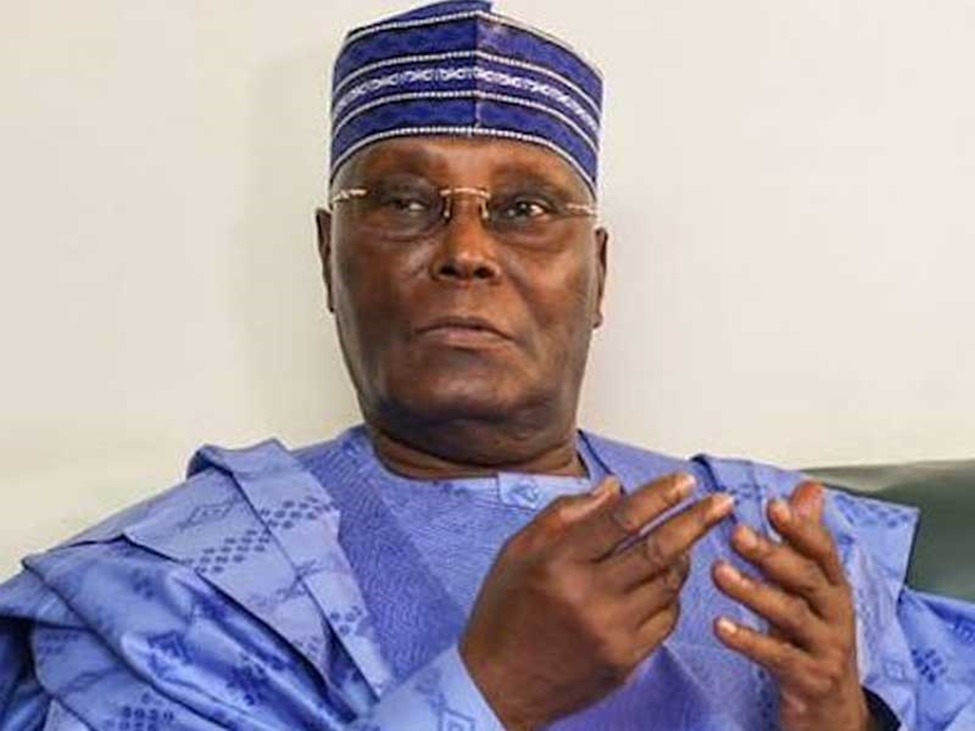
Former Vice President Atiku Abubakar has confirmed plans to visit the United States as part of an international advocacy effort to spotlight what he describes as Nigeria’s worsening insecurity, deepening economic hardship, and declining standards of governance.
The planned visit, disclosed in a statement issued on Sunday by his Media Adviser, Paul Ibe, is expected to include a series of engagements with policy and institutional stakeholders in Washington and other key cities.
According to the statement, Atiku intends to use the trip to present what he termed a candid assessment of Nigeria’s current condition, warning that the country is grappling with a “full-blown internal crisis” that can no longer be ignored or dismissed along partisan lines.
“From the ravaging violence in the North-West and North-East, to the persistent bloodshed in the Middle Belt, and the growing spread of kidnapping and criminality across the country, the Nigerian state is steadily losing its grip on its most fundamental responsibility: the protection of lives and property,” the statement read.
Atiku’s remarks reflect growing concerns within sections of Nigeria’s political and civil society space over the state of national security. Armed banditry, insurgency, communal clashes, and kidnapping for ransom have continued to challenge authorities, particularly in vulnerable regions.
Beyond security, the former vice president is also expected to highlight the country’s economic difficulties, including rising inflation, unemployment, and declining purchasing power among citizens. He is likely to argue that these pressures are compounding social instability and eroding public confidence in governance.
While details of his itinerary remain limited, sources close to the former vice president suggest that his meetings in the United States will involve think tanks, diplomatic circles, and development institutions, where he plans to advocate for increased international attention and support for Nigeria.
Observers say the visit could generate both diplomatic and political reactions back home, especially as it comes amid heightened scrutiny of the administration of President Bola Tinubu. Critics of such international engagements often argue that domestic issues should be resolved internally, while supporters contend that global partnerships are essential in addressing complex security and economic challenges.
Atiku, however, appears to be framing the trip as a necessary step to draw broader attention to what he views as an urgent national emergency.
“This is not about politics; it is about the survival and stability of our nation,” he was quoted as saying. “Nigeria’s challenges have reached a point where constructive international engagement is not just desirable but essential.”
The development also signals Atiku’s continued involvement in national discourse following his role in recent electoral cycles, positioning himself as a prominent voice on governance and policy issues.
Political analysts note that the former vice president’s outreach to international stakeholders may also influence perceptions of Nigeria’s internal situation, particularly among foreign investors and development partners who closely monitor political and economic stability.
However, some government supporters are likely to interpret the move as an attempt to internationalize domestic political disagreements, a strategy that has historically generated mixed reactions in Nigeria’s political landscape.
As preparations for the visit continue, attention will be focused on the outcome of Atiku’s engagements and whether they translate into concrete international responses or policy shifts.
For many Nigerians, however, the core issues raised, security, economic stability, and effective governance, remain immediate concerns that demand urgent and sustained action within the country.
Whether Atiku’s international advocacy will catalyze meaningful change or spark further debate at home, his message underscores a growing consensus that Nigeria stands at a critical juncture, facing challenges that require both domestic resolve and strategic global engagement.