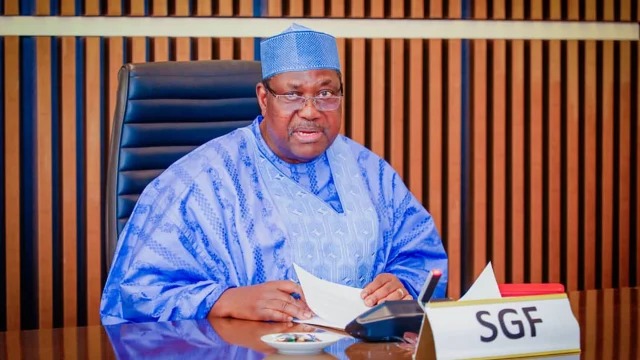
The Secretary to the Government of the Federation, George Akume, has said former Vice President Atiku Abubakar was among political leaders who supported the adoption of rotational presidency in Nigeria following the annulment of the June 12, 1993 presidential election.
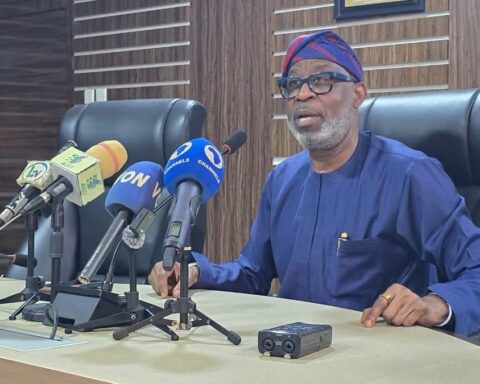
Akume made the remarks on Tuesday during a World Press Conference held in Abuja as part of activities commemorating Nigeria’s 27th Democracy Day anniversary.
According to a statement issued by his Media Aide, Yomi Odunuga, the SGF spoke while responding to questions from journalists on the historical origins of power rotation and the political decisions taken after the annulment of the election believed to have been won by the late Moshood Kashimawo Olawale Abiola.
Akume explained that the annulment of the June 12 election created deep political tension across the country and forced political leaders at the time to take difficult but necessary decisions aimed at preserving national unity, strengthening democratic stability and rebuilding trust among the various regions of the country.
He recalled that prominent leaders within the Peoples Democratic Party held a crucial meeting in Kaduna under the leadership of the late Solomon Lar and Adamu Ciroma to deliberate on the nation’s political future following the crisis triggered by the annulment.
According to Akume, the issue of rotational presidency featured prominently during the discussions as political stakeholders searched for ways to promote inclusion and maintain national balance within the emerging democratic system.
The SGF stated that Atiku was among those who supported the arrangement at the time, alongside other influential political figures who believed that rotating power between different regions would help strengthen national cohesion and reduce political tension.
He said the leaders recognised the need for sacrifice and compromise in order to sustain democracy after years of military rule and political instability.
Akume noted that the decisions reached during that period played a significant role in shaping Nigeria’s Fourth Republic and contributed to the emergence of power-sharing arrangements that have influenced national politics since 1999.
The SGF’s comments came amid ongoing political debates surrounding zoning, power rotation and the future of Nigeria’s presidential succession ahead of the 2027 elections.
Political analysts have continued to differ on whether the principle of rotational presidency should remain an informal political understanding among parties or be fully institutionalised within the country’s constitutional framework.
The June 12, 1993 election remains one of the most significant events in Nigeria’s democratic history. The election, widely regarded as the freest and fairest in the country’s history, was annulled by the military regime led by General Ibrahim Babangida, triggering nationwide protests and prolonged political unrest.
The annulment eventually intensified calls for democratic reforms and contributed to the eventual return to civilian rule in 1999.
Chief MKO Abiola, believed to have won the election, later became a symbol of democratic struggle in Nigeria following his detention and eventual death while campaigning for the restoration of his mandate.
Successive governments have since recognised June 12 as a symbolic date in Nigeria’s democratic journey, with Democracy Day now officially celebrated annually on that date.
Speaking further at the press conference, Akume said Nigeria’s democracy had continued to evolve despite various challenges, adding that the sacrifices of past political leaders and pro-democracy activists should not be forgotten.
He urged Nigerians to remain committed to democratic values, national unity and peaceful political engagement as the country continues its democratic journey.
The event was attended by members of the Federal Executive Council, government officials, political stakeholders and journalists as part of activities marking 27 years of uninterrupted democratic governance in Nigeria.