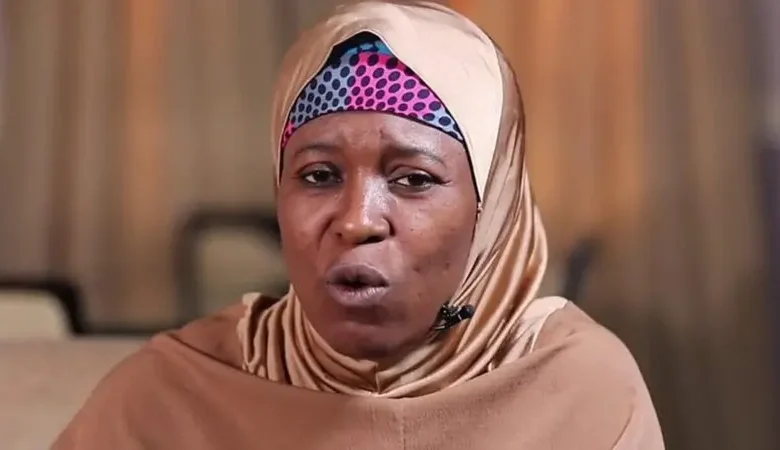
The fragile state of basic education in Nigeria’s capital has come under renewed spotlight as activist Aisha Yesufu issued a strong call to action, urging the Minister of the Federal Capital Territory, Nyesom Wike, to immediately intervene in the ongoing teachers’ strike that has left classrooms deserted across Abuja. The strike, declared by the Nigeria Union of Teachers (NUT), FCT Wing, commenced indefinitely on Monday, April 20, 2026, following months of unresolved disputes between educators and authorities.
At the heart of the crisis are lingering welfare concerns and the government’s failure to implement the recommendations of a committee report submitted as far back as August 2025. For thousands of pupils in public primary schools within the Federal Capital Territory, the consequences were immediate. Classrooms fell silent, school gates remained shut, and learning activities came to an abrupt halt, raising fears among parents and education stakeholders that the disruption could have long-term effects on already strained academic progress. Yesufu, known for her vocal advocacy on governance and social justice issues, took to her X (formerly Twitter) account to express deep concern over what she described as a “preventable crisis.”
Her words carried both urgency and frustration, reflecting the sentiments of many Nigerians who view the recurring strikes in the education sector as a symptom of deeper systemic neglect. “Enough is enough,” she wrote. “When teachers lay down their tools, it is never because they want to. It is because they have been pushed to the wall.” Her statement underscored a critical point often overlooked in public discourse: that industrial actions by teachers are rarely spontaneous. Instead, they are typically the culmination of prolonged grievances, ranging from unpaid salaries and poor working conditions to unfulfilled agreements by authorities. According to union representatives, the current strike stems largely from the non-implementation of a committee report that was expected to address these issues.
Despite repeated engagements and assurances, the report has remained unexecuted, leaving teachers increasingly disillusioned and prompting the drastic decision to embark on an indefinite strike. Education experts warn that prolonged disruptions at the foundational level of learning could have ripple effects across the entire education system. Basic education, they note, forms the bedrock upon which all subsequent learning is built. When it is compromised, the consequences can extend far beyond the classroom—affecting literacy rates, future workforce readiness, and national development. Parents in Abuja have already begun to feel the strain. Many are scrambling to find alternatives for their children, while others worry about the safety and productivity of pupils forced to stay at home indefinitely.
For low-income families who rely heavily on public schools, the situation is particularly dire. Yesufu’s appeal to Wike places the spotlight squarely on the FCT administration, which holds direct responsibility for public primary education within the capital territory. She urged the minister to treat the matter with the urgency it deserves, warning that continued inaction could deepen public frustration and erode confidence in governance. “This is not just about teachers,” she emphasized. “It is about the future of our children and the stability of our society.” While the office of the FCT minister has yet to issue a formal response to her statement, political observers believe that the growing public attention could accelerate efforts to resolve the impasse.
Historically, high-profile interventions have often played a role in breaking deadlocks in labor disputes, particularly in sensitive sectors like education. As the strike enters its first days, the stakes continue to rise. Each passing moment without resolution widens the gap in learning and increases the pressure on both the government and the union to find common ground. For now, Abuja waits, caught between the demands of its teachers, the responsibilities of its leaders, and the uncertain future of its children.