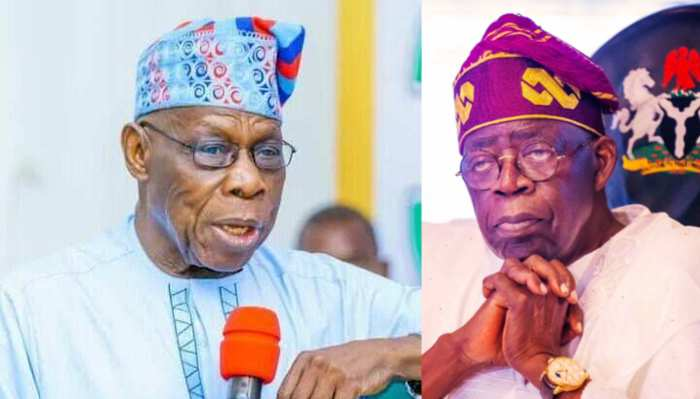
Former President Olusegun Obasanjo has issued a sharp rebuke of the Federal Government’s ongoing borrowing strategy, declaring that public debt poses a far greater threat to the nation than leprosy. Speaking on Friday, October 30, 2026, during the 3rd Ajibosin Annual Symposium at the Olusegun Obasanjo Presidential Library (OOPL) in Abeokuta, Ogun State, the former elder statesman directly tackled President Bola Ahmed Tinubu’s previous assertions defending government debt accumulation.
Rejecting official defenses of the nation’s rising debt profile, Obasanjo argued that unlike physical afflictions, economic insolvency impacts non-consenting future generations. “And for anybody to say debt is no leprosy, is absolute nonsense. Debt is worse than leprosy. Because leprosy destroys only one person.
Debt destroys generations,” Obasanjo declared to the audience of policymakers, academics, and civil society leaders. His remarks were made in direct response to comments by President Bola Tinubu, who had previously defended his administration’s loan acquisitions by maintaining that borrowing was not inherently harmful or akin to “leprosy” as long as the country possessed the capacity to service and repay its commitments.
Questioning the trajectory of Nigeria’s fiscal and monetary decisions over the past four decades, Obasanjo drew on his personal experience as a commercial farmer to highlight the steep depreciation of the domestic currency. “When I started my farm 47 years ago, the naira to the dollar was one naira to $1.85,” Obasanjo recalled.
“What has Nigeria done in 47 years that we now have 1,500 naira to the dollar? What have we done? What do our leaders know? And what do they not know? And from what they know, what can they do for us?” The former president also cautioned Nigeria’s leadership against relying heavily on macroeconomic advice from multilateral financial institutions such as the International Monetary Fund (IMF) and the World Bank.
He noted that these organizations were established prior to Nigeria’s independence and urged Nigerian officials not to adopt foreign-designed policies “lock, stock, and barrel” without scrutinizing whether they fit the country’s local socio-economic realities.
“World Bank and IMF were not designed for us. They were not built by us. They were built before we became independent, and those are the people who determine what we do,” Obasanjo stated, calling on national leaders to prioritize tailored domestic solutions.