By Agbafo Ijeoma
Africa’s long-standing demand for permanent representation on the United Nations Security Council (UNSC) received renewed attention during the General Debate of the 81st session of the UN General Assembly, with African leaders calling for reforms to reflect changes in the global political landscape.
The Security Council, established after World War II, initially reflected the geopolitical realities of 1945, when the United Nations had only 50 member states and much of Africa and Asia remained under colonial rule.
The Council was created with 11 members before its expansion to 15 in 1965, while China, France, the Soviet Union, the United Kingdom and the United States retained permanent seats and veto powers. Eight decades later, the UN has 193 member states, including 54 African countries, but no African nation holds a permanent seat on the Council.
African countries, however, are frequently affected by Security Council decisions on conflicts, sanctions, peacekeeping operations and other international security matters, creating what proponents describe as a representation gap.
UN Secretary-General Antonio Guterres, in his opening address, called for reform of the Security Council, describing the continued absence of permanent African representation as unjust and indefensible.
The President of the 81st UN General Assembly, Khalilur Rahman, also called for fairer representation, noting that Africa had remained without a permanent seat despite its significant role in peacekeeping and international security. He argued that reform was necessary to strengthen confidence in the global institution and ensure that its decision-making structures reflected present-day realities.
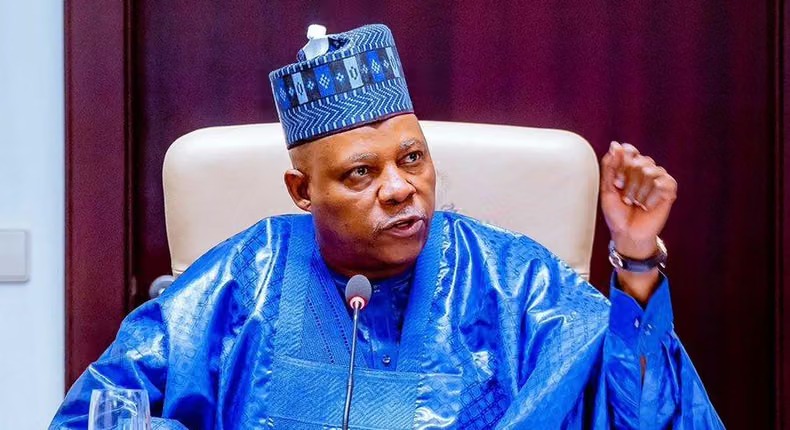
Nigeria’s Vice President, Kashim Shettima, said Africa could not continue to feature prominently on the Council’s agenda while remaining excluded from its permanent membership. He said Nigeria supported the African Union’s Ezulwini Consensus and Sirte Declaration, which call for at least two permanent seats for Africa with the same rights and responsibilities as other permanent members, including the veto for as long as it exists, as well as five non-permanent seats.
Similar positions were expressed by Liberian President Joseph Boakai, Burundi’s President Evariste Ndayishimiye, Kenyan President William Ruto, Ghanaian President John Mahama, South Africa’s Minister of International Relations Ronald Lamola and King Mswati III of Eswatini.
The African leaders argued that permanent representation would address what they described as the continent’s historical under-representation in global decision-making and strengthen the legitimacy of the UN system.
They maintained that Africa was seeking equal participation rather than special treatment, while analysts cited the implementation of the Ezulwini Consensus and continued diplomatic efforts as possible pathways towards reform of the Council.