(held at Metropolitan Club, Victoria Island Lagos On 20th November 2026)
By Bashorun J.K.Randle
As we celebrate the 4oth Anniversary of the Oxford and Cambridge Club, Nigeria the least we can do is to take our cue from the Greek Philosopher Socrates (469 BC – 399 BC) who has thrown a gauntlet (a curved ball);
“The unexamined life is not worth living”
I am highly privileged to be invited as a Guest of Honour and also to propose the toast. My task is not to take Oxford University and Cambridge University to task. Oxford University was founded in 1096 AD and Cambridge University emerged in 1209 AD. Hence, they have been around long enough to merit their enduring success and justify the superlative accolades which they have garnered. In the latest global ranking of universities, Oxford University is accorded 1st position while Cambridge University is ranked 5th.
By way of contrast and counterpoise, the ranking of Nigeria’s leading universities is as follows:
● Covenant University
● University of Ibadan (UI)
● University of Lagos (UNILAG)
● Ahmadu Bello University (ABU)
● Bayero University, Kano (BUK)
● Landmark University
● University of Ilorin (UNILORIN)
● Babcock University
● Osun State University (UNIOSUN)
● University of Nigeria, Nsukka (UNN)
According to QS World University Rankings 2026, no Nigerian university is in the Global Top 100 – not even in the Top 500. Only three Nigerian universities out of 297 made the list at all.
I. University of Ibadan (UI) 1001-1200
II. University of Lagos (UNILAG) 1001 to 1200
III. Ahmadu Bello University (ABU) 1201-1400
For the third time in a row, no Nigerian University has made it into the top 1000 in 2026 universities ranking by QS. No African University is in the Top 100.
The best in Africa:
● University of Cape Town, South Africa – 150th
● University of Witwatersrand, South Africa – 291st
Please forgive me for imposing on you the observation of the late Trinidadian author V.S. Naipaul who attended University College, Oxford and graduated in 1953 with a second-class degree in English.
He was my guest at the weekly Tuesday lunch at this same Metropolitan Club Victoria Island where we are being treated to a sumptuous dinner. That was in 2008 and the President of the club Sir Adetokunbo Ademola (ex-Selwyn College, Cambridge) invited V.S.Naipaul to join him at Table One (the president’s table). What amazed the great author was that to his right was Justice Atanda Fatai-Williams (ex-Trinity Hall, Cambridge); Chief Philip Asiodu (ex-Queen’s College, Oxford); Chief Allison Ayida (ex-Queen’s College, Oxford); Chief Hope Harriman (ex-Christ College, Cambridge) and to his left were Professor Theo Ogunbiyi (ex-St Catherine’s College, Oxford); Professor J.T.K. Duncan (ex-Oxford University); Professor Anya O. Anya (ex-John’s College, Cambridge); Ambassador Oladapo Fafowora (ex-Trinity College, Oxford); and Professor Bolaji Akinyemi (ex-Trinity College Oxford).
Seated at various tables were the likes of Senator Udoma Udo Udoma (ex-St.Catherine’s College, Oxford); Dele Martin (ex-Cambridge University); Fubara Anga (ex-Churchill College,Cambridge); Fela Akoni (ex-Wolfson College Cambridge); and Adegboyega Oluwarotimi Auslem-Peters (ex-Magdalene College, Cambridge and also Oxford University). On Table 4, where I was seated were Chief (Dr) Koleade Adeniji Abayomi SAN (ex-Clare College, Cambridge); Ladi Jadesimi (ex-Oxford University); Dr. Imo Itsueli (ex-Cambridge University) and Louis Mbanefo (ex-King’s College, Cambridge).
There were many more Oxford and Cambridge graduates at the lunch. Perhaps we should specially recognise those members of the Metropolitan Club whose children attended Oxford or Cambridge University. Segun Oki’s daughter; Morin was at Cambridge. Kayode Akindele’s son, Kayode graduated from Oxford. Mr Joachim Lucius Brandler British/Polish (Hon. Consul for Sweden) sent his eldest son David to Queen’s College Cambridge. In addition, two other sons – Marcus and Andrew as well as a daughter, Penelope went to St. Catherine’s College, Cambridge.
V.S. Naipaul was totally intimidated when he learnt that Chief Victor Babaremilekun Adetokunbo Fani-Kayode QC;S.A.N. CON (Downing College, Cambridge) a member of the club who was sitting directly in front of him had a pedigree that was uniquely linked with Cambridge University.
Grandfather: Rev Emanuel Adedapo Kayode-Anglican Priest (M.A. Durham) 1885
Father: Victor Adedapo Kayode (Selwyn College, Cambridge) 1921
Children: Akinola Fani-Kayode (Downing College, Cambridge) and David Oluwafemi Adewunmi Abdulateef Fani-Kayode (Pembroke College, Cambridge)
I also have a somewhat vague recollection of Dr. Gbolahan Elias (ex-Magdalene College, Cambridge); Dr Mofe Atake (ex-Darwin College Cambridge), and Demola Akinrele (ex-Fitzwilliam College, Cambridge) being at the lunch.
V.S. Naipaul was invited by the President of the club to address members. He was lost for words!! All he could manage was;
“I am thoroughly overwhelmed. I have never seen so many Oxford and Cambridge University graduates under one roof anywhere I have been all over the world.”
Anyway, after lunch was over I escorted him to the car that was waiting to pick him up and deliver him to his hotel. His parting words were:
“With so many Oxford and Cambridge University graduates, how come Nigeria is in such a mess?” That is the question we are still grappling with in the year 2026, eighteen years afterwards. Indeed, it takes us straight back to Socrates who said:
“To find yourself, think for yourself.”
Has Nigeria found itself and are Nigerians (especially the graduates of Oxford and Cambridge Universities) thinking for themselves?
At this juncture I must exculpate Dr. Micheal Omolayole who celebrated his 98th birthday a few days ago on 13th October 2026. He attended Corpus Christi College, Oxford from 1953 to 1954. I believe he is the oldest living graduate of Oxford University (or Cambridge University) in Nigeria. At his annual Michael Omolayole Lecture just a few days before his birthday, he spoke eloquently for almost an hour without referring to any notes. He is still very cerebral.
I hope you will invite him to speak to you all next year or the year after when he would be celebrating his 100th birthday.
Among the list of founding fathers of Metropolitan Club, Oxford and Cambridge Universities feature prominently:
● Justice (Sir) Adetokunbo Adegboyega Ademola (Selwyn College, Cambridge)
● Justice (Sir) Louis Nwachukwu Mbanefo (King’s College, Cambridge)
● Justice Charles Dadi Umeha Onyeama (Brasenose College, Oxford)
● Chief Godfrey Kio Jaja Amachree (Pembroke College, Cambridge)
● Justice Atanda Fatayi-Williams (Trinity Hall, Cambridge).
We can afford to pause in order to savor the encounter between our former Head of State General Yakubu Gowon (1966-1975) and the Secretary to the Federal Military Government (1970-1972) late Alhaji Abdulazeez Attah who attended Balliol College, Oxford from 1944 to 1947. He studied PPE (Philosophy, Politics, and Economics).
During a meeting of the Federal Executive Council, General Gowon had casually dropped a clanger;
“My secretary (nodding in the direction of Alhaji Abdulazeez Attah) will deal with the matter.”
A furious Alhaji Abdulazeez Attah insisted on an immediate correction:
“I am not your secretary. I am the Secretary to the Federal Military Government.”
PPE (Philosophy, Politics and Economics) was invented at Oxford University in the 1920’s, specifically to train people to run a country. Not three separate degrees. One degree course over three years – all three woven together:
● Philosophy – logic, ethics and political philosophy.
How to think; how to argue; what is just.
● Politics – British politics, comparative government, international relations,
and political theory. How power actually works.
● Economics – micro, macro, economic history, and public finance.
How money and the state actually work.
Alas, none of Nigeria’s founding fathers – Chief Obafemi Awolowo; Dr Nnamdi Azikiwe and Alhaji (Sir) Ahmadu Bello, the Sarduana Sokoto studied PPE at Oxford University. Our first Prime Minister Alhaji (Sir) Abubakar Tafawa Balewa attended University of London, Institute of Education from 1945 to 1946. However, Chief Obafemi Awolowo sent his son Olusegun to Cambridge University to study law. He was called to the English Bar in 1962. He died in a gruesome motor accident on his way from Ibadan to Lagos on 10 July 1963. He was only twenty-four years old.
It is most gratifying to acknowledge that Fani-Kayode, Udo Udoma and Elias families have each sent three generations to Oxford and Cambridge. My beloved cousin Mr Harry Afolabi Lardner S.A.N was at St John’s College, Cambridge.
Please grant me the indulgence of recalling the exploits of Peter Alexander Ashikiwe Adione-Egon (otherwise known as the “Motor-Park Economist”). He was in the Upper Sixth Form while I was the Lower Sixth, at King’s College, Lagos in 1962. He was a star athlete and a brilliant student. From King’s College, he gained admission to University of Cambridge and graduated in Social Anthropology and Economics in 1966. In the Oxford and Cambridge games he trashed Jeffrey Archer (who was representing Oxford University) in the 100 yards race to Archer’s astonishment.
After leaving Cambridge, Alex pursued a rather unconventional career. He arrived in Lagos right after the 29th July 1966 counter coup. The coup, carried out by Northern military officers in response to the political tensions that followed the January 1966 coup, resulted in the overthrow and killing of Major General Johnson Aguiyi-Ironsi, Nigeria’s first military Head of State, alongside Lieutenant Colonel Adekunle Fajuyi, the Military Governor of the Western Region. The uprising, which began in Abeokuta and spread to Ibadan and Ikeja, also resulted in the deaths of numerous military personnel, particularly those of Eastern Nigerian origin. Lieutenant Colonel Yakubu Gowon subsequently assumed leadership on 1 August 1966.
Alex Egom would have been better served if he had followed the footsteps of Albert Osakwe (St.Peter’s College, Oxford) who studied Chemistry. He excelled not only in athletics but also cricket and football. Osakwe was an Oxford blue. He was the captain of Oxford University Football team. He went on to become Nigeria’s Ambassador to the Congo followed by a stint at the United Nations and eventually Ambassador to Japan. Two of his children – Nneka (Mrs Okeke) and Ikeme also graduated from Oxford University.
As for my encounters with Jeffery Archer (Brasenose College, Oxford 1963 to 1966) who was also an Oxford Blue and President of Oxford University Athletics Club, here is the story. He plagiarized my book.
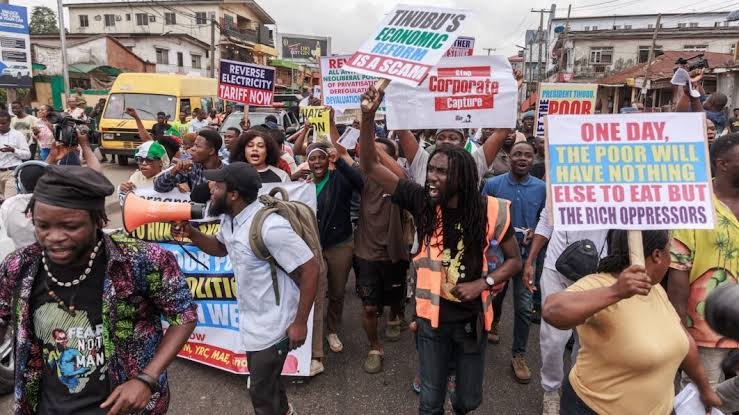
As for V.S. Naipaul, he deserves an answer to the question he raised in 2008 – why is Nigeria in such a mess, and still grappling with poverty in the spite of the abundant supply of Oxford and Cambridge graduates? Take for example the issues of fuel subsidy and the exchange rate of the naira which became an albatross over the neck of the Nigerian economy.
A lethal stranglehold. Was the solution beyond the Oxford and Cambridge club? Unlike the Congo where Patrice Luluma, the first Prime Minister was the only graduate (he attended neither Oxford or Cambridge). Nigeria has always had both human resources and plenty of minerals which would match what is available in the Congo; crude oil, natural gas, timber, iron ore, gold, limestone and agricultural resources.
As far back as the 1960’s, Nigeria would reel out four-year development plans which were anchored on tackling poverty. As one of the planners put it: “GOVERNMENT IS ABOUT COMING TO BLOWS WITH POVERTY”. All the critical minerals which we have suddenly discovered – tin, columbite, tantalite, monazite, coal, limestone, gold, iron ore, crude oil and natural gas were already captured. The best brains from Oxford and Cambridge were part of this landable endeavour. At various times, those plans were anchored by the likes of Dr. Pius Nwabufo Charles Okigbo (1924 to 2000) who undertook his post-doctorial studies at Nuffield College, Oxford.
Both Kunle Oyenuga and Dr. Patrick Dele-Cole who were contemporaries at King’s College, Cambridge were very much involved in charting Nigeria’s Development plans. While Patrcik was ensconced in Cabinet Office in Lagos working directly under Yahaya Abubaka (the brilliant mathematician), Kunle had been posted to Jos where he had a close shave with death.
Dr Titus Okereke rendered the following account in his book: “Our Father’s Land”
“Then the 1966 crisis came. My friend Kunle Onyenuga was told by his Hausa neighbor to leave Jos before 6am otherwise he would kill Kunle. Kunle did not wait. He fled Jos at 3am that night and escaped to the south.”
Let us spare ourselves any further drama and rather focus on the plans which aggregated Nigeria’s vast resources – oil, natural gas, gold, coal, iron ore, limestone, tin, bitumen, lead, zinc, lithium, rare earth and critical minerals. Considering that our population at that time was only a fraction of what it is now, Nigeria could confidently look forward to a prosperous future.
The highlights were:
● Infrastructure
● Diversified economy
● Value addition
● Urban/Rural migration
● Export Drive
● Industrialization
● Agriculture and Agro-Allied industrial Zones
● Wealth Creation
● Youth Employment
● Financial Prudence(no debts).
This endeavour was not exclusively an Oxbridge enterprise. The likes of Chief Olu Falae (Yale University); Chief Olusola Dada (University of Ibadan); Chief John Edoziem (University of Ibadan) and several others too many to mention generously shared their very patriotic vision with the rest of our society. Somehow, we mismanaged it all. The result was a shipwreck. We have wasted fifty years.
We must find space and time to acknowledge the providence of OXFAM, an international organisation committed to combating poverty, inequality and social injustice. Since its establishment in 1942 as the Oxford Committee for Famine Relief, Oxfam has played a significant role in advocating for economic justice, humanitarian assistance and sustainable development across the world.
In Nigeria, where vast natural resources coexist with widespread poverty, Oxfam’s work draws attention to the persistent inequalities that prevent millions of citizens from benefiting from the nation’s wealth. Through its advocacy for transparency, accountability, fair taxation and equitable distribution of resources, the organisation continues to highlight the importance of ensuring that economic growth translates into improved living conditions for ordinary Nigerians.
On a lighter note, for decades David Frost (ex-Gonville and Caius College, Cambridge) kept us spellbound while hosting “That Was The Week That Was” – the satire show that changed British television. He got a Third in English but that was not a barrier to his superlative achievements. Along with Peter Cook, John Bird and John Cleese he galvanized the “Cambridge Footlights” and launched a powerful weapon against government incompetence and the absurdities of the conduct of politicians – with razor sharp wit and humor.
We cannot toast Oxbridge without mentioning Sir Roger Bannister and the historic first sub-four-minute mile. On 6 May 1954, at Oxford University’s Iffley Road athletics track, Bannister achieved what many had long considered almost impossible. He ran one mile in 3 minutes and 59.4 seconds, becoming the first man in history to break the four-minute barrier.
An Oxford-educated medical student, Bannister accomplished this remarkable feat with the assistance of two fellow athletes, Chris Brasher and Chris Chataway, who helped set the pace. Despite challenging weather conditions, his determination and extraordinary final burst of speed secured his place in sporting history.
The achievement was more than an athletics record; it was a triumph of human endurance, discipline and determination. Bannister subsequently pursued a distinguished career in neurology and was knighted in 1975 for his contributions to medicine. His legacy remains one of Oxford’s most celebrated sporting achievements and a powerful reminder that seemingly impossible barriers can be broken.
Many years ago, I was part of a leadership training programme which KPMG had arranged in Oxford. The venue was a magnificent castle. The food was excellent and the wines were of the finest quality. For two weeks we were treated like royalty.
One of us Desmond Abbot- Felsworth (ex-Balliol College, Oxford) was from a very aristocratic Anglo-French family who owned vineyards in the most exotic parts of France, Italy, and Spain. He insisted on advertising his credentials as a wine connoisseur. Every night at dinner, he wore a blindfold and boasted that he could identify the wine being served just by tasting it and rolling it on his tongue.
He always got it right. However, on the last night before our departure the Oxford and Cambridge graduates amongst us decided to teach him a lesson. Desmond as usual walked in blindfolded and asked for the wine. After just one skip, he blurted out: “This is urine !!” The Oxford and Cambridge gays rose in unison and demanded: “But whose urine is it?”
As regards the frequently bandied rivalry between our own late Chief Remi Fani-Kayode and Lee Kuan Yew of Singapore at Cambridge, this has been debunked. There was no real rivalry – they never met as rivals. They were not even at Cambridge at the same time.