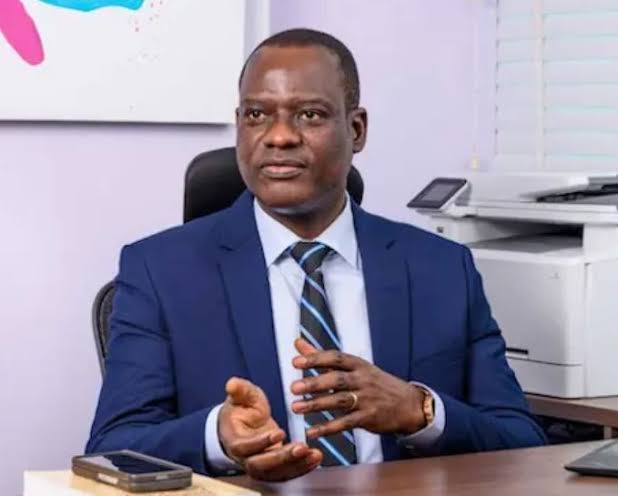
The Minister of Finance and Coordinating Minister of the Economy, Taiwo Oyedele, has warned that Nigeria and the wider African continent are losing an estimated $500 billion annually due to negative narratives, misinformation, and damaging public perceptions.
Speaking during a high-level dialogue session on the morning of Tuesday, November 17, 2026, at the 13th World Public Relations Forum (WPRF) hosted at the Transcorp Hilton Hotel in Abuja, the minister emphasized that distorted public narratives impose a severe “narrative cost” on the nation, resulting in lost foreign investments, capital flight, higher borrowing costs, and missed job creation opportunities.
Addressing delegates during the forum’s morning plenary, themed “Responsible Communication: The Voice of the World” and held as part of the Toni Muzi Falconi Day High-Level Dialogues, Oyedele described public trust as “the most valuable currency for any economy, any enterprise, any society.”
He noted that pessimistic slogans such as “Nigeria is finished” actively undermine investor confidence and drive skilled professionals out of the country.
Oyedele stressed that effective public communication must be anchored on tangible institutional performance rather than mere publicity.
“A courteous spokesperson cannot compensate for an institution that treats customers badly. A policy speech cannot substitute for a promise not kept,” he stated, adding that while communication can explain performance and make it visible, real institutional delivery must come first.
To illustrate how misunderstood economic data can trigger real-world hardship, the minister referenced Nigeria’s October 2026 inflation figure of 14.06 per cent, the lowest recorded in six years.
Acknowledging public skepticism over the statistic given the persistently high retail prices of staples such as bread and milk, Oyedele clarified that disinflation indicates a slower pace of price increases rather than an immediate drop in market prices.
He warned that failing to communicate this distinction creates self-fulfilling price cycles, explaining that when people stop believing in official numbers, they expect prices to rise, and those expectations behave like instructions that prompt traders and producers to mark up goods in advance.
He further cited how deliberate misinformation surrounding recent tax reforms sparked widespread panic among small business owners, many of whom were unaware they had been exempted because falsehoods drowned out official facts.
While affirming that citizens possess the democratic right to criticise government failures and demand accountability, Oyedele urged media organisations, broadcasters, and social media influencers to reject sensationalism.
Warning that digital algorithms often incentivise anger over accuracy, noting that “outrage pays” while “correction does not”, he challenged information gatekeepers to verify claims before amplifying them and to hold both positive and negative reports to the same standard of proof.
At the same time, he cautioned government officials against attempting to paint an unrealistic picture of the country, asserting that authorities would not pretend Nigeria is a paradise, but would instead communicate realities as they are.
Other prominent speakers and panelists at the Tuesday morning session reinforced the minister’s message on institutional transparency and accurate reporting.
Speaking on the same panel, the Chairman and Chief Executive Officer of United Nigeria Airlines, Prof. Obiora Okonkwo, argued that radical honesty remains the strongest reputation management strategy for corporate entities.
Using aviation disruptions as an example, Okonkwo urged airlines to openly disclose operational realities, such as bird strikes or technical issues, rather than withholding facts out of fear of passenger backlash.
Also addressing the forum alongside the ministers, the Comptroller-General of the Nigeria Customs Service, Bashir Adewale Adeniyi, advocated for proactive and responsible communication across border and regulatory agencies to eliminate ambiguity and build stakeholder trust.
Meanwhile, the Minister of Information and National Orientation, Mohammed Idris, who is serving as the Coordinating Minister and host for the weeklong global gathering running from November 15 to 22, 2026, underscored Nigeria’s commitment to championing ethical communication standards across the more than 126 participating countries.
Concluding his remarks, Oyedele urged public relations practitioners to embed themselves early in the policy formulation process, citing the phased, stakeholder-engaged rollout of recent customs and trade reforms as a model, to ensure that citizens’ lived experiences match official commitments.