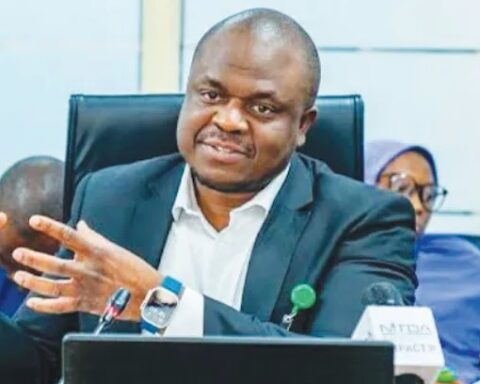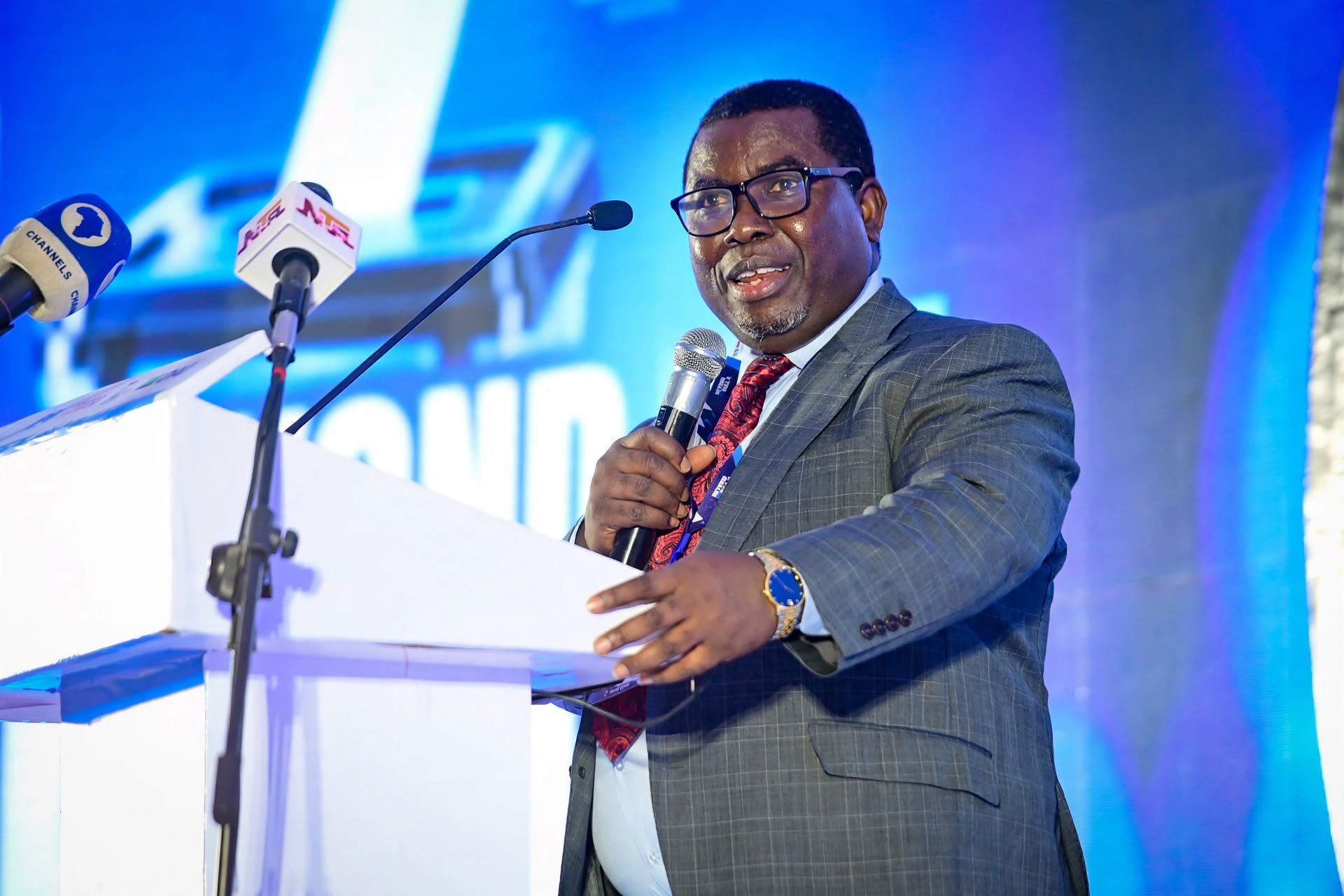
The Chairman of the Independent National Electoral Commission (INEC), Prof. Joash Amupitan, SAN, has appealed to Nigerians to trust his leadership to deliver a free, fair, credible, and inclusive general election in 2027, vowing that the Commission will not fail the nation.
Prof. Amupitan gave the assurance on Thursday, November 12, 2026, during a high-level panel discussion held between 2:00 PM and 3:30 PM GMT (3:00 PM – 4:30 PM WAT) at Chatham House, London, United Kingdom. The event, convened in partnership with the Kimpact Development Initiative (KDI), was themed “Nigeria’s 2027 Elections: Democratic Trajectory and Regional Stability Beyond the Ballot”.
Addressing concerns over public skepticism trailing previous electoral cycles, the INEC Chairman acknowledged that the controversies surrounding the 2023 general elections created a significant trust deficit for the electoral body, damage he admitted the Commission has not yet fully recovered from, though his administration is actively working to reverse it.
”Why must Nigerians trust me? Nigerians must trust me because, number one, I have conducted off-cycle elections, and observers agree that the recent election in Osun State marked a clear improvement,” Prof. Amupitan told the international audience. “Every election is a lesson. The 2023 election was a great lesson for Nigeria, and the one we had in Anambra was another.”
Pointing to his track record since assuming office in October 2025, he cited the peaceful conduct of off-cycle governorship elections in Anambra, Ekiti, and Osun states, the Federal Capital Territory (FCT) Area Council polls, and 16 legislative by-elections as concrete evidence of INEC’s renewed operational capacity.
Dispelling fears of political interference, Prof. Amupitan stressed that his allegiance lies strictly with the Nigerian people and the law, firmly ruling out accepting any political appointment from the presidency or any other authority after completing his tenure.
He declared that his loyalty is solely to the Constitution of the Federal Republic of Nigeria and the Electoral Act, adding that every constitutional institution, including the Presidency, the National Assembly, and state governors, owes its primary loyalty to the Constitution and the rule of law.
To prevent a repeat of past technological and operational failures, the INEC boss detailed a comprehensive set of new safeguards that have been woven into the Commission’s preparations.
He explained that INEC identified collation centres as a major vulnerability during past polls and has now introduced strict technical validation checks to ensure that any polling unit results failing accuracy verification are automatically blocked from being uploaded to the INEC Result Viewing Portal (IReV).
Alongside this digital upgrade, the Commission has reduced the number of voters assigned to each Bimodal Voter Accreditation System (BVAS) device from 1,250 to 850 to accelerate accreditation on election day, and has scheduled a nationwide mock election for Saturday, November 28, 2026, to test-run these upgraded systems ahead of the main polls.
Furthermore, following statutory verification procedures and an independent forensic review, INEC has purged invalid records from the national voter register and resolved localized registration disputes, including allegations of irregular voter spikes in Ebonyi State, in accordance with the Electoral Act.
Meanwhile, back at the Commission’s headquarters in Abuja on the same day, INEC confirmed that it had begun deploying non-sensitive election materials across states in preparation for the polls, while noting that it expects to receive its remaining election funding before the end of November 2026.
Prof. Amupitan also used the London forum to reaffirm the official 2027 election timetable, reminding stakeholders that the Presidential and National Assembly elections are scheduled for Saturday, January 16, 2027, followed by the Governorship and State Houses of Assembly elections on Saturday, February 6, 2027.
Concluding his remarks, the INEC Chairman urged young Nigerians to remain actively engaged in the democratic process and resist voter apathy. Warning that misinformation and digital disinformation remain among the greatest threats to Nigeria’s democracy, he called on citizens to verify information before acting on or sharing it online so as to give the nation’s democratic process the best chance to succeed.
For further context on the legislative oversight surrounding INEC’s preparations ahead of the polls, watch House of Reps Summons INEC Chairman Joash Amupitan Over 2027 Election Readiness, which covers recent parliamentary scrutiny of the Commission’s readiness.