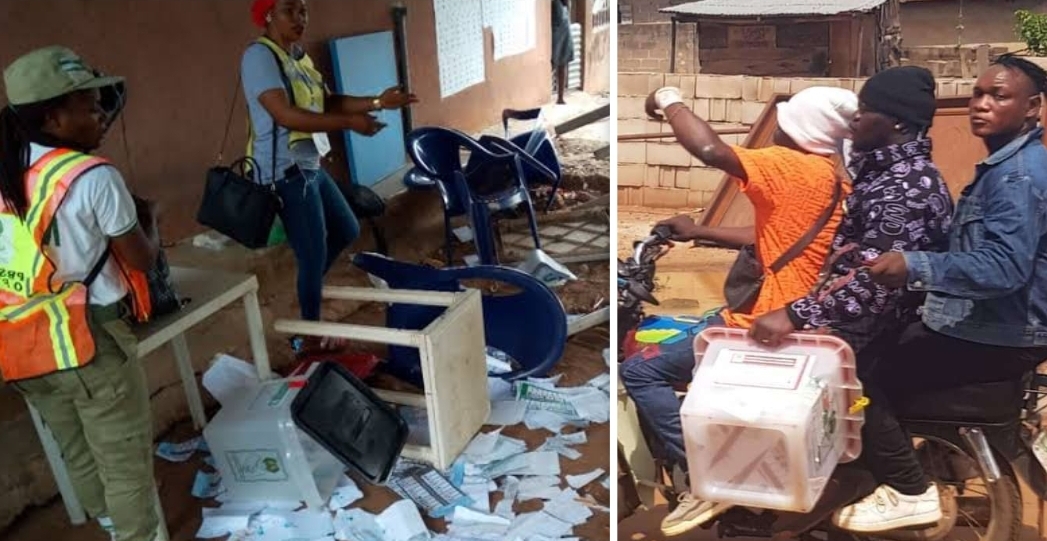
Elections in Nigeria do not just have winners and losers. They have casualties. In every cycle since 1999, we count the dead before we count the votes. In 2023 alone, the Centre for Democracy and Development recorded 109 election-related deaths, and over 400 incidents of violence, ballot snatching and voter intimidation. From burning INEC offices in Ebonyi to gunshots in Surulere, Rivers and Kogi, thuggery has become the dark infrastructure of our politics.
As we approach January 16, 2027, the question is no longer whether thugs will be deployed. We know they will. We have already witnessed incidents of thuggery and violence in Edo and Cross River states against opposing political campaigns. The question is whether we could finally cure the disease instead of treating the bruises.
Just last week, INEC Chairman Prof. Joash Amupitan broke from his prepared speech to re-echo what former President Goodluck Jonathan sounded in 2019: “No political office in this country is worth the blood of a single Nigerian.” He had just been shown a video of a candidate in Kano campaigning with a gun, and another threatening to kill INEC officials with AK-47s. If candidates are already brandishing weapons 100 days to the polls, what will happen on Election Day? Political thuggery survives on three pillars.
First is impunity. Our laws are fierce on paper and feeble in practice. The Electoral Act 2026 prescribes 2 to 3 years imprisonment for ballot snatching, voter intimidation and possession of weapons at campaigns. How many thugs were jailed after 2023? Less than five! The financier sits in Government House, the thugs sit in police cell for two days, then returns home as a hero. When crime pays, crime stays.
Second is poverty as a recruitment tool. A jobless youth in Port Harcourt, Sokoto or Ado-Ekiti is offered N20,000, a shot of tramadol, and a branded T-shirt to “protect votes.” That is not protection. It is employment into criminality. Political godfathers have replaced apprenticeship with thuggery as youth empowerment.
Third is the security compromise. In many states, Divisional Police Officers and local security heads are handpicked or “settled.” Thugs operate under the watch of security agents. In Kogi and Bayelsa in 2019 and 2023, video evidence showed armed men moving with police escorts. When the state looks away, violence becomes strategy. This should be curbed in 2027. The cure for 2027 must be surgical, not superficial in the following ways:
Arrest the owner, not just the dog. INEC and the Inspector General of Police must agree: for every arrest of a thug, investigate the sponsor. Follow the phone calls, follow the money, follow the bus that conveyed them. The EFCC’s new joint financial monitoring team for 2027 already tracks campaign finance. That same team should track payments for violence. Under the new Act, party chairmen and candidates bear vicarious liability for violence by their agents. Enforce it once in Kano, Lagos and Rivers, and the market for thugs will collapse.
2. Create Election Security Courts. The Justice Uwais Electoral Reform Report of 2008 recommended special tribunals for electoral offences. Seventeen years later, nothing has been done to that effect. We cannot prosecute thuggery in regular courts that adjourn for three years. INEC has announced it will deploy 1.5 million security personnel for 2027. Without swift courts, those arrests are photo-ops. We need mobile election courts in each senatorial district sitting within 48 hours of an offence. Judgment must be delivered before the oath of office.
3. Take polling units out of the hands of thugs. Violence happens where stakes are concentrated and oversight is weak. INEC’s plan to expand polling units from 176,846 to over 200,000 and to use upgraded BVAS that transmits results even faster is an anti-thuggery strategy. Smaller crowds per unit are harder to intimidate. More importantly, all results must be transmitted from the polling unit in real-time on IReV. When results are already online, there is no ballot box worth snatching.
4. Name, shame, and ban. INEC must publish a Thuggery Blacklist before February 6. Any candidate who is credibly linked to arming youths should be disqualified and publicly shamed. The Peace Committee led by General Abdulsalami Abubakar should move beyond handshakes. Candidates who sign the peace accord and break it must face public sanctions, including denial of media slots and donor funding. Goodwill has failed. Sanctions may work.
Finally, the citizen’s antidote: Voters must refuse to be intimidated. In 2023, voters in Oshodi, Enugu and Bauchi stood their ground against thugs and insisted on voting. They are the heroes of our democracy. Civil society must organise “Community Shield” – unarmed citizens with phones, recording every intimidation attempt from outside the 300-metre limit, streaming live. When thuggery is streamed, it is scared.
2027 must not add to our mass of widows and orphans because a man wants a second term. Thuggery is not our culture. It is a lazy politician’s substitute for popularity. A man who is loved does not need a gun to win a ward. If we cure thuggery in 2027, we will have cured the single greatest threat to the legitimacy of who governs us on May 29. The blood of Nigerians is not ballot ink. Let us stop writing our election with the blood of innocent citizens.
Dr. Onyekakeyah, former member of The Guardian Editorial Board, is a public affairs commentator and columnist for Daily Query.