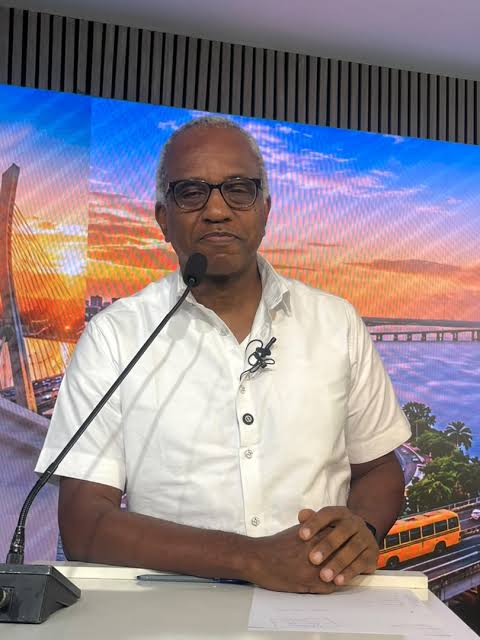
Funso Doherty, the governorship candidate of the Nigeria Democratic Congress (NDC) in Lagos State, has accused vested interests within the state’s informal transport network of intentionally frustrating efforts to modernise public transportation.
Speaking on Sunday, November 8, 2026, during the Lagos Governorship Debate held in Lagos, Doherty addressed the persistent reliance on substandard commercial buses and the pervasive influence of informal collection agents, locally known as agberos, across the metropolis.
The debate was organized by the Nigeria Debate Consortium, a coalition comprising Channels Television, TVC News, The PUNCH, TheCable, and Vanguard Newspapers.
During his session, Doherty argued that the state’s failure to overhaul its public transit network is deliberate rather than accidental. He noted that thousands of unsafe, un-roadworthy commercial buses continue to operate daily without comprehensive systemic upgrades because key beneficiaries profit directly from the status quo.
”Our public transportation system is not modernised. Thousands of rickety buses are moving around. We must ask ourselves: are these what our people deserve? Why has it taken so long to modernise public transportation?” Doherty stated.
”In my opinion, the lack of modern transportation is not by accident. There are vested interests in operating the bus system the way it is. Many of us understand the agbero system; there is an ecosystem around it, and there is no political will to deal with that problem,” he added.
The candidate’s debate remarks build upon a formal press statement issued on Tuesday, November 3, 2026, by the Lagos State Chapter of the NDC.
In that statement, spokesperson structures for the party raised concerns regarding multiple taxation layers and non-standardized levies collected along transport corridors, which increase financial burdens on bus operators and commuters alike.
Doherty pledged that an NDC administration would prioritize a transparent, properly regulated transit framework designed to protect commuter welfare, phase out arbitrary road levies, and expand modern public transit options.
”We will modernise the transportation system because we will be elected by the people, not by an agbero network,” Doherty concluded.