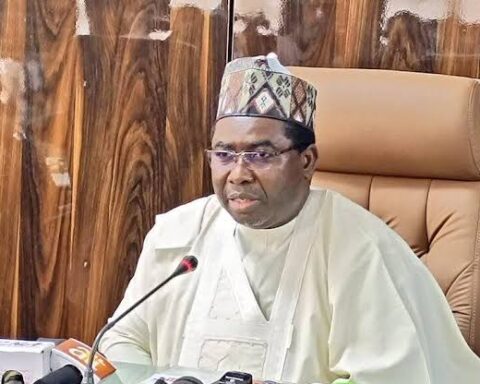
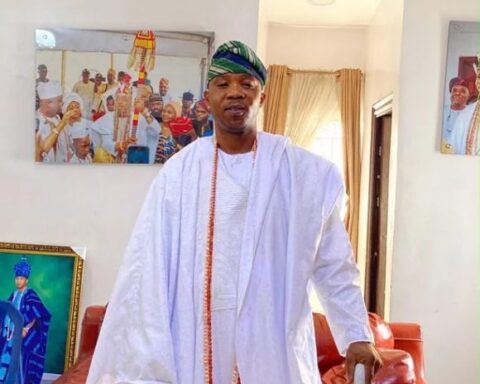
Governorship candidate of the Labour Party (LP), Gbadebo Rhodes-Vivour, alongside Funso Doherty of the Nigeria Democratic Congress (NDC), launched a scathing critique of the Lagos State Government’s waste management infrastructure, describing it as inefficient, overly centralised, and in urgent need of structural reform.
The sharp exchanges occurred on Sunday, November 8, 2026, during a high-stakes governorship debate hosted in Lagos.
Addressing attendees during the evening session, Gbadebo Rhodes-Vivour argued that the state operates a primitive waste system rather than a modern recovery framework.
”Lagos does not have a waste management system; what we have is a pick-and-dump system,” Rhodes-Vivour stated, emphasizing that municipal solid waste collection is heavily centralised, cutting off local government authorities from effective participation.
He added that clogged drainage channels and accumulated refuse directly exacerbate seasonal urban flooding across the metropolis.
Echoing similar concerns, Funso Doherty described the stench and uncollected refuse in several parts of Lagos as a clear systemic governance failure.
”Parts of Lagos are visibly smelly, and that is a failure of leadership,” Doherty noted. He emphasized that the state government cannot rely solely on under-resourced Private Sector Participants (PSP).
“We need direct, large-scale public sector investment in waste collection trucks, modern waste receptacles, and strategic transfer loading stations alongside long-term recycling programs.”
In response to the criticisms, representatives of the Lagos State Government and the ruling All Progressives Congress (APC), led by Deputy Governor Dr. Obafemi Hamzat and Supported by Commissioner for the Environment and Water Resources Tokunbo Wahab, defended the state’s environmental footprint.
State officials highlighted ongoing investments in major transfer loading stations across the state, including facilities in Alimosho (Olusosun and Solus 3), Epe, and Badagry designed to handle thousands of metric tonnes of waste daily.
They cited high population density and rapid urban expansion as core operational challenges while maintaining that structural upgrades remain ongoing.