“Don’t vote for me if…”, Why Nigerians must hold leaders to their own words
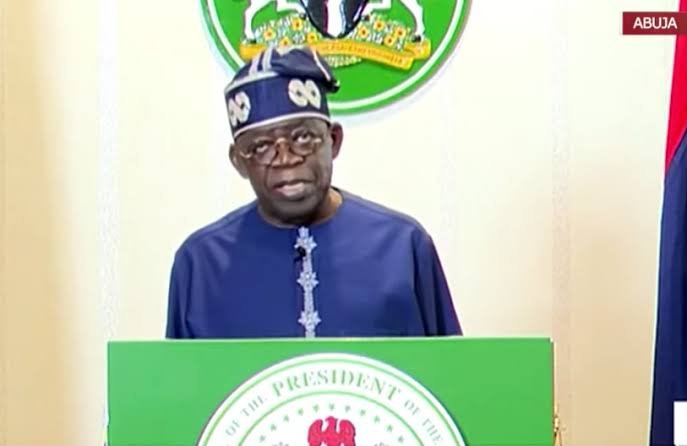
During the 2023 presidential campaign, Bola Ahmed Tinubu made a promise about electricity that Nigerians have every reason to revisit as he prepares to seek another mandate. Speaking to members of the organised private sector in Lagos, he made a declaration that would eventually become an important test of his administration’s political accountability:
“Whichever way, by all means necessary, you will have electricity, and you will not pay for estimated bills anymore. A promise made will be a promise kept. If I don’t keep the promise and I come for a second term, don’t vote for me, unless I give you adequate reasons why I couldn’t deliver.”
These were not the casual assurances of a politician seeking votes. Tinubu was explicitly placing his political future on the scale of his performance, inviting Nigerians to judge him by the electricity supply they received under his administration. He also attached a qualification, promising to provide adequate reasons if he failed. Now, as another presidential election approaches, the question is no longer what candidate Tinubu promised. It is what President Tinubu has delivered, and whether the explanations offered by his government meet the standard he established.
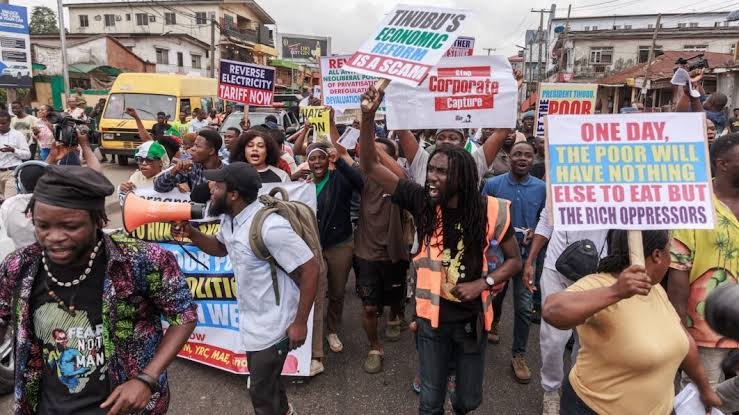
For millions of Nigerians, electricity remains a crushing financial and operational burden. Households continue to pay electricity bills while simultaneously buying petrol to run generators, spending scarce resources on fuel and maintaining equipment that should not be necessary in the first place.
This burden extends far beyond individual households. A small business owner who must buy fuel to keep the doors open has to recover that cost somewhere. The barber raises his prices; the food seller spends more to preserve perishable items; the welder factors diesel costs into his estimates; and the manufacturer passes energy expenses into the final price of every product. Electricity costs contribute to inflation, weaken commercial competitiveness, discourage investment and make locally manufactured goods more expensive. The customer ultimately bears the bill.
The introduction of Band A electricity tariffs was presented as a move towards cost-reflective pricing, with customers expected to receive a minimum of 20 hours of electricity daily in exchange for higher charges. But paying a higher tariff does not guarantee that electricity will be available whenever it is needed. For a business already struggling with rising operating costs, paying premium electricity bills while remaining dependent on a generator is an excruciating double penalty. The consumer is paying more without necessarily escaping the additional cost of self-generation.
When challenged on this record, the APC Presidential Campaign Council has drawn attention to the concluding clause of Tinubu’s promise: that Nigerians should not vote for him again unless he provided adequate reasons for his failure. Its spokesperson, Dele Alake, recently argued that critics had reproduced the president’s pledge without giving sufficient attention to this qualification.
The administration’s defence rests on several interventions: the passage of the Electricity Act 2023, the Presidential Metering Initiative, efforts to settle legacy debts owed to electricity generation and gas companies, and investments in transmission infrastructure. Alake disclosed that the government had established a ₦4 trillion bond programme to settle verified liabilities, with the first two tranches raising more than ₦1.2 trillion. He also claimed that over 1.5 million electricity customers had been metered under the administration’s initiatives in the last three years.
That defence deserves an honest hearing. Ignoring the qualifying condition would amount to a selective reading of the president’s pledge. But acknowledging that qualification does not resolve the debate; it sharpens it.
The president’s qualification about providing adequate reasons was not an instruction to Nigerians to abandon scrutiny. It was a commitment to explain himself. And an explanation must be examined against evidence.
The Electricity Act 2023 was undoubtedly an important policy development. It opened the way for state governments to participate more directly in electricity generation, transmission and distribution, creating opportunities for subnational electricity markets and greater private-sector participation. Several states have since begun establishing their own regulatory frameworks. The metering initiative also addresses a longstanding problem in a country where estimated billing has remained a persistent source of consumer frustration.
Yet the existence of an intervention is not proof that the problem it was designed to solve has disappeared.
Figures published by the Nigerian Electricity Regulatory Commission (NERC) provide a useful indication of the distance still to be covered. Its July–August 2026 metering factsheet puts national metering coverage at 63.10 per cent, with 8,045,565 customers metered out of 12,749,789 active customers. This leaves approximately 4.7 million active customers without meters and still dependent on estimated billing. Progress is evident, but so is the size of the unfinished task.
There is also an important detail in the government’s metering claims that deserves clarification. While Alake attributes more than 1.5 million installations to the administration’s Presidential Metering Initiative over three years, NERC’s October 2026 metering factsheet identifies the core Presidential Metering Initiative as beginning in 2027, with an initial deployment of 750,000 meters. The government should explain how the 1.5 million figure relates to the different metering programmes and installations already undertaken. These figures should be reconciled rather than presented as though they necessarily describe the same intervention.
NERC’s second-quarter 2026 operational and commercial performance report presents another troubling picture. Aggregate technical, commercial and collection losses across distribution companies averaged approximately 36 per cent, against an allowed regulatory target of 16.92 per cent. These losses encompass technical weaknesses in distribution networks, commercial irregularities and revenue collection failures. They are not simply electricity physically disappearing from the grid, but they expose the operational and financial inefficiencies that continue to undermine the market.
No honest observer would suggest that Nigeria’s electricity crisis began with the Tinubu administration. Decades of underinvestment, gas supply constraints, liquidity problems and infrastructure deficits cannot be resolved overnight. A government may inherit a complicated situation, introduce reforms whose benefits will take years to materialise and encounter genuine obstacles along the way.
But citizens must be careful not to confuse an explanation with an accomplishment.
The electricity sector cannot be evaluated by the volume of legislation passed, bonds issued or projects announced. These interventions matter only when they produce measurable improvements. A transmission substation is valuable when it strengthens grid stability and improves supply. A debt-settlement programme matters when it helps generation companies sustain and increase electricity production. A metering framework succeeds when meters actually reach homes and commercial premises, reducing the dependence on estimated billing.
This is where the government’s scorecard must meet the people’s experience. A president seeking another four years cannot ask the electorate to evaluate his intentions alone; he must answer for the conditions under which citizens have lived during the years he has already spent in office.
The Nigerian who has spent another year buying petrol to power a generator, the business owner whose profits are being consumed by the cost of electricity, and the household still struggling with estimated billing are not discussing electricity as a political talking point. They are living with the consequences of a problem that has outlasted several governments.
Tinubu invited Nigerians to hold him to his word. That standard was not manufactured by his political opponents; it was established by the candidate himself. His administration has presented its explanations and pointed to the reforms it considers evidence of progress. Whether those explanations are adequate, and whether the achievements are sufficient to justify another mandate, remain questions for the electorate to determine.
If democratic accountability is to mean anything, election promises must carry consequences. Politicians cannot ask citizens to take their campaign declarations seriously when seeking office and then expect those same declarations to lose their force when the time comes to account for them.
When a president sets the terms by which Nigerians should judge his performance, holding him to those terms is not political hostility. It is the fundamental obligation of citizenship.
Shaakaa can be reached on: shaakaastephanie@yahoo.com