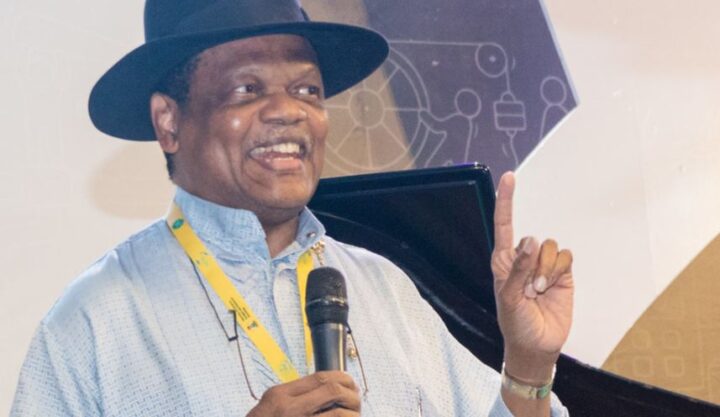
Mr. Atedo Peterside, the President and Founder of ANAP Foundation and Founder of IBTC Bank, has warned that Nigeria’s current macroeconomic reforms are widening the country’s wealth divide by making the rich richer while pushing lower-income citizens deeper into poverty.
Speaking during a televised national broadcast on Channels Television’s flagship morning show, Sunrise Daily, on Tuesday, November 3, 2026, the veteran investment banker delivered a candid assessment of the administration’s economic direction.
Addressing viewers from the Lagos studio at 8:30 AM, Peterside stated that while high-net-worth investors and asset holders continue to benefit from structural fiscal realignments, the vast majority of Nigerians are suffering from an absolute absence of effective social safety nets.
Reflecting on his personal portfolio to illustrate the disconnect between economic statistics and daily life, Peterside acknowledged that his own investments have performed well under the current environment. However, he emphasized that asset growth among the wealthy should never be used as a measure of national economic health.
Pointing to the stark reality on the ground, he stressed that his primary concern lies not with high-net-worth portfolios, but with the 130 to 140 million Nigerians who are poor and growing poorer by the day as soaring food prices, elevated fuel costs, and relentless currency depreciation erode their basic purchasing power.
Peterside further explained that poverty in Nigeria remains heavily concentrated along zonal lines, creating a structural policy disconnect within government circles. Presenting demographic benchmarks, he noted that out of the country’s 36 states, only 12 alongside the Federal Capital Territory recorded poverty rates below the 50 percent threshold.
The remaining states failed to meet this benchmark, including every single state across the Northwest and Northeast regions, as well as four states each in the North-Central and South-South zones.
According to Peterside, this geographic concentration allows policymakers operating out of low-poverty hubs like Lagos and Abuja to perceive the reforms as a success, while failing to account for the millions in high-poverty zones who bear the brunt of the hardship.
Concluding his remarks, Peterside called on the Federal Government to urgently pair its macroeconomic deregulation with targeted, transparent social support programs and strict fiscal discipline before the socioeconomic divide becomes completely unbridgeable.