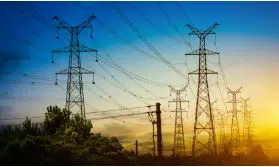
Power sector experts and industry stakeholders gathered in Lagos on Tuesday, November 3, 2026, for the Energy Sector Reform and Expenditure Summit. Convened at the Honeywell Auditorium in Victoria Island, the high-level dialogue addressed Nigeria’s persistent power supply challenges and explored actionable pathways toward energy security.
Key industry figures urged the Federal Government and private investors to accelerate capital deployment into mini-grids, solar technology, and localized power architectures to complement the fragile national grid. Delivering his opening remark, Dr. Victor Odumuyiwa, Director at the University of Lagos Centre for Information Technology and Systems (CITS), highlighted the pivotal role of microgrids in bridging the country’s severe generation and distribution gaps.
”The potential of microgrids and integrated renewable energy systems to deliver sustainable electricity access, particularly to off-grid rural communities and commercial clusters, is no longer theoretical,” Dr. Odumuyiwa stated. “To overcome the recurrent grid collapses and infrastructure bottlenecks, Nigeria must aggressively adopt decentralized power models that offload pressure from the central transmission network.”
Adding a commercial perspective, Miss Esther Eyenobong, Senior Sales Manager (West Africa) at Jinko Solar, pointed to the urgent requirement for rapid infrastructure deployment to address the millions of citizens who remain off-grid. ”With over 85 million Nigerians still lacking reliable access to electricity, utility-scale solar installations and hybrid energy systems represent the fastest, most scalable path forward,” Eyenobong noted.
“We are introducing advanced energy storage and high-efficiency photovoltaic solutions designed specifically to withstand regional operational conditions while reducing reliance on fossil-fuel generators.” Throughout the morning sessions, panelists emphasized the need for streamlined regulatory frameworks under the Electricity Act, lower import tariffs on clean-energy components, and enhanced public-private partnerships.
Stakeholders concluded that diversifying Nigeria’s energy mix through distributed microgrid networks will strengthen commercial productivity, lower operational costs for businesses, and ensure long-term grid reliability.