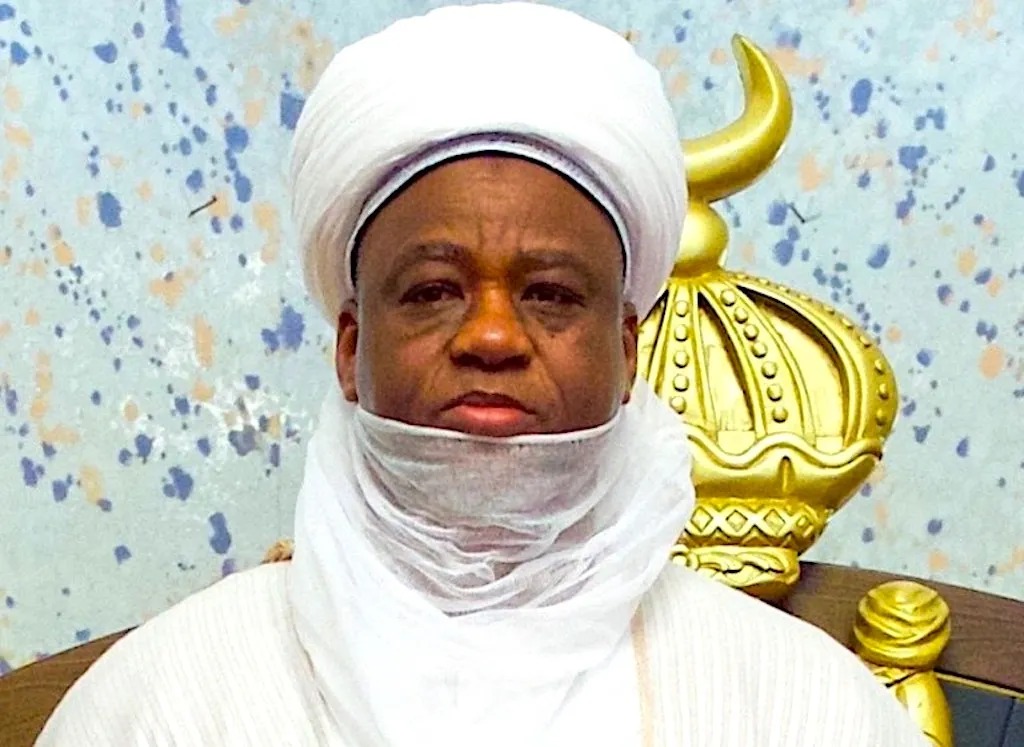
The Sultan of Sokoto, Alhaji Sa’ad Abubakar, has urged Nigerians to harness the founding ideas, educational thoughts and principles of the Sokoto Caliphate to ensure good governance and address societal challenges.
Abubakar, who is also the President-General of the Nigeria Supreme Council for Islamic Affairs (NSCIA), made the call at the closing ceremony of activities marking his 20th anniversary on the throne and the 13th Sheikh Usmanu Bin Fodiyo Week in Sokoto on Monday.
The event was organised by the Sultanate Council and the National Council of Muslim Youth Organisations (NACOMYO).
It had the theme: “The Sokoto Caliphate: An Egalitarian Model for Peace, Justice, Unity and Sustainable Development.”
The Sultan said the Caliphate’s founding ideals centred on quality human relations, respect for human dignity and closeness to Allah, which provided society with serenity, strength, purpose and direction.
He said the values promoted by the founding Caliphate scholars and leaders remained relevant in spite of the social, economic and political transformations that had taken place over the years.
“Indeed, more so, because what replaced the Caliphate was the British colonial rule, which was exploitative and subversive, even if subterranean.
“The nearly 60 years of this exploitative rule have had the misfortune of installing systems and structures that not only continue to benefit the colonial enterprise but also undermine our recovery from colonial morality and mentality,” he said.
Abubakar described the Caliphate as evidence of the capacity of African scholars to build a society, government and economy founded on the rule of law, adding that its legacy could inspire African liberation and development.
He urged Muslim scholars to promote the spirit of brotherhood established by Prophet Muhammad and highlight the Caliphate’s contributions to integrating diverse ethnic groups.
“The message of this brotherhood provides a strong pillar of modern Nigeria’s national integration,” he said, recalling the Islamic teaching that all human beings descended from Adam and were honoured by Allah.
The sultan described himself as “a soldier of Islam and a soldier of peace,” saying the promotion of peaceful coexistence remained central to his traditional and religious responsibilities.
“Before I became Sultan here, I was a soldier. I am still a soldier, a soldier of Islam and a soldier of peace, because what I spend most of my time doing is bringing peace to communities,” he said.
He stressed that Islam did not encourage coercion or forced conversion, urging Muslims to demonstrate the virtues of their religion through good conduct.
The Sultan also appreciated his lieutenants, supporters and volunteers for their continued encouragement and support in carrying the responsibilities of the Sultanate throne over the past 20 years.
In his remarks, Gov. Dauda Lawal of Zamfara congratulated the Sultan on his 20th anniversary on the throne, describing his reign as a period marked by humility, unity, stability, religious tolerance and national cohesion.
Lawal said the Sultan’s fatherly counsel and interventions remained valuable in addressing Nigeria’s socioeconomic and security challenges.
He called on Islamic scholars, traditional rulers, community leaders and youth organisations to promote peaceful coexistence, discourage extremism and restore values of honesty, compassion and respect for human life.
The governor stressed that sustainable peace required not only security operations but also quality education, economic opportunities, moral orientation and community participation.
Similarly, Gov. Ahmed Aliyu of Sokoto State, represented by his deputy, Alhaji Idris Gobir, described the Sultan’s contributions to religious tolerance, peaceful coexistence and national development as remarkable.
Aliyu said the anniversary provided an opportunity to reflect on the intellectual heritage of the Sokoto Caliphate, particularly the teachings of Sheikh Usmanu Bin Fodio, Abdullahi Fodio and Sheikh Muhammad Bello on scholarship, moral reform, social responsibility, justice, accountability and good governance.
Earlier, the guest lecturer, Dr Dawud Abdallah, Director of the Middle East Monitor (MEMO), London, had called for greater recognition of the contributions of African Muslims enslaved in the Americas.
Delivering a lecture titled “The Religious and Intellectual Traditions of the Sokoto Caliphate: Changing the Condition of Africans in the Diaspora,” Abdallah said historical accounts of slavery often overlooked the Islamic heritage and intellectual contributions of enslaved Africans.
He called for reparations beyond financial compensation, including investments in African health and educational institutions, scholarships, technology transfer, psychological rehabilitation for descendants of enslaved Africans, debt cancellation and official apologies from Western countries for the injustices of slavery.