By Ibrahim Owolewa
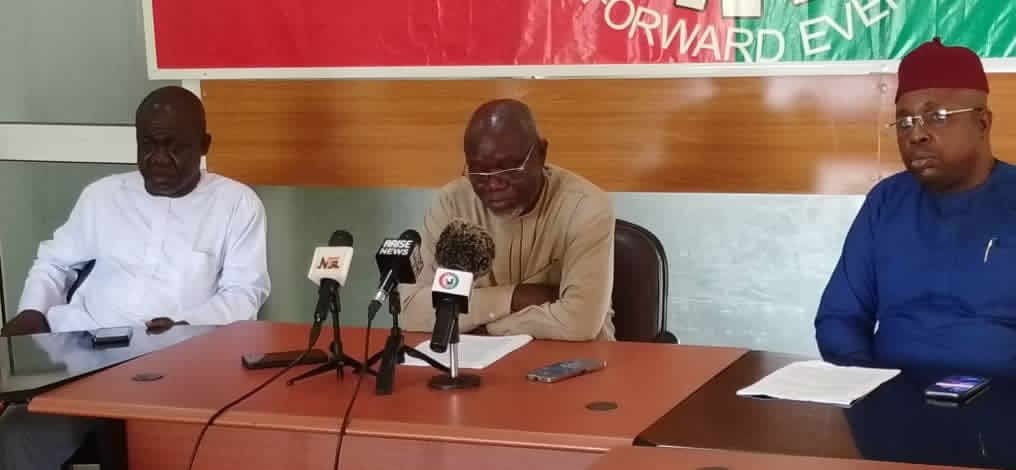
October 26, 2026, may well be a defining moment in Nigeria’s democratic journey. On that day in Abuja, the Nigeria Democratic Congress publicly presented its financial records. It was barely eight months after its formation. According to the figures released by the party, it generated N8.5 billion from nomination form sales, membership dues, levies and supporters’ voluntary contributions. It spent N2.4 billion on party primaries, publicity, administration, staff salaries and other activities. That leaves the new party with a healthy bank balance of over N6 billion.
The party capped the presentation with a promise to render an even more detailed account of its finances at the end of the financial year.
That signals a new dawn in Nigeria’s politics which has long suffered a crisis of transparency and trust. Citizens have grown used to a melody of campaign pledges only to face a frustrating secrecy, misplaced priorities and opaque accounting once politicians settle into office.
A brainchild of Senator Henry Seriake Dickson, the first-two term Governor of Bayelsa State and Senator representing Bayelsa West Senatorial District in the 10th National Assembly, the NDC is bullishly charting a new path, not just for party politics but governance across the polity. And this is thanks largely to the close guidance of Dickson who serves as the party’s National Leader.
The significance of the account presentation is not merely in the figures but in the principle. Transparency is the lifeblood of democracy. Citizens have a right to know how institutions that seek to govern them raise and spend money. Political parties are public institutions seeking the people’s mandate to manage national resources and shape the country’s future. They therefore have an obligation to account for their own finances if Nigerians must trust them to account for the nation’s treasury?
Painfully, political parties in Nigeria have always observed this all-important requirement in the breach.
Governments routinely spend public funds without adequate explanation. Political parties collect billions during election cycles, yet Nigerians rarely know where the money comes from or how it is spent. Internal accountability mechanisms are often weak or non-existent.
This culture has fuelled public cynicism and weakened confidence in democratic institutions. It has reinforced the belief that politics is merely another avenue for personal enrichment.
Seriake Dickson’s NDC looks determined to change that mis-begotten tradition.
As the man fondly called the Ofurumapepe insists, ‘transparency is a duty, not a favour to the public. Every Naira entrusted to a political party should be judiciously deployed and duly accounted for’.
This is why the NDC’s initiative deserves commendation. The standard the party seeks to establish should be welcomed across the political spectrum.
Globally, the law requires political parties to maintain proper financial records and submit reports to the appropriate authorities. In Nigeria, however, compliance is too often observed in the breach. Fiscal accountability is seldom treated as the public commitment that it is.
This has produced distrust, suspicion and persistent allegations of financial misconduct.
The NDC seeks a new order. It wants to birth a new nation.
Dickson, the party’s founder and National Leader, explained that one of the principal objectives behind establishing the NDC was to build “an institution that is bigger and greater than any one of us, an institution that will endure for posterity.”
He added that the party is determined to establish standards of accountability to both its members and the Nigerians.
That philosophy is not new for Dickson.
During his tenure as Governor of Bayelsa State from 2012 to 2020, he gained a reputation for structured governance and institutional reforms. His administration introduced mandatory monthly public briefings, by law, detailing the State’s revenues, federal allocations and expenditures. Those briefings gave Bayelsa citizens regular insight into government finances.
Dickson also encouraged the periodic publication and updating of the State’s audited accounts, promoting a culture of transparent bookkeeping that was unusual in many parts of the country.
In fact, he went ahead to sponsor an Executive bill to Bayelsa State House of Assembly which not only made it mandatory for every Governor of the State to give such public account, but also made it an impeachable offence for any sitting Governor who fails to do so for three consecutive months. And when the State Assembly finally passed the bill into an Act, Dickson immediately accented to it, beginning from himself as the then sitting Governor. He refused to kick the can further down the road.
Those efforts attracted international attention. In June 2017, the British High Commission in Nigeria commended Bayelsa State’s commitment to transparency and fiscal accountability. That recognition acknowledged an administration that understood the value of openness in public finance.
The NDC’s latest initiative therefore appears to be an extension of a governance philosophy Dickson has long espoused: institutions should be stronger than individuals, and public confidence must be earned through accountability.
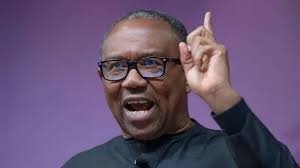
One memorable thing happened at that Abuja event. In attendance were Mr. Peter Obi, the NDC’s presidential candidate, and his running mate, Alhaji Rabiu Kwankwaso, members of the party’s National campaign council, as well as the Chairman and top leadership of the party.
For years, Obi has consistently argued that Nigeria’s greatest challenge is not the absence of resources but the failure to manage them honestly and efficiently. His mantra is fiscal discipline, prudent management of public funds and accountability. The public presentation of the party’s accounts aligns with that broader vision, as well.
This message of transparency and accountability should spread across the Nigerian landscape. And that is why Seriake Dickson is not your everyday Nigerian politician. He comes across more as a patriot, democrat, nation builder and visioner. Which explains why the NDC National Chairman, Sen. Moses Cleopas, continues to describe the Ofurumapepe as ‘the man who saw tomorrow’
Now, Dickson and the NDC have thrown down the gauntlet. Other political parties should pick it up. They owe Nigerians an explanation of how they raise and spend their funds. They should voluntarily publish comprehensive financial statements and embrace public scrutiny instead of dreading it. But of course, they won’t. And that is why NDC remains head and shoulders above them.
Indeed, the Independent National Electoral Commission must be inspired by the Dickson and NDC example and play a more assertive role in enforcing accountability in party finances. It is actually a constitutional requirement from political parties, which INEC is supposed to implement. More than elections, democracy also demands fiscal responsibility even before the ballots are cast.
Financial transparency nips corruption in the bud and strengthens internal discipline across party lines. It reassures members that their contributions are properly managed. Above all, it tells citizens that those seeking power understand their responsibility to the people.
Dickson and his team are drilling that message down. Citizens have, sadly, become accustomed to hearing about missing funds, inflated contracts and unaccounted expenditures. That is not a part of Dickson. And with his DNA rubbing off on NDC, the party is sure to be the real breath of fresh air the polity has been gasping for.
Nigerians have repeatedly been told to trust political leaders without being shown evidence that such trust is deserved. Seriake Dickson has amply shown that evidence.
NDC is saying things do not have to remain that way. The party is setting a higher standard.
October 26 was not simply the day a political party published its accounts. It was the day a young political movement publicly declared that accountability is not optional. It is fundamental.
If that principle takes root, Nigerian democracy will be stronger for it.
Sen. Henry Seriake Dickson, CON, deserves credit for insisting that political leadership must be anchored on institutions rather than personalities. He should be commended for insisting on public trust rather than secrecy.
The NDC has made the first move. If the other political parties will follow, October 26, 2026 will be remembered as Nigeria’s day of a new dawn.
We sure need more of Dicksons in the firmament.
Ibrahim Owolewa wrote from Ilorin, Kwara State