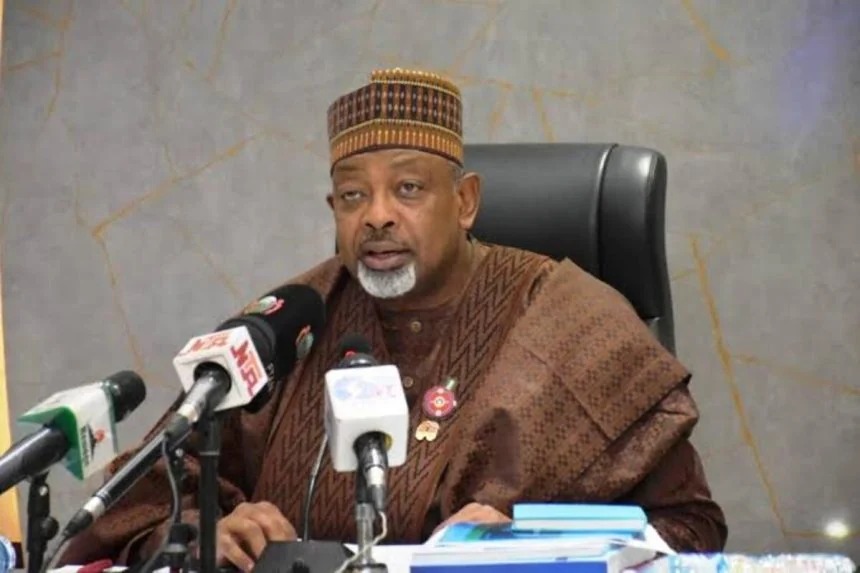
The Minister of Agriculture and Food Security, Senator Abubakar Kyari, has cautioned opposition politicians against weaponizing technical food security assessments for political propaganda ahead of the 2027 general elections.
Speaking via an official press statement released on Monday, November 2, 2026, at the Federal Ministry of Agriculture and Food Security headquarters in Abuja, Kyari emphasized that technical projections must not be distorted to score political points or undermine public confidence.
The minister’s warning followed political commentary surrounding the results of the October 2026 Cadre Harmonisé (CH) food security assessment.
The assessment, a regional framework supported by the Food and Agriculture Organisation (FAO), World Food Programme (WFP), UNICEF, FEWS NET, and the Permanent Inter-State Committee for Drought Control in the Sahel (CILSS), projected that 33.5 million Nigerians could face acute food insecurity during the mid-2027 lean season.
Kyari highlighted that this figure actually represents an improvement compared to the 34.8 million projected for the same period in 2026.
”There is a clear difference between legitimate political debate and deliberately misrepresenting a technical assessment for electoral propaganda,” Kyari stated. “Hunger, malnutrition, and poverty are not campaign materials. When data identifies a risk, our duty is to act on it, not hide from it or turn it into political point-scoring.”
Kyari explained that the drivers of acute food insecurity cited in the report, including climate change, flooding, global market shocks, and high input costs, are complex challenges being actively addressed through target government interventions, farmer support schemes, and local food production drives.
He reaffirmed the Federal Government’s commitment to using the Cadre Harmonisé findings to direct aid and resource allocations to the most vulnerable regions.