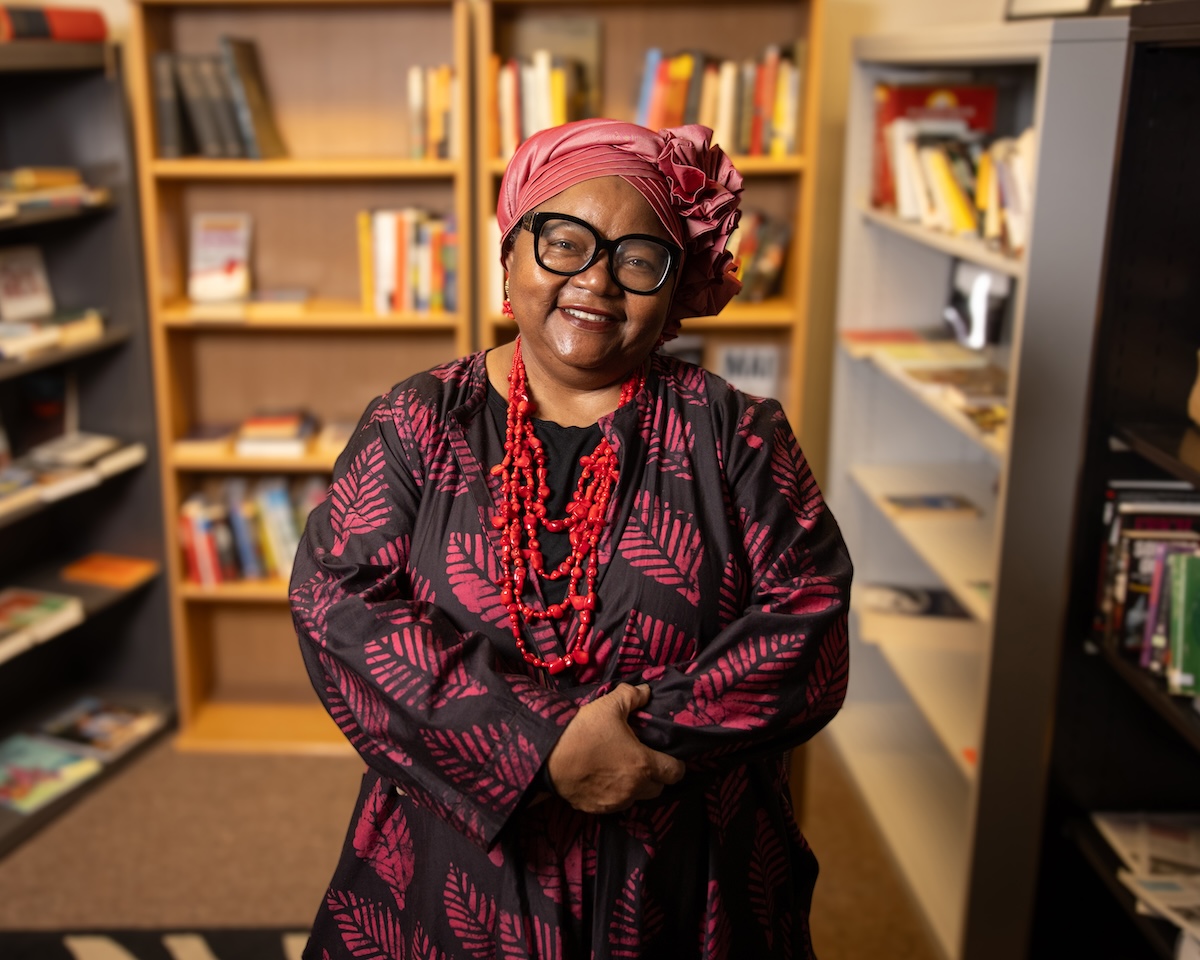
A Nigerian-born United States-based academic, Prof. Mojubaolu Okome, has been selected to serve on the prestigious Fulbright U.S. Student Programme National Screening Committee.
Okome, a Professor of Political Science at Brooklyn College, City University of New York (CUNY), will serve on the committee responsible for the Africa, West/Central 2 region.
The appointment places the Nigerian scholar among academics entrusted with evaluating applications from American students seeking opportunities to study, conduct research and teach abroad.
Her selection also highlights the contributions of Nigerian scholars in the diaspora to international education, and reinforcing the importance of mentorship, inclusion and equal access to academic opportunities.
Brooklyn College announced her selection, describing the appointment as an opportunity to contribute to one of America’s foremost international educational exchange programmes.
Reacting to the development, Okome described the invitation as deeply personal, saying it offered another opportunity to help young scholars overcome barriers she encountered during her academic journey.
The professor recalled that from her doctoral studies at Columbia University, she struggled to navigate academic opportunities without the mentorship and institutional guidance that could have eased her path.
“From my doctoral studies at Columbia onward, nobody opened doors for me,” she said, reflecting on the challenges of building an academic career without adequate support.
She explained that she lacked mentors who could identify opportunities, explain how to pursue them or reassure her that she deserved a place among accomplished scholars.
According to her, those experiences forced her to rely on trial, error, determination and persistence to establish herself in academia.
Okome said many Black scholars, including African academics in the diaspora, would recognise similar experiences of navigating institutions without the necessary mentorship and professional networks.
Rather than allow those difficulties to discourage her, the scholar said she resolved to help others gain access to opportunities that had not been readily available to her.
“So, I made a decision long ago: whatever support I never received, I would give,” she declared.
She described her new Fulbright responsibility as an extension of that commitment, stressing that every applicant deserved serious consideration, fairness and respect.
“Behind every application is a student who has worked hard, sometimes without a guide, to get to this point,” she said.
The professor pledged to approach the screening exercise with diligence and impartiality, recognising the sacrifices and aspirations behind each application.
She, particularly, encouraged students from disadvantaged backgrounds and those who doubted their competitiveness to pursue international academic opportunities rather than exclude themselves.
“To students considering Fulbright, especially those who have never been told they’re ‘Fulbright material,’ apply,” she urged.
Okome also advised prospective applicants to seek guidance, identify experienced mentors and obtain honest feedback about the competitive selection process.
She challenged successful scholars to extend similar opportunities to others, emphasising that academic advancement should create pathways for succeeding generations.
The Fulbright U.S. Student Programme, sponsored by the U.S. Department of State and administered by the Institute of International Education, provides opportunities for graduates and graduate students to pursue academic and cultural exchanges internationally.
National Screening Committee members assess applications and recommend candidates for further consideration by relevant Fulbright authorities, although they do not make the final award decisions.
Okome, an international political economist whose scholarship focuses on Africa, migration, gender, governance and development, has also been recognised for her contributions to global education and African studies.