By Clement Nwankwo
Introduction: Why Are We Here?
Nigeria approaches the 2027 General Elections at an important moment.
For many Nigerians, the dominant feeling is not necessarily optimism or pessimism. It is concern.
Concern about the economy.
Concern about insecurity.
Concern about the cost of living.
Concern about jobs and livelihoods.
Concern about corruption and the quality of public institutions.
Concern about infrastructure and public services.
And, perhaps most importantly, concern about whether elections can actually produce the kind of leadership and governance that citizens desire.
But there is an important question we must confront:
What do we do with our concern?
Do we simply complain?
Do we withdraw from politics?
Do we conclude that our votes do not matter?
Do we vote according to party loyalty, ethnic identity, religion or immediate personal benefit?
Or can we transform our concerns into informed, responsible and effective democratic action?
That is the conversation I would like us to have.
1. The Nigeria we are experiencing
Before we talk about voting, we should honestly acknowledge the reality that many Nigerians experience every day.
The economic pressure
Millions of households continue to struggle with:
* High food and transport costs;
* Pressure on household incomes;
* Unemployment and underemployment;
* Poverty and food insecurity;
* Difficult conditions for small businesses;
* High interest rates and limited access to affordable credit;
* Increasing demands on households and businesses through taxation and other charges.
The macroeconomic picture has improved in important respects. The IMF reports that Nigeria’s reforms have strengthened macroeconomic stability, with growth estimated at 4.0% in 2025 and improved foreign-exchange and fiscal conditions. But it simultaneously notes that poverty and food insecurity remain serious and that conditions remain difficult for many Nigerians. (IMF)
This presents an important distinction:
A country can experience macroeconomic improvement while many households are still experiencing economic pain.
We should therefore ask:
How do we translate macroeconomic stability into improvements that ordinary citizens can actually feel?
2. The cost of living question
For the ordinary citizen, economic policy is ultimately experienced at the level of the household.
It is experienced when a parent goes to the market.
It is experienced when a family pays school fees.
It is experienced when someone fills a vehicle with fuel.
It is experienced when electricity bills arrive.
It is experienced when rent is due.
It is experienced when a young person searches unsuccessfully for employment.
Therefore, economic success cannot be measured only by GDP, foreign reserves, exchange-rate stability or government revenues.
Those things matter.
But citizens also reasonably ask:
When will the benefits of economic reforms begin to translate into better lives?
This is the challenge of moving from stabilisation to inclusion.
The World Bank’s April 2026 Nigeria Development Update makes essentially this point: macroeconomic stability has improved, but household incomes have not fully recovered and poverty remains high. (World Bank)
3. Security: Can we prosper without safety?
Another fundamental concern is insecurity.
Citizens worry about:
* Terrorism and insurgency;
* Banditry and kidnapping;
* Communal and farmer-herder conflicts;
* Attacks on communities;
* Economic disruption caused by insecurity;
* The safety of farmers, traders, businesses and travellers.
Security is not simply a law-and-order issue.
It is an economic issue.
A farmer who cannot safely reach his farm cannot produce.
A business that cannot safely transport its goods cannot thrive.
A community that lives in fear cannot prosper.
The IMF continues to identify domestic security as a significant risk to economic activity and stresses the need for improved security alongside infrastructure and other structural reforms.
So, another question for 2027 is:
What should citizens demand from political parties and candidates about security—and how will we judge their performance afterwards?
4. Infrastructure: The everyday face of government
For citizens, government is often experienced through infrastructure.
A government may talk about reforms, policies and programmes, but citizens encounter government through:
The road they drive on.
The electricity they receive – or do not receive.
The water available to their community.
The public hospital they visit.
The school their children attend.
The public transport system they depend upon.
Infrastructure therefore matters not merely because it is development infrastructure.
It is part of the social contract between government and citizens.
Nigeria continues to face substantial infrastructure bottlenecks, including challenges in the electricity sector. The IMF has specifically identified electricity, infrastructure, agriculture, human capital and security as areas requiring structural reform to achieve more inclusive growth.
5. Taxation and the social contract
Government needs revenue.
There is no serious argument against that proposition.
A country cannot provide quality infrastructure, education, healthcare, security and other public services without adequate public revenue.
But taxation also raises an important question:
What does the citizen receive in return?
If citizens are asked to pay more taxes while businesses face difficult operating conditions and households continue to struggle, government must demonstrate that public revenue is being converted into public value.
The conversation should therefore not simply be:
“Should government tax?”
It should also be:
“How much should government tax, whom should it tax, how should it spend the revenue, and what accountability should accompany taxation?”
That is a legitimate democratic question.
6. Corruption public accountability
Citizens are also entitled to ask:
* How is public money being spent?
* Are public contracts transparent?
* Are government institutions accountable?
* Are public officials subject to effective oversight?
* Are institutions capable of investigating and sanctioning wrongdoing?
* Are citizens able to obtain information about government expenditure?
Corruption is not an abstract problem.
Every naira lost through corruption is potentially a naira unavailable for:
* roads;
* schools;
* hospitals;
* security;
* electricity;
* social protection;
* employment-generating investment.
Democracy therefore cannot be reduced to elections.
Elections choose governments. Accountability determines how governments govern.
7. But let us also acknowledge what is changing
A balanced conversation requires us to recognise that Nigeria is not standing still.
There have been significant macroeconomic reforms since 2023.
These include reforms to the foreign-exchange regime, fuel subsidy policy, monetary policy and public finances. International assessments indicate that these measures have contributed to improved macroeconomic stability, stronger external buffers and better functioning of the foreign-exchange market.
Growth has also remained positive, with the IMF estimating 2025 growth at 4.0.
These are important developments.
But the democratic question is:
How do we move from macroeconomic stabilisation to broadly shared prosperity?
And:
How do we ensure that the costs of reform are not disproportionately borne by ordinary citizens while the benefits remain distant or unevenly distributed?
That is not an argument against reform.
It is an argument for better implementation, social protection, accountability and inclusion.
8. So, what should citizens do?
This brings us to the central question of this discussion.
If we are concerned about Nigeria, what are we going to do about it?
The 2027 elections provide an opportunity, but only if citizens approach them differently.
We should not see ourselves merely as:
Voters.
We should see ourselves as:
Citizens.
There is an important difference.
A voter participates on Election Day.
A citizen participates in democracy before, during and after Election Day.
9. Before the election: Become informed
Citizens should ask:
Who are the candidates?
Not merely:
Which party do they belong to?
But:
* What have they previously done?
* What do they stand for?
* What is their record?
* What are their qualifications?
* What are their priorities?
* Do their promises appear realistic?
* How do they propose to finance those promises?
We should move from:
“Who is our party’s candidate?”
to:
“Who is best positioned to serve the public interest?”
10. Vote on issues, not just identity
Nigeria is a diverse country.
Identity matters to people. Party affiliation matters. Community interests matter.
But democracy is weakened when these become the only basis for choosing leaders.
We should encourage citizens to ask:
What will this candidate actually do about the problems I face?
What is the candidate’s position on:
* Security?
* Jobs?
* Education?
* Healthcare?
* Infrastructure?
* Electricity?
* Cost of living?
* Small businesses?
* Corruption?
* Local government?
* Women’s participation?
* Youth opportunities?
* Institutional accountability?
The question is not simply:
“Who do I like?”
It should also be:
“Who can govern effectively, ethically and accountably?”
11. During the election: Protect the integrity of your participation
Citizens have a role in ensuring that the electoral process is credible.
That means:
* Participate peacefully;
* Follow electoral procedures;
* Reject violence;
* Resist misinformation;
* Be cautious about unverified election claims;
* Report electoral irregularities through appropriate channels;
* Respect lawful electoral processes.
And importantly:
Do not allow anyone to convince you that your vote is worthless.
Your vote is one component of democratic participation.
But its value is greatest when combined with information, vigilance and continued engagement.
12. After the election: Don’t go home
Perhaps one of the greatest weaknesses of democratic participation is that citizens often become active during elections and passive afterwards.
We vote.
Then we disappear.
But democracy does not end when the results are announced.
Citizens should continue to ask:
* What did our representatives promise?
* What have they delivered?
* How are public funds being spent?
* What laws are being made?
* What policies are being implemented?
* Are representatives attending to constituency concerns?
* Are government institutions accountable?
Election Day is not the end of citizenship. It is the beginning of accountability.
13. The question I want to put this group
Let me turn the subject around.
Instead of asking:
“What will politicians do for us in 2027?”
I would ask:
What are WE going to do differently in 2027?
If we are concerned about Nigeria:
Will we register and vote?
Will we educate ourselves about the candidates?
Will we examine manifestos?
Will we challenge misinformation?
Will we reject violence?
Will we refuse to sell our votes?
Will we hold candidates to account for their promises?
Will we monitor what happens after the election?
Will we remain engaged with government between elections?
14. Five questions for our discussion
I would put these questions directly to the group:
1. What is your single biggest concern about Nigeria today?
2. What should government be doing differently to address that concern?
3. What should we, as citizens, be doing differently?
4. What should determine our choice of candidate in 2027?
5. How do we ensure that our participation does not end on Election Day?
These questions can move the conversation from complaint to responsibility.
15. From concern to action
The central message I would leave with the group is this:
We have every right to be concerned about Nigeria.
But concern alone will not change Nigeria.
Anger alone will not change Nigeria.
Complaints alone will not change Nigeria.
And withdrawing from the democratic process will not necessarily change Nigeria.
The challenge is to transform concern into informed citizenship.
From:
Concern → Information
Information → Participation
Participation → Accountability
Accountability → Better Governance
That is the democratic chain we need to build.
Conclusion
The 2027 elections should not simply be about choosing between political parties or personalities.
They should be an opportunity for citizens to ask a much more fundamental question:
What kind of Nigeria do we want, and what kind of leadership is capable of taking us there?
We should enter the 2027 elections neither with blind optimism nor with hopeless cynicism.
We should enter them with clear eyes.
We should recognise the progress that has been made.
We should acknowledge the pain that remains.
We should scrutinise those seeking our votes.
And we should remember that democracy places responsibilities not only on governments, but also on citizens.
From concern to information.
From information to participation.
From participation to accountability.
And from accountability to better governance.
Our votes matter. But our citizenship must matter every day.
That, ultimately, is how we begin to make our votes count.
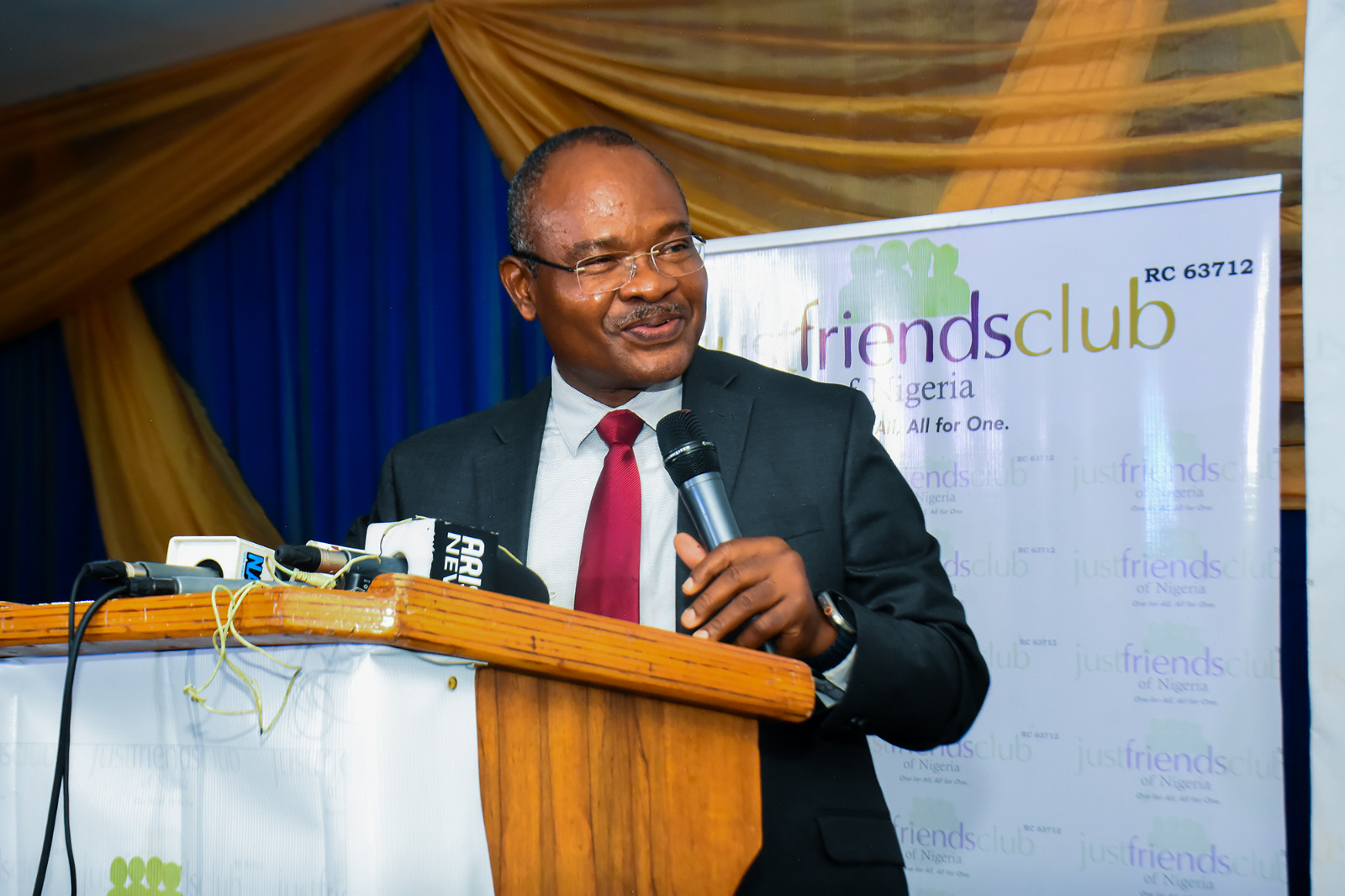
Nwankwo, spoke at the 8th Annual Lecture of Just Friends Club of Nigeria in Abuja on 20 October 2026