The unfinished business of Nigerian federalism, the price of contested belonging, and the family that violence has brought to the centre of our national conscience
At dawn in Gbajiba, a village in Guma Local Government Area of Benue State, the silence carries the weight of what has happened there. A compound that once sheltered three generations has been destroyed, and a family must now confront the terrible distance between the place it calls home and the possibility of returning to it in safety. When violence reaches a place like this, it does not destroy buildings alone. It enters the private history of a family, scattering the ordinary things through which people recognise their lives and remember who they are.
The woman at the centre of this story is my aunt, Kuker. She is the senior of three co-wives, a matriarch who bore eight daughters before giving birth to a son as her last child. Almost two decades ago, I stood with her in the labour room, witnessing the arrival of that boy. His birth was a moment of extraordinary happiness, one of those occasions when the future seems to open itself to a family with uncommon generosity.
Today, that memory carries a different weight. The childhood home of that boy has been caught in the violence that continues to unsettle communities across the Middle Belt. When I spoke with Aunty Kuker on the telephone, her voice carried the exhaustion of a woman confronting more grief than any family should bear. She had just lost her first daughter, the eldest of those eight girls. As I write, her daughter’s body lies in a mortuary, awaiting a proper burial that a displaced family, stripped of its ancestral compound in Gbajiba, must now find a way to arrange.
A mother should be able to mourn her daughter without also wondering where her family will live or whether it is safe to return home. Yet this is the cruelty displacement adds to grief: even the rituals through which families honour their dead become difficult when insecurity has driven the living from their ancestral homes.
I know the family behind these circumstances. I know that the woman who is grieving is not a statistic, and that Gbajiba is not an anonymous settlement to be forgotten when the next news bulletin arrives. This is where the national conversation about the Middle Belt must begin: not with an argument over nomenclature or an electoral calculation, but with an honest recognition of what happens when the places to which people belong become places from which they must flee.
The tragedy of Gbajiba exposes a question Nigeria has postponed for too long: what does citizenship mean when the protection it promises cannot be relied upon where it is most urgently needed?
The Middle Belt is frequently discussed as a geographical buffer between the North and South or as an electoral constituency whose importance rises and falls with presidential politics. Neither description explains its history or its political consciousness. The region is not a single ethnic group or a uniform culture. It encompasses the Tiv, Idoma, Igala, Jukun, Berom, Angas, Eggon, Tarok, Gbagyi, Nupe, Kaje, Sayawa, and many other communities with distinct histories and identities.
Yet their differences do not erase the political experiences that have brought many of these communities together. Questions of representation, administrative authority, land, and security have shaped a shared consciousness that cannot be explained by geography alone. The Middle Belt’s historical and political reach also extends beyond the boundaries of today’s North Central geopolitical zone, into Southern Kaduna in the North West and parts of Taraba and Adamawa in the North East. North Central is an administrative designation, the Middle Belt is a historical and political identity that the label does not fully contain.
To understand this identity, we must return to the colonial period, when British administrators consolidated diverse populations within the Northern Region under a system of indirect rule. For many minority communities, the constitutional negotiations preceding independence raised an uncomfortable question: would self-government bring genuine political freedom, or would the departure of colonial authority leave them vulnerable to domination by larger regional majorities?
The question was serious enough to become part of the constitutional negotiations preceding independence. In 1957, the British colonial authorities appointed the Willink Commission to investigate the fears of minorities throughout Nigeria. Its report, published in 1958, acknowledged minority anxieties but did not recommend the creation of a separate Middle Belt Region. Instead, it favoured constitutional safeguards and other measures.
The commission examined minority concerns across Nigeria, not the Middle Belt alone. Nevertheless, its decision left an important question unresolved for communities seeking greater political recognition: how could a federation protect those whose interests might repeatedly be overridden by a larger majority?
Joseph Sarwuan Tarka and the United Middle Belt Congress (UMBC) gave political expression to that struggle. Tarka’s demand for recognition was not a rejection of Nigeria; it was an argument about the kind of Nigeria that independence ought to produce. A genuine federation must allow diverse communities to participate in a common political enterprise without expecting smaller nationalities to accept permanent political subordination.
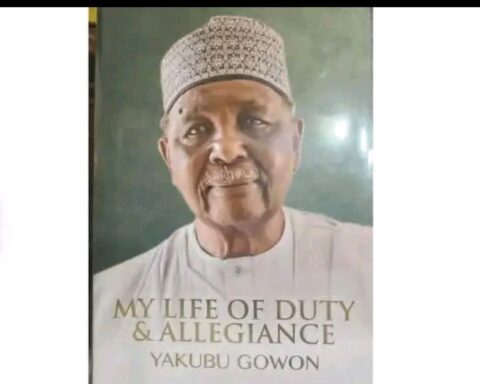
The creation of 12 States by General Yakubu Gowon in 1967, including Benue-Plateau State, changed the structure of the federation. Subsequent state creation brought government closer to some communities and gave political expression to identities that had previously been submerged within larger regional arrangements. Nigeria now has 36 states.
But new boundaries could not, by themselves, resolve every question that had given rise to the Middle Belt struggle. A political demand once articulated across a broader territory became distributed among different States, each with its own political leadership, interests, and competition for federal resources. Administrative recognition mattered, but it could not guarantee security, equal treatment, or effective protection for every community.
Today’s violence must not be presented as a simple consequence of historical marginalisation. Its causes differ across locations and incidents, and they require evidence-based investigation. The deeper connection is that the Nigerian federation continues to face a fundamental test: whether its institutions can protect citizens whose lives and livelihoods are threatened, regardless of where they live or how much political influence their communities possess.
That test is painfully visible across Benue, Plateau, Nasarawa, and Southern Kaduna, where communities have endured killings, attacks on settlements, destruction of homes, and displacement.
Public discussion often reduces these tragedies to “farmer-herder clashes” or explains them principally through climate change and competition over land and water. Resource pressures are real, and disputes over land use require serious attention. But these explanations cannot account for every incident, and they cannot turn the killing of civilians or the destruction of their homes into an acceptable consequence of competing livelihoods.
A dispute over land does not justify the destruction of a family compound. Competition for resources does not make forced displacement legitimate. Describing violence in the language of resource conflict does not relieve the State of its responsibility to investigate crimes, identify those responsible, and protect communities at risk.
Nor should the demand for justice become an excuse for collective blame. Responsibility must be established through evidence and attached to those who commit crimes. No ethnic or occupational group should be condemned wholesale for the actions of particular people. Communities that have suffered violence are entitled to demand protection and accountability without having their grief turned into hostility against an entire population.
Section 14(2)(b) of Nigeria’s 1999 Constitution declares that the security and welfare of the people shall be the primary purpose of government. This is not a ceremonial sentence to be repeated at public functions and forgotten when citizens need protection. It establishes a standard by which government must be judged.
For a family driven from its home, constitutional promises are measured in immediate terms. Can its members return safely? Can they cultivate their land without fear? Can they bury their dead and rebuild their lives without wondering whether they will be forced to flee again?
These are not unreasonable demands. They are among the most basic obligations a government owes its citizens.
Political representation matters, but the presence of elected officials from a region cannot be mistaken for the protection of its people. Nor can a region’s importance during elections substitute for the security it needs after the votes have been counted. Communities may be courted for their support and praised for their contribution to national unity, yet find themselves confronting the same dangers long after the campaign has moved elsewhere.
When attacks and displacement recur, representatives must do more than issue condemnations after each tragedy. They must demand preventive action, press for transparent investigations, scrutinise security institutions, and account to the people whose lives are at stake. Federal and state authorities must be judged by whether their actions actually make communities safer.
Nigeria cannot continue to measure political attention by the number of visits officials make to affected areas or the promises they deliver after another attack. The more meaningful measure is whether people can return home, remain there, and resume their lives without living under the shadow of another displacement.
This requires more than expressions of sympathy.
Security agencies must be better equipped to act on local intelligence, respond promptly to credible warnings, and protect vulnerable communities before attacks occur. The debate over state policing deserves serious consideration, but any reform must include independent oversight, safeguards against political abuse, and protection for minorities within individual States. Bringing policing closer to the people is not enough if it also brings the possibility of abuse closer to them.
Land administration requires the same seriousness. Customary land rights, competing claims, and different patterns of land use must be handled through clear laws and fair procedures. Where people have been driven from their homes by violence, displacement must not become a means of settling disputes by force. Safe return and lawful resolution of competing claims must be part of any lasting response.
Investigations into serious crimes must be credible, impartial, and capable of leading to prosecution where evidence establishes guilt. Arrests, press statements, and announcements of investigations cannot substitute for justice. When violence repeatedly goes unanswered, victims lose confidence in the law, while those contemplating further attacks may conclude that the consequences are unlikely to be serious.
Displaced families also need practical assistance to rebuild. Roads must be restored, farms made accessible, livelihoods supported, and homes reconstructed where necessary. Return must be safe and sustainable, not a temporary movement back into danger. A family that returns to its village only to flee again has not escaped displacement; it has merely been given a brief interval between two crises.
These are not special concessions to the Middle Belt. They are obligations of a State that claims the right to govern its citizens and expects their loyalty in return.
For Aunty Kuker, however, these arguments are not abstractions. The State is not a debate at a constitutional conference or a promise in a campaign manifesto. Its presence or absence determines whether her family can return home, cultivate its land, mourn its dead, and rebuild a life interrupted by violence.
Her daughter is dead. Her family compound has been destroyed. A proper burial must be arranged while the family’s future remains uncertain. No political argument can make these facts less painful, and no account of Nigeria’s constitutional history can restore what this family has lost.
But the circumstances of this family should force us to confront what we have come to accept as normal. A community should not have to endure repeated violence before its suffering receives sustained national attention. A family should not have to become a symbol before its right to safety is taken seriously. And the people of a region should not have to prove their political usefulness before the State treats their security as an urgent responsibility.
When Gbajiba burns, Nigeria must see more than another local tragedy. It must see a test of its own promises to its citizens. A country that cannot protect people in their homes must explain what its constitutional commitments and declarations of national unity mean to those who have lost the very places in which they belong.
The Middle Belt is not a footnote to Nigeria’s history. It is not merely the space between two larger regions, an electoral calculation, or a convenient phrase for describing recurring violence. It is home to people whose histories matter, whose identities deserve recognition, whose dead deserve to be mourned in dignity, and whose living deserve the chance to remain where they belong.
I think of Aunty Kuker and the daughter she must bury. I think of the boy whose birth I witnessed almost two decades ago, and of the childhood home that should have held the memories of his growing up rather than become part of his family’s grief.
I cannot separate their story from the larger question Nigeria must answer. What is the worth of political recognition if people remain unsafe in their homes? What is the meaning of national unity if citizens can be driven from the places where their families have lived for generations? And what does citizenship offer a mother who must mourn her daughter while wondering whether she will ever return home?
These are not questions the Middle Belt should have to ask alone. They concern the integrity of the Nigerian State and the promise it makes to every citizen, wherever that citizen lives.
Nigeria must decide whether citizenship is a promise it intends to keep or merely a document it expects its people to carry while they flee for their lives.
Shaakaa can be reached on: shaakaastephanie@yahoo.com