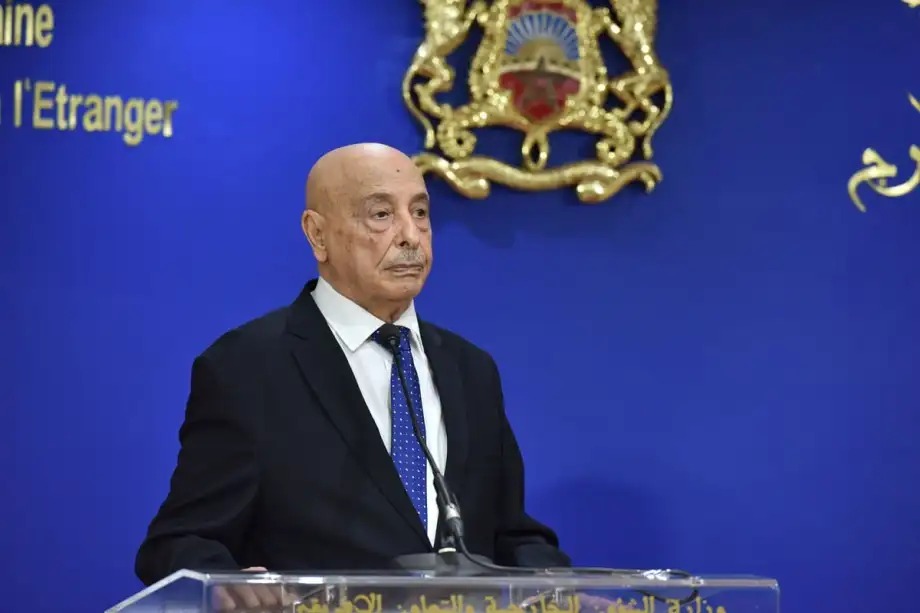
In a dramatic political realignment signaling a shift in eastern Libya’s balance of power, the House of Representatives voted on Tuesday, October 6, 2026, to remove its longtime speaker, Aguila Saleh, after 12 years in office.
Lawmakers elected Al-Salhin Abdelnabi Al-Obeidi as the assembly’s new speaker following a landmark vote at the parliamentary headquarters in Benghazi. House of Representatives spokesman Abdullah Bliheg confirmed the leadership transition via a statement released on X (formerly Twitter).
The sudden removal followed a pivotal legislative session on Monday, October 5, chaired by Second Deputy Speaker Mesbah Douma and attended by 102 lawmakers.
During that session, parliament approved sweeping amendments to its internal bylaws. House leadership terms are now capped at 12 months from the election date, stripping away automatic extensions.
Outgoing leaders are explicitly barred from delaying sessions or blocking elections aimed at replacing them.
The reforms effectively dismantled the long-held procedural grip of the 82-year-old Saleh, who had served as speaker since August 2014.
Saleh was long recognized as a foundational political ally to eastern military commander Khalifa Haftar. However, analysts view his exit as the culmination of an internal rift within the eastern establishment, driven by the rising influence of Haftar’s sons—most notably Saddam Haftar.
”Aguila Saleh appears to be the latest casualty of Saddam Haftar’s drive to centralize decision-making in eastern Libya and bulldoze his way into a political role,” said Emadeddin Badi, a senior analyst at Chatham House.
Reports indicate lawmakers received a tacit “green light” from the Haftar camp to proceed with the leadership vote, cementing the military family’s authority over eastern political institutions.
Libya remains divided between the UN-recognized Government of National Unity (GNU) led by Prime Minister Abdulhamid Dbeibah in Tripoli and the eastern administration anchored in Benghazi under Haftar’s control.
The parliamentary shakeup comes at a sensitive juncture, coinciding with fresh U.S.-backed diplomatic efforts to revitalize Libya’s stalled political process, break the institutional stalemate, and work toward unified national elections.