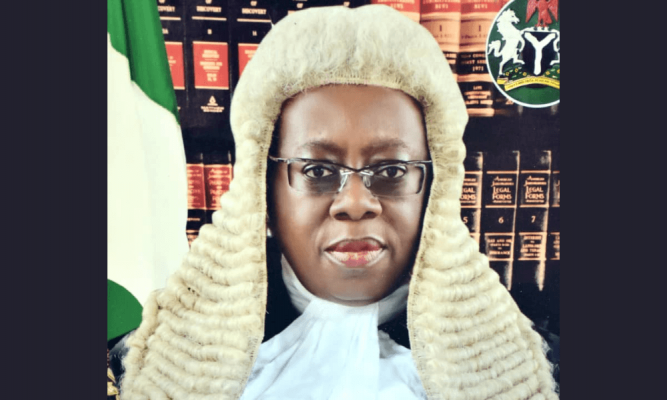
A gentleman called Gbadebo Rhodes-Vivour wants to be governor of Lagos State. But he cannot speak the language of the land. About four weeks ago, he told Arise TV that he had hired a teacher to teach him Yoruba Language. Àdàgbà kọ ilà, lílé ní í lé. Tribal marks made in adulthood come out as big scars; they confer no beauty; they scare away suitors.
That was what happened last week at a town hall event in Lagos when Gbadebo publicly demonstrated his Yoruba Language adult education and bungled everything with a beautiful Yoruba proverb, appropriately chosen but badly rendered.
The man wants to govern a Yoruba state. In Yorubaland, realpolitik is inseparable from the politics of language. And this is not peculiar to the South-West. Can anyone who cannot speak Yoruba contest the governorship of this 4th Republic Kwara State and win? How would such a candidate address the people on the streets of Ilorin, particularly the women of Ọjà Ìyá?
Can you struggle to speak Hausa and still hope to govern Kano? Can you be illiterate in Igbo and ask to be entrusted with the governorship of an Igbo state?
Gbádébọ̀ is a royal, beautiful name; it is the shortened form of Gbádébọ̀wálé which means “bring the crown home” or “return home with the crown.” But how does one bring home what one cannot connect with? The son of Rhodes-Vivour’s struggle to speak Yoruba makes his ambition to govern Lagos exceedingly difficult to sell. It got worse last week.
Still, I will not step out to blame this man for the failure of his Bluetooth connection to the Yoruba language. The cutlass is not to blame for its blunt edge; neither is the hoe responsible for its missing teeth. Some persons, at a point in the past, simply made some wrong choices; they neglected sharpening the tool that may be needed today. The source of the problem is recorded twice in the Bible: “The fathers have eaten a sour grape, and the children’s teeth are set on edge.”
Gbadebo’s father was Yoruba, his mum Igbo. How did he miss the language of his father? Osun State Governor, Ademola Adeleke, like Gbadebo, had an Igbo mother, yet he speaks first-rate, mother-tongue Yoruba. I understand he also speaks Igbo fluently. His parents were his angels. If they did not make him to speak Yoruba, the crankshaft of his political bulldozer would never have worked in Osun State.
There is a lesson here: proficiency in one’s mother tongue is often a certificate of (political) acceptance, particularly in this setting. But that certificate, and every qualification on the academic transcript, may soon count for little, especially now that Gbadebo’s infirmity is fast becoming an epidemic in Yorubaland. The Hausa do not have that problem; the affliction is not for the Igbo. It is a Yoruba illness. And if they do not sit up now, very soon, the political choice open to them may be between the highly educated who cannot speak Yoruba and the profoundly unlettered who speak it with cultivated fluency.
So, I plead: teach your children to speak, read and write the language of their fathers. No Yoruba child should confuse or conflate labalábá (butterfly) with làpálàpá (ringworm). I watched Gbadebo Rhodes-Vivour do precisely that in the town hall video. It was ghastly. Every Yoruba should understand what they hear when someone whispers or shouts ogún (twenty); ogún (inheritance); ogun (war); Ògún (the god of iron); òjò (rain), ojo (a coward), Òjó (a personal name), and even, Ojó (a town in Osun State).
A child born of Yoruba parent(s) should be able to glide confidently through the tones and know when identical sounds yield meaning to context as with ogún (twenty) and ogún (inheritance); ó jó (it burnt); ó jó (he danced/she danced).
If you do not teach your child your language, when the day breaks tomorrow, your ọmọ onílé (child of the house) will become an àlejò (a guest) and be treated as one.