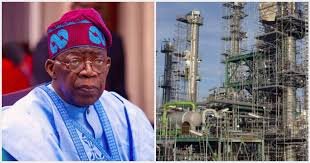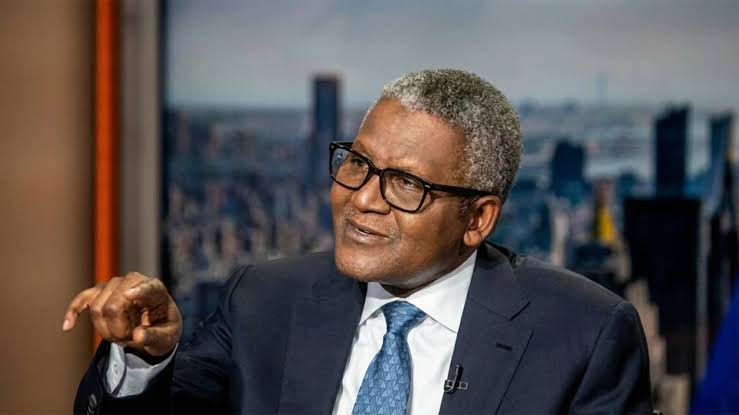
Nigerian billionaire and President of the Dangote Group, Aliko Dangote, has accused local fuel marketers and International Oil Companies (IOCs) of secretly instigating protests against his proposed $16 billion crude oil refinery planned for Lamu, Kenya.
Addressing journalists in Nairobi following a groundbreaking event held at the project site on Wednesday, September 30, 2026, Dangote alleged that vested interests in the regional petroleum sector were funding resistance under the guise of community land rights disputes to protect their import monopolies.
The allegations follow community demonstrations outside the project perimeter in Lamu County. Demonstrators, led by local community organiser Ali Sharif, voiced concerns over fair compensation for displaced landowners and called for the public disclosure of environmental impact assessments.
”We are demanding to see the full mitigation measures proposed,” Sharif stated during the demonstration. “Past industrial projects in the region have left critical environmental concerns unaddressed”.
Dangote, however, maintained that local dissatisfaction was being manipulated by corporate entities threatened by local refining capacity.
”Those who benefit from importing refined petroleum products into East Africa do not want to see local refining capacity,” Dangote said. “They are sponsoring these protests to delay progress, just as we experienced elsewhere. But we will not be deterred”.
Despite opposition and ongoing legal challenges surrounding land acquisition, Kenya’s President William Ruto and host leaders formally backed the commencement of the project.
Speaking at the project grounds, President Ruto characterised the mega-refinery, which is slated to process up to 700,000 barrels of crude oil per day and feature a 1,000-megawatt captive power plant, as a key driver for regional economic independence.
”This facility represents a shift away from raw resource export toward industrial self-reliance,” Ruto stated.
Kenya’s Cabinet Secretary for Energy and Petroleum, Opiyo Wandayi, dismissed criticisms regarding Kenya’s lack of domestic crude production, pointing out that global refining hubs like Singapore rely on imported crude via open market access.
The $16 billion facility is slated to become one of Africa’s largest industrial projects, expected to generate up to 60,000 jobs during its peak construction phase. Dangote confirmed that regional governments have been offered a combined 30% equity stake in the venture to ensure regional participation.