By Agbafo Ijeoma
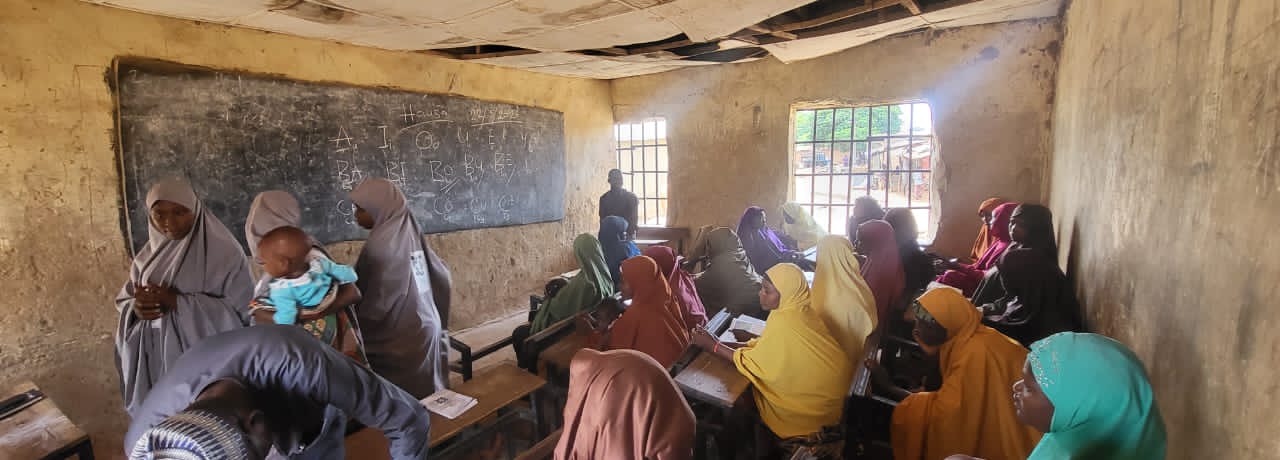
For some married adolescent girls in Bugau, Damau Ward of Kubau Local Government Area, Kaduna State, motherhood has not ended their pursuit of education. After leaving school because of early marriage, the girls are now back in the classroom, learning to read and write in Hausa and English alongside other married women in their community.
The women attend classes four times a week, from 8:30 a.m. to 10:00 a.m., in an effort to regain the educational opportunities they lost. Basira Isah, 15, said she was married at 13 after dropping out of Primary Three, while Hadiza Danjuma and Zainab Shehu also left school at JSS 2 before they were married. The girls said cultural expectations in Bugau often favoured educating boys while girls were expected to marry, have children and take care of their families.
The challenge is reflected in wider data from Kaduna State. The 2021 Nigeria Multiple Indicator Cluster Survey found that 45.3 per cent of women aged 20 to 49 in the state had entered marriage or union before age 18, while 18.3 per cent had married before 15. The 2026 Kaduna State Out-of-School Children Mapping also identified 187,719 children aged three to 17 who were out of school across the state’s 23 local government areas, with Kaduna North Senatorial Zone accounting for 51 per cent of the figure.
The return to learning began after the Participatory Communication for Gender Development (PAGED) Initiative trained Basira, Hadiza and Zainab on literacy and the importance of education. Motivated by the training, the three girls went from house to house with support from their husbands and the traditional leader of Bugau, encouraging other married women who had dropped out of school to return.
The community leader, Malam Ibrahim Adamu-Bugau, supported the initiative by allowing the women to initially use his house as a classroom, while the community explored ways to provide books, writing materials and other learning resources.
Despite difficulties finding a permanent learning space and the need for more teachers, the programme, which began in February, has already produced noticeable progress. Some participants who previously could not identify the English alphabet can now read and spell their names, while others have learnt to write shopping lists, recognise phone numbers and assist their children with schoolwork.
For the women, these everyday skills represent a second opportunity to pursue education and improve their lives, while also strengthening their ability to support the education of their children.