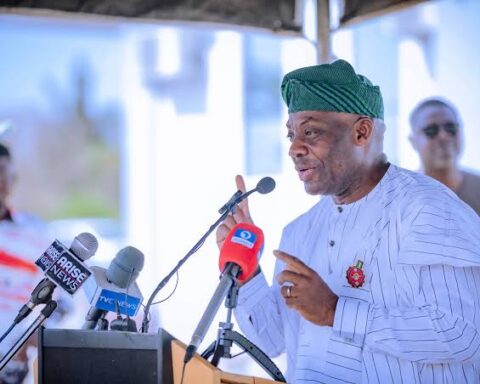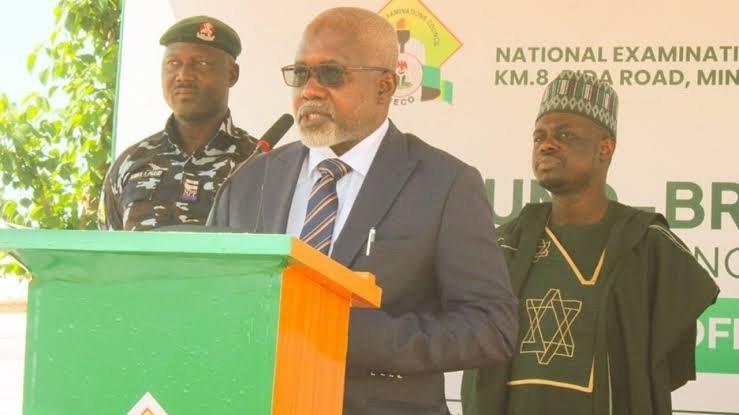
The Chairman of United Nigeria Airlines, Prof. Obiora Okonkwo, has challenged Nigerian universities to prioritize entrepreneurship and practical skills development, urging institutions to overhaul their academic models so graduates can establish businesses rather than depend solely on paid employment.
Speaking during an address in Abuja, Prof. Okonkwo emphasized that the true measure of a modern educational system lies not in the volume of certificates it awards, but in the practical capacity it instils in students to solve societal problems and drive sustainable economic growth.
Addressing academic leaders and policy formulators, the airline boss advocated for a systemic shift where entrepreneurship becomes a mandatory core subject across all academic departments.
He argued that students in disciplines ranging from medicine and law to the basic sciences must be conditioned to think commercially from day one, equipping them to establish private practices, launch tech ventures, or drive industrial innovations upon graduation.
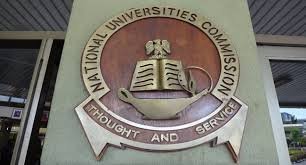
To support this transformation, Prof. Okonkwo called on the Federal Government and the National Universities Commission (NUC) to implement sweeping regulatory reforms. He urged authorities to move away from traditional, certificate-centred benchmarks and adopt competence-based evaluation frameworks that reward real-world problem-solving and market readiness.
Drawing from his personal trajectory as a professor of entrepreneurship and business executive, Okonkwo shared that he founded his first enterprise while still an undergraduate and has never held conventional paid employment. This early exposure to enterprise, he noted, is vital for shaping the next generation of economic leaders.
He further outlined five critical competencies that must form the bedrock of 21st-century higher education: strong technical and professional competence, creative problem-solving capabilities, integrated entrepreneurship training, advanced digital literacy, and steadfast ethical leadership.
Stakeholders across the education and private sectors have echoed his stance, agreeing that aligning university curricula with evolving industrial demands remains essential to curbing national unemployment and fostering long-term economic resilience.