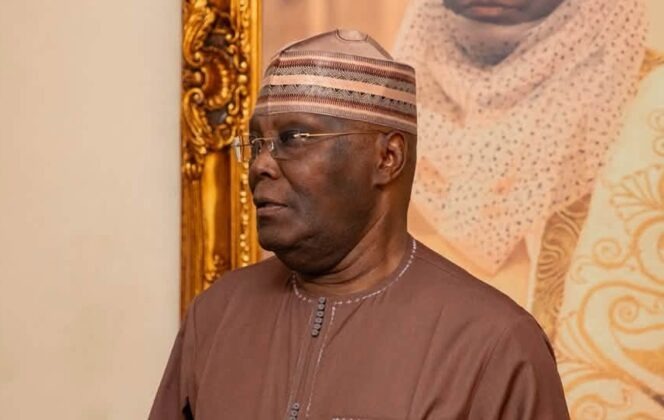
Former Vice President Atiku Abubakar has clarified his economic vision for Nigeria’s energy sector, stating that his proposal to restore petrol subsidies is strictly designed as a domestic “production subsidy” rather than a return to funding foreign imports.
In a detailed official press statement released on Friday morning, September 11, 2026, from Abuja, Atiku addressed the ongoing debate surrounding his policy proposal, asserting that government intervention must directly support local crude refining to drive down prices for consumers while protecting private investments.
Speaking through his Senior Special Assistant on Public Communication, Phrank Shaibu, Atiku explained that the traditional subsidy model which bled public funds by paying foreign refiners and importers, was flawed.
However, he argued that total deregulation without consumer safeguards has left millions of Nigerians facing unbearable costs for fuel, transport, and food.
”We are restoring subsidy through a production subsidy model, not an import subsidy model,” the statement quoted Atiku as saying. “If you do not refine in Nigeria, you do not qualify. This is not a subsidy for foreign refineries or middlemen; it is a direct subsidy for Nigerian production.”
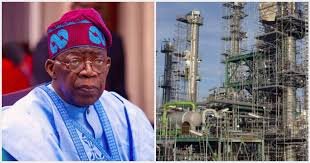
The former Vice President explained that the plan focuses on discounting the cost of crude oil feedstock supplied to domestic refineries, such as the Dangote Petroleum Refinery and various modular refining units operating nationwide.
By lowering input costs at the point of processing, refineries can significantly reduce the ex-depot price of petrol without suffering operational losses.
The press release directly addressed recent concerns from private investors regarding potential government price caps. Atiku agreed with private refiners that commercial entities cannot be expected to absorb losses caused by artificially mandated retail prices.
”Dangote Refinery is right to insist that a private business cannot carry the burden of government-imposed prices,” the statement emphasized. “There is a world of difference between forcing a refiner to sell at a loss and helping that refiner lower its cost of production. Our model does the latter.”
To prevent the corruption that plagued past subsidy regimes, Atiku outlined several strict fiscal safeguards embedded within the proposed framework which includes; A fixed, non-negotiable budgetary ceiling on total annual subsidy spending.
A maximum subsidized price differentials applied strictly to verified barrels of crude processed domestically.
Atiku also outlined the need for Digital & Electronic Tracking; Real-time monitoring of crude intake, refined output, and distribution to eliminate non-existent “ghost barrels.”
He suggest a mandatory, open audits of all participating refineries and government disbursements.
Responding to critics from the presidency who labelled the policy a reversal of economic progress, Atiku urged political leaders to engage with the actual mechanics of the proposal.
He reiterated that the ultimate measure of any economic policy is whether it leaves money in the pockets of working families, promising that a targeted production model would restore affordability while expanding local industrial capacity and job creation.