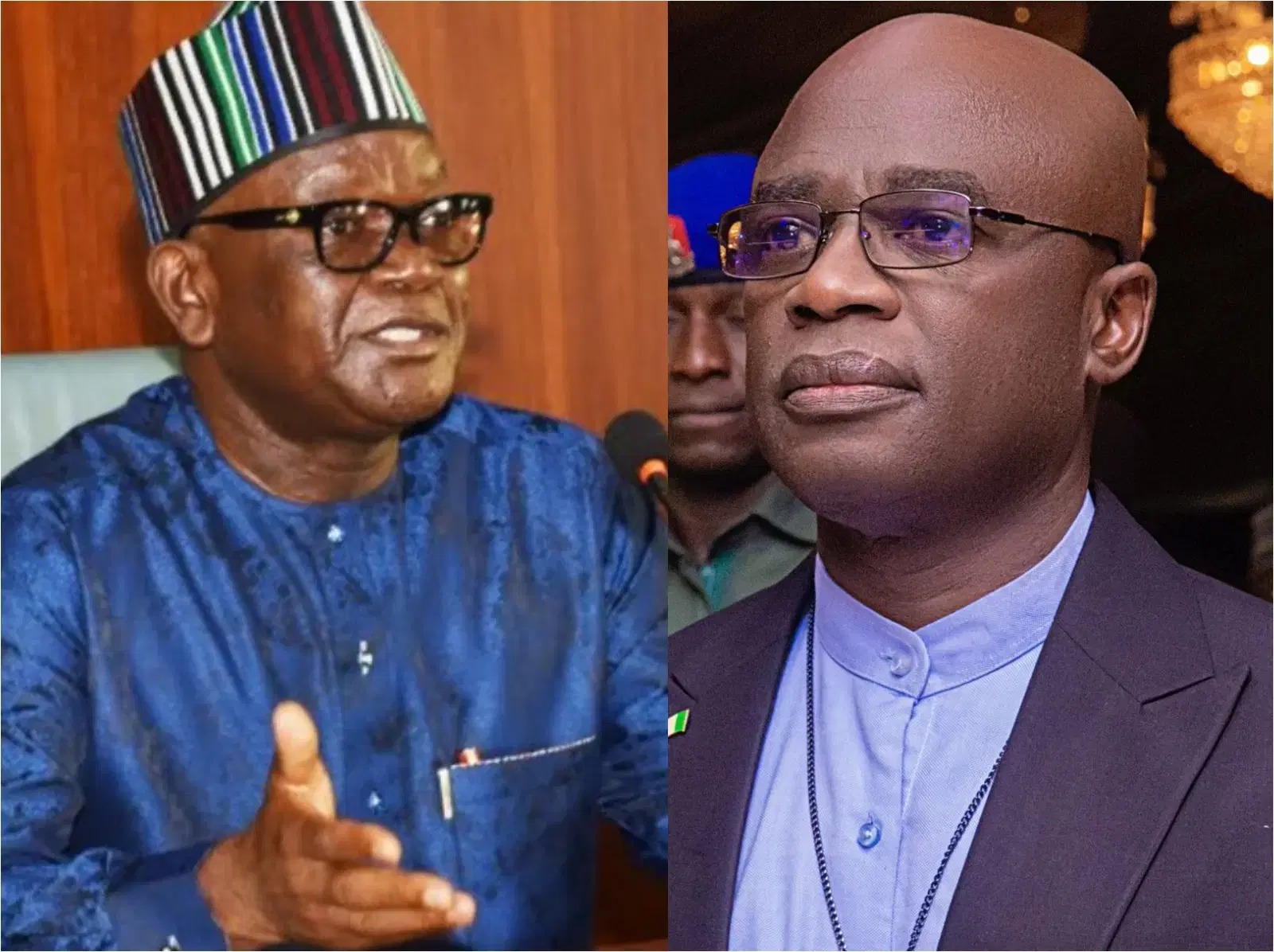
Former Governor of Benue State, Samuel Ortom, launched a scathing attack on his successor, Governor Hyacinth Alia, on Tuesday, September 8, 2026, accusing the incumbent administration of operating on a foundation of lies, deceit, and systematic hypocrisy while disregarding the rule of law.
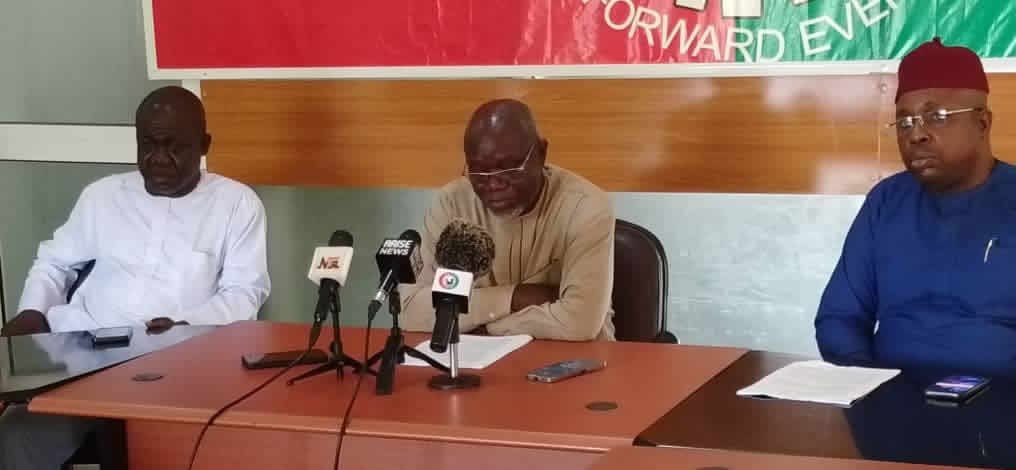
Speaking during an interactive media briefing with journalists at 11:00 AM at his private residence in Makurdi, the state capital, Ortom alleged that the current administration has actively shut out key political stakeholders and breached fundamental democratic processes across the state.
During the session, the former governor detailed specific instances where he claimed the incumbent government deliberately undermined judicial rulings and executive norms.
Ortom highlighted the non-compliance of the state government regarding his official vehicles, which were impounded shortly after he left office.
”I took the matter to court and won. The court explicitly ordered the return of my vehicles and awarded ₦5 million in damages against the state government. As I speak to you today, those vehicles have not been restored, nor has the government appealed the judgment. This is clear evidence of a total disregard for judicial decisions and the rule of law,” Ortom stated.
Ortom further criticized Governor Alia’s political leadership style, accusing him of isolating traditional leaders and civic actors. He claimed that during a recent community visit in his constituency, instructions were issued to local monarchs forbidding them from receiving him.
He also asserted that local government autonomy in Benue remains non-existent in practice, alleging that council chairmen are blocked from operating independently or managing local funds.
In a swift reaction issued Tuesday afternoon in Makurdi, the Chief Press Secretary to Governor Alia, Kula Tersoo, rejected Ortom’s claims, describing the accusations as unfounded and born out of frustration over ongoing administrative inquiries into past governance.
Tersoo maintained that the current administration remains firmly anchored on accountability, institutional transparency, and economic recovery.
He added that the state government is simply addressing the heavy financial liabilities and grey areas inherited from the previous administration through constitutional and legal channels.