In the dead of winter in the Tennessee hills, a mother sits by a flickering hearth with a needle, a spool of thread, and a basket of scraps. There is no money for store-bought fabric, but there is an abundance of love and a defiant imagination. She stitches the rags together, piece by mismatched piece, creating a small winter coat. When her young daughter, Dolly, puts it on, she doesn’t feel the chill of poverty, she feels wrapped in a masterpiece.
Years later, the world would laugh at the child in the patchwork coat, missing the point entirely. But Dolly would teach us a lesson that echoes far beyond Appalachia. “One is rich only if they choose to be.”
Now, as the world mourns the quiet passing of a global icon, that lyric lands on Nigerian soil with the weight of a physical blow.
Because if there is any nation on Earth that understands the sacred alchemy of the Coat of Many Colours, it is Nigeria.
To be Nigerian is to wear a coat stitched from fragments.
Geopolitically, historically, and socially, we are a massive quilt, over two hundred and fifty distinct ethnic groups, a mosaic of languages, distinct worldviews, and fractured systems sewn together by history.
For decades, outside observers, cynical historians, and internal pessimists alike have stared at the seams, predicting that the thread would snap under the weight of bad governance, that the fabric was too frayed, too poor, too violently contradictory to hold. They look at our fault lines and see an imminent tear, convinced that a society built from such diverse and discordant elements cannot possibly endure the cold winds of modernity.
Yet, like Dolly’s mother working late into the night by a dying hearth, the ordinary Nigerian possesses a defiant kind of genius: the sacred, unyielding art of making something out of absolute nothing.
Look closer at our streets, past the sterile headlines of macroeconomics and policy failures. This is a country where systemic neglect and infrastructural abandonment hand us literal rags, yet we turn them into an avant-garde aesthetic of survival.
It is the brilliant philosophy of Okirika, where cast-off garments from foreign lands are repurposed, washed, ironed, and worn with such fierce pride that they rival high fashion. It is the gritty, unsung ingenuity of the roadside vulcanizer repairing tires with sheer muscle and wit, the neighbourhood mechanic keeping a 30-year-old car alive on sheer stubborn hope, and the campus entrepreneur, lecturer, or civil servant stretching a meagre, delayed salary across an entire extended family through a masterclass in domestic macro-economics.
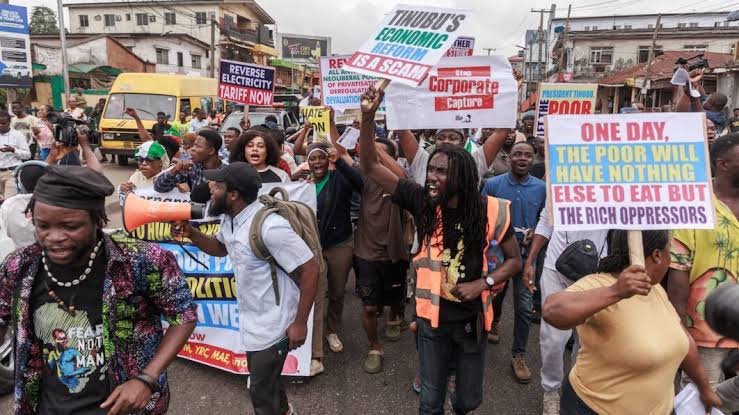
We navigate runaway inflation, blackout grids, fuel queues, and the daily humiliation of institutional failure, yet we step out into the blinding afternoon sun with our heads held high, draped in an unquantifiable dignity that no government budget can ever calculate or tax.
We are a people keeping ourselves warm while the architects of the State try to sell the roof over our heads, proving that the real wealth of this nation has never trickled down from the top, it is sweated out from the bottom, woven by hands that refuse to let the nation unravel.
In “Coats of Many Colours,” the children at school jeer at Dolly. They measure worth by brand names, by clean lines, by the pristine uniformity of wealth they didn’t earn. We see that exact psychological warfare in Nigeria today.
There is a relentless societal pressure to measure human worth by material validation, the foreign-used car, the visa stamp, the designer label, the superficial gloss of inherited or unearned luxury.
The world looks at the average Nigerian struggling through a broken economy and points fingers, whispering about lack, mapping our worth by poverty indices and dollar exchange rates.
But Dolly’s anthem gives us the ultimate counter-script.
Her mother told her the biblical story of Joseph and his coat of many colours, teaching her that love, history, and identity out-value gold. In Nigeria, our true wealth has never been found in government accounts or institutional safety nets, it lives in our communal safety nets.
It is in padi-ship, the deep-rooted solidarity of neighbours, the prayers of mothers echoing across quiet mornings, the shared pots of soup passed across compound walls, and an irrepressible joy that laughs right in the face of hardship.
We carry an internal richness that no bad policy can bankrupt.
Dolly Parton spent her life giving away millions of books and singing songs that honoured the dignity of the working class. She left behind a world that feels a little colder for her absence, a cultural landscape diminished by the loss of her radiant, down-to-earth wisdom.
As Nigeria mourns her alongside the rest of the globe, let us reclaim our narrative with the very spirit she championed. We are not an embarrassing collection of scraps, discarded by history and forgotten by progress. We are a coat of many colours, sewn by survival, warmed by an unyielding spirit, and coloured by a vibrancy that no economic winter can ever fade.
When the world looks at our patchwork and sneers, let us pull our heritage tight around our shoulders, smile in the face of the storm, and remember – one is rich only if they choose to be.
Shaakaa can be reached on: shaakaastephanie@yahoo.com