Experts in pathology and cancer care have called for increased investment in pathology services to strengthen cancer diagnosis and treatment in Nigeria and West Africa.
They also advocated the adoption of artificial intelligence (AI) and digital technologies to improve cancer diagnosis and treatment.
The experts made the call at the 16th Annual General Meeting and Scientific Conference of the West African Division of the International Academy of Pathology (WADIAP), on Tuesday in Lagos.
The conference, tagged EKOPATH ’26, has the theme: “Future-Proofing Pathology in West Africa: Integrating Quality, Innovation, and Regional Synergy.”
They stressed that accurate pathology was central to effective patient management.
Prof. Usman Aliyu, Director-General, Nigeria Institute for Cancer Research and Treatment (NICRAT), described pathologists as the gateway to cancer treatment, noting that no cancer therapy could be appropriately administered without an accurate diagnosis.
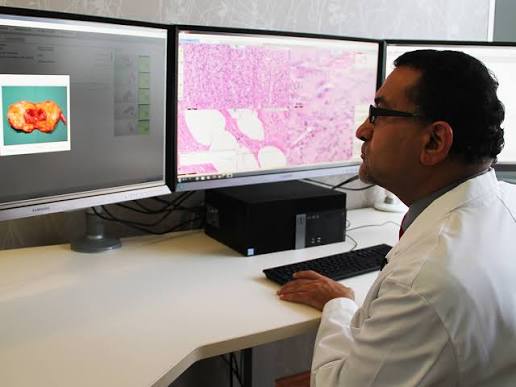
Aliyu explained that pathologists examine tissue and other specimens taken from patients, conduct laboratory tests and study cellular changes to determine whether a disease was cancerous and, where applicable, identify its characteristics.
According to him, any error in diagnosis can result in inappropriate treatment, worsening of the patient’s condition and potential increase in mortality.
He said that NICRAT, established by the Federal Government to provide leadership in cancer prevention, treatment, research and control, had strengthened pathology services through capacity-building programmes and upgrading pathology laboratories with modern equipment.
Aliyu said that the interventions were aimed at equipping pathologists, physicians and laboratory personnel with the knowledge and tools required to deliver cancer diagnostic services that met international standards.
On the rising incidence of cancer, he attributed the trend partly to changing lifestyles and an ageing global population.
According to him, the challenge is not peculiar to Nigeria.
He urged Nigerians to adopt healthier lifestyles, including good nutrition and regular exercise, while avoiding known risk factors such as smoking, excessive alcohol consumption and physical inactivity.
Similarly, Anatomic and Forensic Pathologist, Prof. Francis Faduyile, expressed optimism that greater interaction among pathologists across West Africa would strengthen regional collaboration and improve healthcare delivery.
Faduyile, however, raised concern over the shortage of pathologists in Nigeria, estimating that only about 150 specialists were available to serve a population of more than 200 million people.
He said that the shortage was not peculiar to Nigeria, as developed countries also faced pathologist shortages, but stressed the need to maximise and retain the limited specialists available in the country.
Faduyile, the Senator representing Ondo South Senatorial District, identified poor remuneration, economic pressures, insecurity and other unfavourable working conditions as major factors driving health professionals out of Nigeria.
He called for measures to address both the push factors driving professionals away and the pull factors attracting them to other countries, noting that the challenge affected virtually every medical specialty.
The senator also pledged that legislators would collaborate with relevant stakeholders and strengthen oversight to ensure that policies and laws supported better healthcare outcomes for Nigerians.
The Keynote Speaker, Prof. Adekunbiola Banjo, emphasised that pathology remained indispensable to patient management, particularly in cancer care.
Banjo, Professor of Anatomy and Pathology at the University of Lagos, explained that advances in medicine had moved treatment away from a “one-size-fits-all” approach towards targeted and personalised therapies based on specific biomarkers and characteristics of individual patients.
She urged Nigerians to ensure that any tissue removed during a medical procedure was submitted for pathological examination to determine whether it contained cancer or another disease condition.
Banjo also called for improved working conditions and incentives to encourage healthcare professionals to remain in Nigeria, noting that specialists were few and largely concentrated in urban centres.
She stressed that equitable healthcare required high-quality pathology services that were accessible to people irrespective of their ability to pay.
Banjo further advocated for stronger cancer screening programmes, saying that early detection significantly improved treatment outcomes.
She identified cervical, breast and colorectal cancers among those for which screening programmes should be strengthened, while also highlighting the role of pathology in diagnosing other diseases beyond cancer.
According to her, pathology also contributes to healthcare planning through autopsies, which can provide evidence on major causes of death, including factors contributing to maternal mortality.
On concerns about the affordability of cancer screening, Banjo said that some screening services were covered by health insurance schemes, including state-based programmes and the national health insurance system.
She urged wider use of available health insurance coverage to improve access to preventive and diagnostic services.
Also, Prof. Edwin Wiredu, Professor of Pathology, University of Ghana Medical School, said that the conference was designed to position pathology for a rapidly changing world.
Wiredu said that the specialty had historically operated largely behind the scenes, in spite of its critical role in patient care.
He called for deliberate measures to attract more young doctors into pathology and retain trained specialists.
Prof. Fatimah AbdulKareem, President, WADIAP, said that the conference’s theme was timely as pathology underwent rapid transformation through molecular diagnostics, digital pathology, artificial intelligence, and precision medicine.
“Our challenge is to ensure that West Africa is not merely a recipient of these advances, but an active contributor to innovation and scientific excellence.
“Future-proofing pathology requires investment in our people, infrastructure, research and education, alongside stronger quality systems and regional collaboration.
“This conference, therefore, provides an important platform to share knowledge, strengthen partnerships and collectively shape the future of pathology in our region,” AbdulKareem said.
She said that pathologists’ work was central to accurate diagnosis, patient care, research, and public health.
According to her, the concept of “future-proofing” pathology requires the specialty to move beyond its traditional role of simply confirming whether a tumour is cancerous.
“Two patients with the same type of cancer may require different treatments because of differences in their tumour characteristics”.
AbdulKareem said that future pathologists must, therefore, be proficient in AI, digital pathology and molecular diagnostics to provide increasingly precise diagnoses and help oncologists determine appropriate treatment and predict patient outcomes.
She expressed concern over the severe shortage of pathologists in Nigeria, saying that available statistics indicated that the country had at some point trained hundreds of specialists, but fewer than 200 were now practising in the country.
AbdulKareem said that the situation was worsening as young doctors showed limited interest in pathology training, while some trained specialists migrated immediately after qualification.
She cited the experience of the Lagos University Teaching Hospital (LUTH), where an advertised residency programme reportedly attracted very few interested candidates and eventually had no new resident commenced training.
In spite of the challenges, AbdulKareem said that the profession must continue to train specialists and work with government and other institutions to improve pathology services.
She also rejected concerns that AI would make pathologists redundant, saying that technology would instead complement the work of specialists and enhance their ability to deliver accurate and timely diagnoses.
“Let us therefore, continue to uphold the highest standards of quality and professionalism, embrace innovation, and strengthen the spirit of collaboration that defines WADIAP,” AbdulKareem said.
Dr Martins Momoh, the Chairman, Local Organising Committee of the conference, said that to “future-proof” pathology in West Africa meant more than simply adopting new tools to embed uncompromising quality management into every phase of the diagnostic pipeline.
Momoh said that it called for the embrace of bold innovations from digital pathology to molecular diagnostics and tailor them to meet local health challenges.
“Most importantly, it requires regional synergy, breaking down geographic and institutional silos, so that sub-regional collaboration can drive standard setting, research, and resource sharing across West Africa”.
The News Agency of Nigeria (NAN) reports that the conference has participants across West Africa participating in the three-day event, which began on Aug. 24 and will end on Aug. 26.