By Dan Ngerem
Nigeria’s premier socio-economic super-artery is failing.
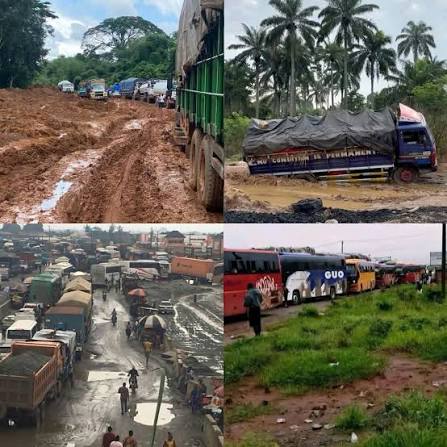
The Lagos–Benin–Agbor–Asaba–Onitsha corridor which anchors the industrial South-West, the oil-rich South-South, and the hyper-commercial South-East has degenerated into an infrastructural crisis.
While this systemic decay is a historical backlog that did not originate with the current administration, the reality remains clear: the existing network of major interstate roads must attract immediate priority attention to mitigate an escalating economic and social conundrum.
Maintaining this critical network is not a regional luxury; it is a fundamental pillar of national productivity, public safety, and economic security.
1. The Macroeconomic Toll: Escalating Inflation and Supply Chain Collapse
* Supply Chain Disruptions: Heavy-duty trucks carrying vital manufacturing components,imported goods, and agricultural perishables are routinely trapped for days at failed junctions like Ologbo, Okada, and the Benin Bypass.
* Induced Inflation: As agricultural goods rot in transit, the supply shortage drives up food prices across major urban hubs. The heavy financial losses suffered by haulage companies are passed directly to everyday consumers.
* Escalating Operating Costs: Fleet operators face an estimated 40% surge in emergency maintenance costs due to severe mechanical wear and tear. Paired with massive fuel wastage from vehicles idling through hours of gridlock, the overhead costs of doing business nationwide continue to soar.
2. The Social Impact: Public Health Risks and Community Isolation
* Public Health and Mental Exhaustion: Journeys that should seamlessly take 5 to 6 hours now stretch into grueling 15 to 24-hour nightmares and some stretching to days. Commuters are subjected to profound psychological strain, extreme physical fatigue, and the hazards of being stranded for days without sanitation or medical access.
* Compromised Highway Safety: Severe potholes and structural craters create involuntary bottlenecks. When commercial vehicles are forced to a crawl, they become vulnerable targets for highway criminality and opportunists.
Furthermore, navigating these uneven terrains significantly increases the frequency of fatal accidents involving articulated vehicles.
* Local Disenfranchisement: Agrarian communities lining the Agbor, Asaba, and Benin sub-corridors are becoming increasingly isolated. Deplorable access roads cut off local farmers from competitive regional markets, while making emergency healthcare transfers nearly impossible.
3. Moving Forward: A Non-Partisan Call to Action
The degradation of national infrastructure is a cumulative crisis built over decades. Resolving it requires looking past historical blame and focusing entirely on immediate execution. Complex bureaucratic frameworks, such as the long-term concession agreements under the Highway Development and Management Initiative (HDMI), must be optimised with emergency clauses to allow for rapid intervention on the worst-hit sections.
Core Recommendations for Priority Intervention:
* Emergency Pothole Palliatives: Deploy immediate, high-durability palliative works at notorious bottlenecks ahead of and during heavy rainy seasons to keep the wheels of commerce turning.
* Strategic Inter-Governmental Collaboration: Create streamlined legal pathways that allow state governments along the corridor to executing urgent repairs on federal assets, ensuring clear, swift reimbursement mechanisms.
* Critical Logistics Zoning: Designate the Lagos–Benin–Onitsha axis as a Special
Infrastructure Zone, prioritising it for targeted national funding to reflect its disproportionate contribution to the country’s Internally Generated Revenue (IGR).
Conclusion
Nigeria cannot achieve sustainable economic growth while its primary distribution channels remain broken. Repairing and maintaining the Lagos–Benin–Agbor–Asaba–Onitsha expressway is an urgent necessity to prevent further productivity loss, protect public mental wellbeing, and preserve human life. It is time to treat interstate road maintenance as the national emergency that it is.
Ngerem, Private Investor, was:
President, Athletics Federation of Nigeria (AFN)
Former Chairman, Marketing, Confederation of African Athletics (CAA)
Former Member, Presidential Advisory Panel on Nigerian Sports
dngerem@gmail.com