By Solomon Dalung
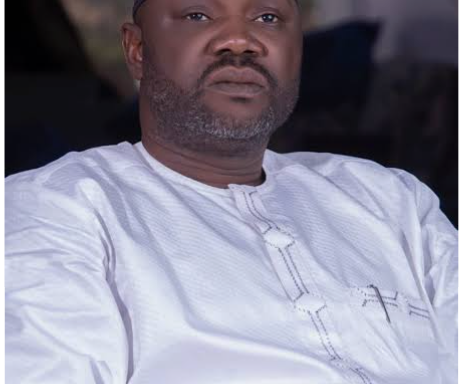
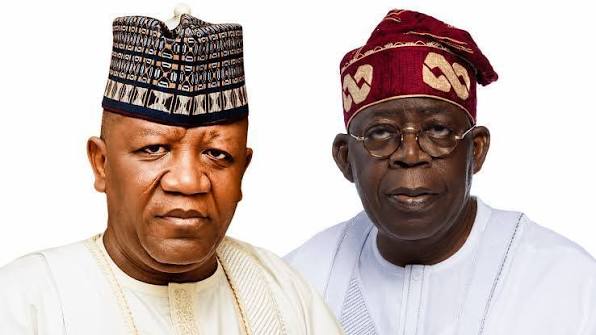
President Bola Ahmed Tinubu has appointed former Zamfara Governor Abdul’aziz Yari as Director-General of his 2027 presidential campaign.
That appointment brings one question to mind: how did Yari become so extraordinarily wealthy?
This is not a question based on rumours or internet estimates of his net worth. There is enough documented history to justify asking it.
Yari became Governor of Zamfara State in May 2011 and left office in May 2019. Before becoming governor, his career was largely in politics, including party positions and a term in the House of Representatives.
Yet his financial affairs subsequently became the subject of serious scrutiny.
In 2019, the ICPC obtained a court order freezing $669,248.89 and ₦24.3 million in funds linked to Yari and companies associated with him.
In January 2021, a Federal High Court ordered the final forfeiture of ₦278.99 million traced to him after the funds could not, in the court proceedings, be satisfactorily accounted for.
In February 2022, the same anti-corruption agency secured an interim forfeiture order over 10 properties linked to Yari, including properties in Abuja, Kaduna, Zamfara and Maryland, United States.
These are not allegations I have invented. They are matters that went before Nigerian courts.
They do not establish that every part of Yari’s wealth is illicit, and I am not suggesting that they do.
But they establish something else: there have been serious, documented questions about the financial affairs of a man who is now being presented as one of the principal political figures of the 2027 election.
Then something happened this month that makes the question even harder to ignore.
As chairman of Geregu Power, Yari reportedly committed about ₦6 billion of his personal funds to address an immediate bond repayment obligation of the company.
Pause there.
Approximately ₦6 billion in personal resources.
For a former governor whose publicly known career has been predominantly political, that is an extraordinary level of liquidity.
So I want to know something very simple:
What is the legitimate source of this wealth?
What businesses generated it?
What investments produced it?
When were those businesses established?
What did he own before becoming governor in 2011?
What did he acquire during his eight years in office?
And what did he accumulate after leaving office?
These are reasonable questions in any democracy, particularly when the individual concerned has held public office.
Being wealthy is not a crime.
Owning businesses is not a crime.
Having ₦6 billion available for investment or corporate rescue is not a crime.
But when a former public official becomes extraordinarily wealthy, Nigerians are entitled to know how that wealth was accumulated.
That is especially relevant now that President Tinubu has chosen Yari to lead his 2027 campaign.
The Director-General of a presidential campaign will be one of the principal people asking Nigerians to trust the candidate and his administration.
So Tinubu’s choice inevitably raises another question:
What does the President know about Yari’s financial history that Nigerians don’t know?
Or perhaps the more straightforward question is:
Why was Yari considered the best person to lead this campaign despite the unresolved questions surrounding his wealth?
I am not asking for Yari to be convicted in the court of public opinion.
I am asking for the standard we should apply to everyone who has held public office:
If you become extraordinarily wealthy after years in public service, explain how.
It is a fair question.
And Yari should have no difficulty answering it if the wealth has a clear and legitimate origin.
Dalung was Minister of Sports